


Deep aortic procedures place sustained demands on retraction systems, making frame design a critical factor in maintaining reliable surgical access throughout long, complex OR cases.
As operative depth increases and access requirements evolve, the way a frame manages retraction forces, preserves working space, and supports adjustment over time can directly influence workflow and efficiency in the operating room. OneFrame™ table-mounted retraction systems and wishbone-style frames approach these demands differently, particularly in how they support consistent surgical access, blade positioning, and control as a case progresses.
Understanding how each frame design behaves over the full duration of a procedure helps surgical teams select a retraction strategy that supports stable access and predictable workflow in deep aortic surgery.
Why Frame Design Matters in Deep Aortic Exposure
Unlike shorter or more superficial procedures, deep aortic cases often require exposure to be maintained across multiple operative phases without interruption. Minor changes in retraction geometry, reduced working space, or major reconfiguration can disrupt workflow and require more adjustments during the procedure.
Frame design directly influences how retraction behaves under these conditions. The way forces are distributed, how independently blades can be adjusted, and how much working space remains available all affect whether exposure remains stable or requires repeated intervention. In deep operative fields, consistency over time becomes just as important as initial access.
Choosing a frame is about more than just setup preferences; it demonstrates how a retraction system provides support for extended exposure and enables precise adjustments as anatomical conditions, depth, and access needs evolve throughout the procedure.
OneFrame Systems: Modular Control for Deep Abdominal Exposure
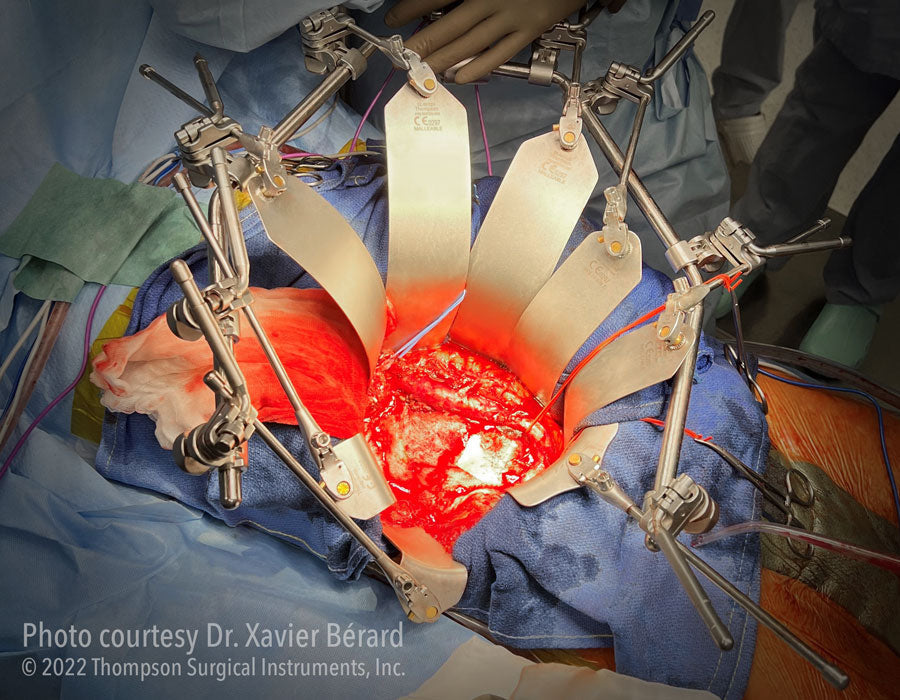
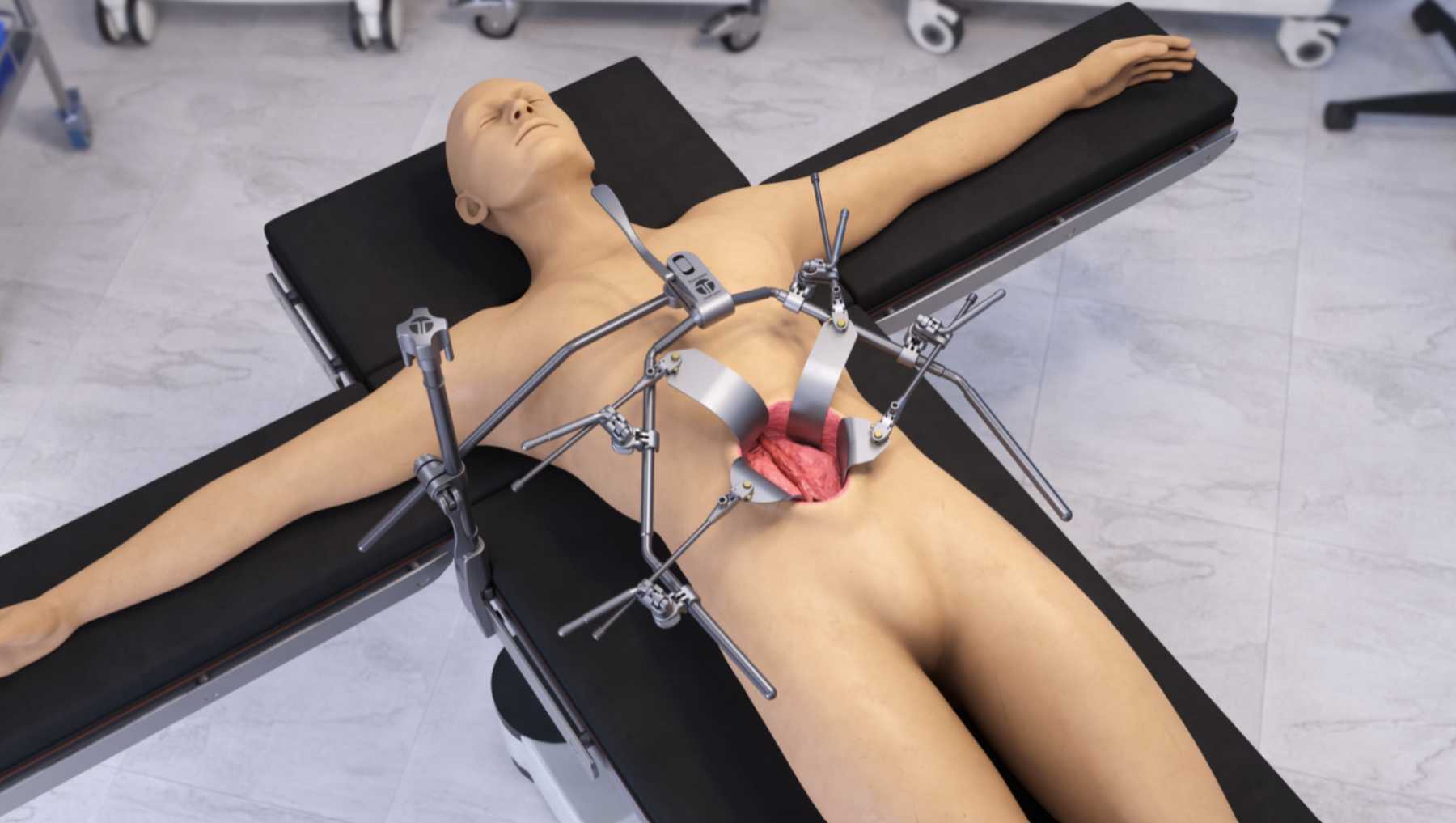
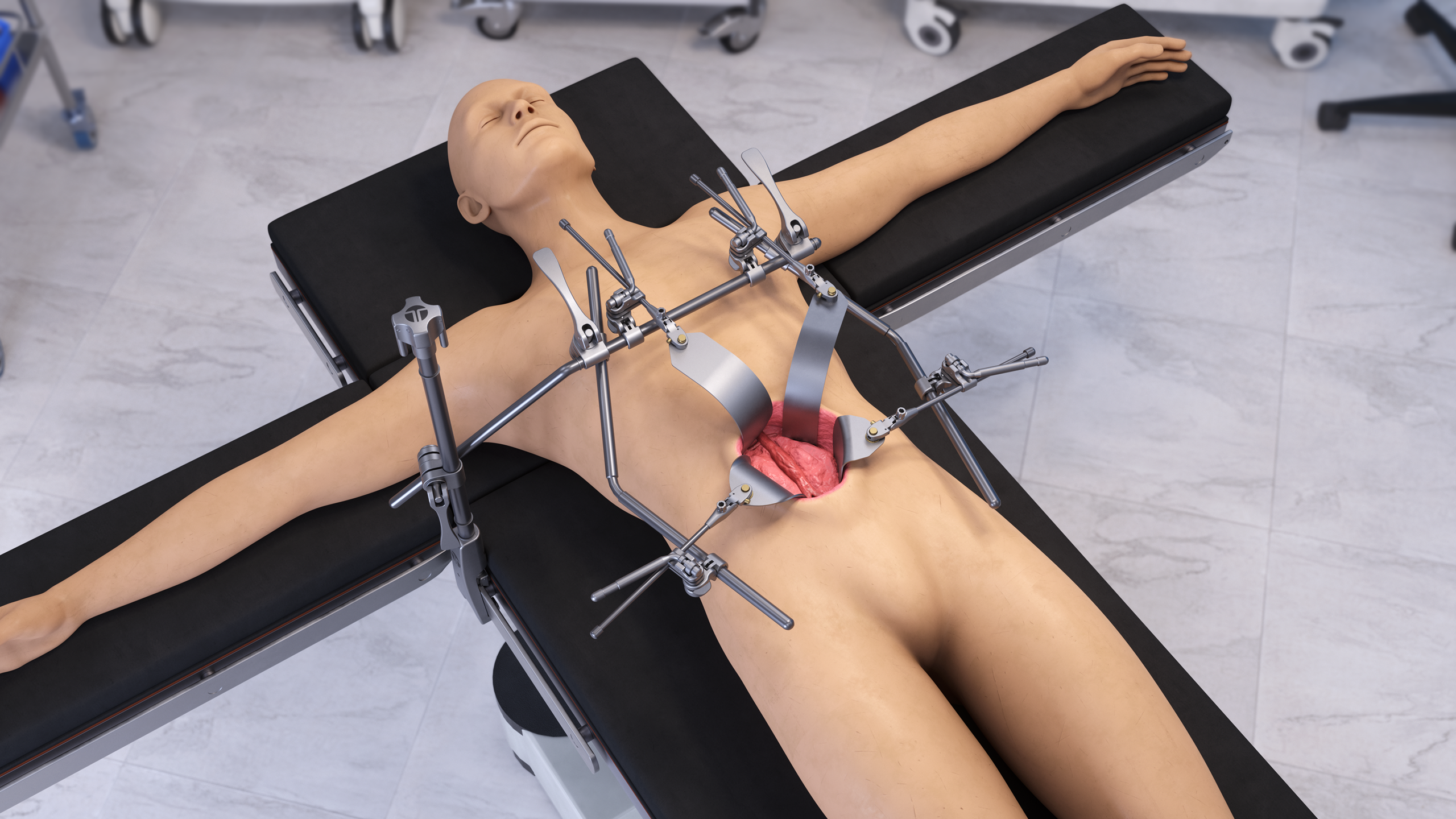
Thompson Retractor’s AAA OneFrame Retractor Set uses a single, table-mounted frame to support multiple retractor handles and blades. The one-piece frame provides an extremely easy platform, allowing surgical teams to quickly set up the retractor set, and position blades to their liking.
This one-piece design supports multiplanar retraction, which is particularly valuable in deep abdominal and aortic exposure, where access requirements often change as the procedure progresses. Independent blade control allows teams to expand, refine, or shift exposure incrementally, helping maintain consistent access without requiring full system reconfiguration.
Because the frame is anchored to the operating table, OneFrame systems provide hands-free stability throughout long procedures. This table-mounted foundation preserves exposure geometry over time while keeping retraction predictable as surgical requirements evolve.
Wishbone-Style Frames: Directional Retraction Characteristics
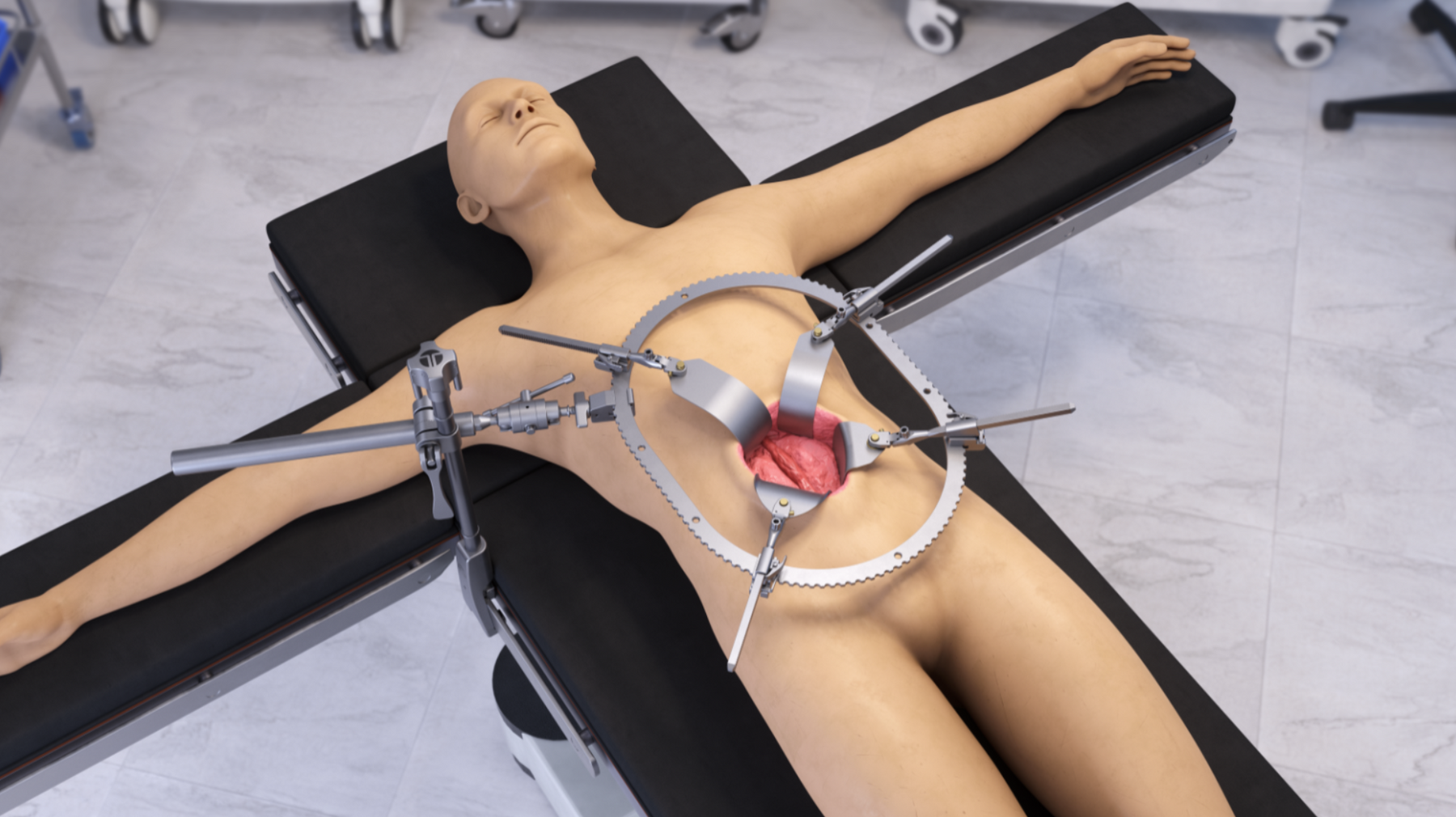
Wishbone-style retractor frames use a Rail Clamp, a two-piece clamp on the table with a pole placed through the drapes. This requires a puncture hole through sterile drapes, creating a potential pathway for contamination of the sterile field.
The Thompson Elite Rail Clamp is a one-piece part that attaches directly over the sterile drapes, thus keeping the sterile field intact.
Comparing OneFrame and Wishbone™ Frame Behavior in Deep Aortic Exposure
Frame design influences how exposure is created, maintained, and adjusted throughout long procedures. The comparison below highlights how OneFrame-style systems and Wishbone-style frames differ in access geometry, working space, and blade-positioning flexibility in deep-operative environments.
|
Design Consideration |
OneFrame™ System |
Wishbone™ Frame |
|
Retraction geometry |
Modular, multi-planed |
Fixed, directional |
|
Blade positioning |
Quick angling ability |
Paired behavior tied to frame geometry, no quick-angle ability |
|
Adjustment impact |
Localized changes without full reconfiguration |
Adjustments often affect the overall frame |
|
Working space |
Preserved within an open frame architecture |
May narrow as exposure expands |
|
Exposure behavior over time |
Supports incremental refinement |
May require broader repositioning |
|
Use-case alignment |
Long-duration, evolving exposure needs |
More static exposure requirements |
Thompson’s OneFrame is constructed from high-quality, durable materials and engineered with precision for superior stability. The major difference between the Wishbone and OneFrame is the option to use Thompson's S-Lock Blades and Quick Angling Handles. Wishbone does not offer S-Lock blades, which allow surgeons to select their blade and load it into the retractor handle; instead, it typically offers only fixed handles and blades. These blades may swivel or be fixed in one place, but they do not have the angling ability that Thompson provides with our Quick Angle Handles. Quick Angle Handles allow the blade to toe in or out 45 degrees, whereas the Wishbone does not have an angling mechanism. The angling keeps the blades/handles low-profile for the surgeon, and keeps the workspace clean, while simultaneously providing excellent exposure.
Why OneFrame Is Often Selected for Deep Aortic Exposure
Deep aortic procedures place sustained demands on retraction systems, particularly when exposure must be maintained and refined over multiple phases of the case. OneFrame-style systems are often selected in these environments because they support controlled, incremental adjustment without requiring broad reconfiguration as surgical access needs change.
The defining characteristic of a OneFrame system is independent control of the retractor handle and blade. Blades may be positioned and adjusted without disturbing the rest of the construct.
Because the frame is anchored to the operating table, OneFrame systems also provide hands-free stability throughout prolonged procedures. This stable foundation helps maintain consistent exposure while keeping retraction predictable over time, supporting surgical teams as they move from initial access through deeper operative phases without repeated resets.
Thompson OneFrame Design and Clinical Evaluation in Practice
Thompson Surgical Instruments designs OneFrame systems with a focus on durability, repeatability, and workflow consistency in complex abdominal and aortic procedures. The system’s table-mounted foundation, one-piece frame setup, and compatibility with a wide blade ecosystem allow surgical teams to configure exposure based on anatomy, depth, and procedural strategy.
Thompson offers a 30-day clinical evaluation that enables surgical teams to move beyond specifications and assess OneFrame in real operating-room conditions. Teams can refine setup preferences during live cases and determine how the system supports stable surgical access over long procedure durations.
Drawing on decades of experience in table-mounted retraction, Thompson helps surgical teams transition from evaluation to standardization with confidence. All Thomson retractors are designed based on surgeon feedback, as we strive to partner with surgical teams to deliver reliable, long-lasting surgical access.
For more than six decades, Thompson Surgical Instruments has focused exclusively on helping surgeons achieve consistent, hands-free exposure through precision-engineered table-mounted systems. Our OneFrame architecture reflects this legacy, supporting repeatable setups and long-duration access in complex aortic procedures, backed by real-world clinical evaluation. Contact us to request a 30-day clinical evaluation and explore Thompson’s approach to table-mounted retraction.
Share:
Blade Selection for Deep Retroperitoneal & Upper-Abdominal Aortic Exposure
A Buyer’s Checklist for Retractors for Long TAAA Surgeries: Stability, Reach, and OR Footprint