



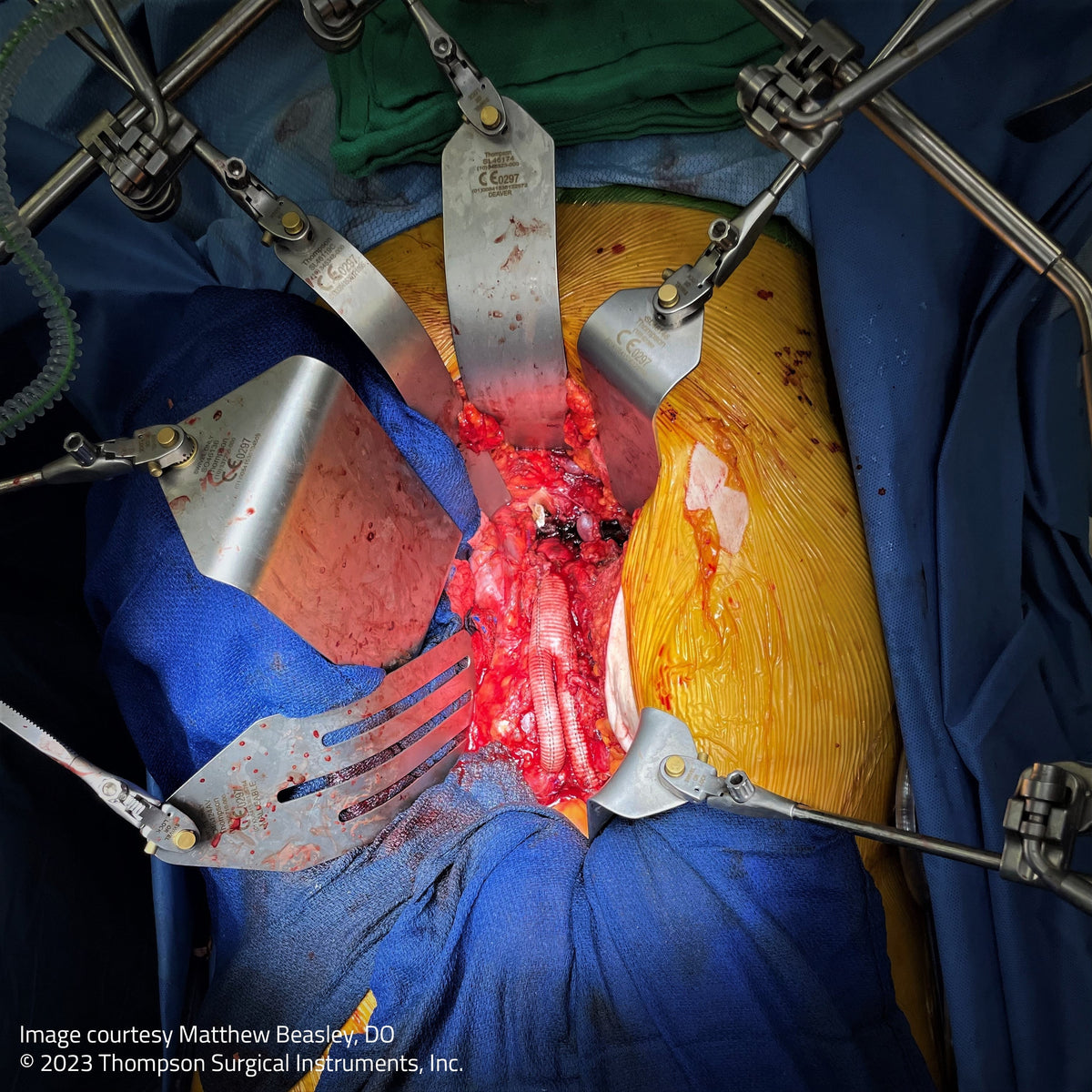
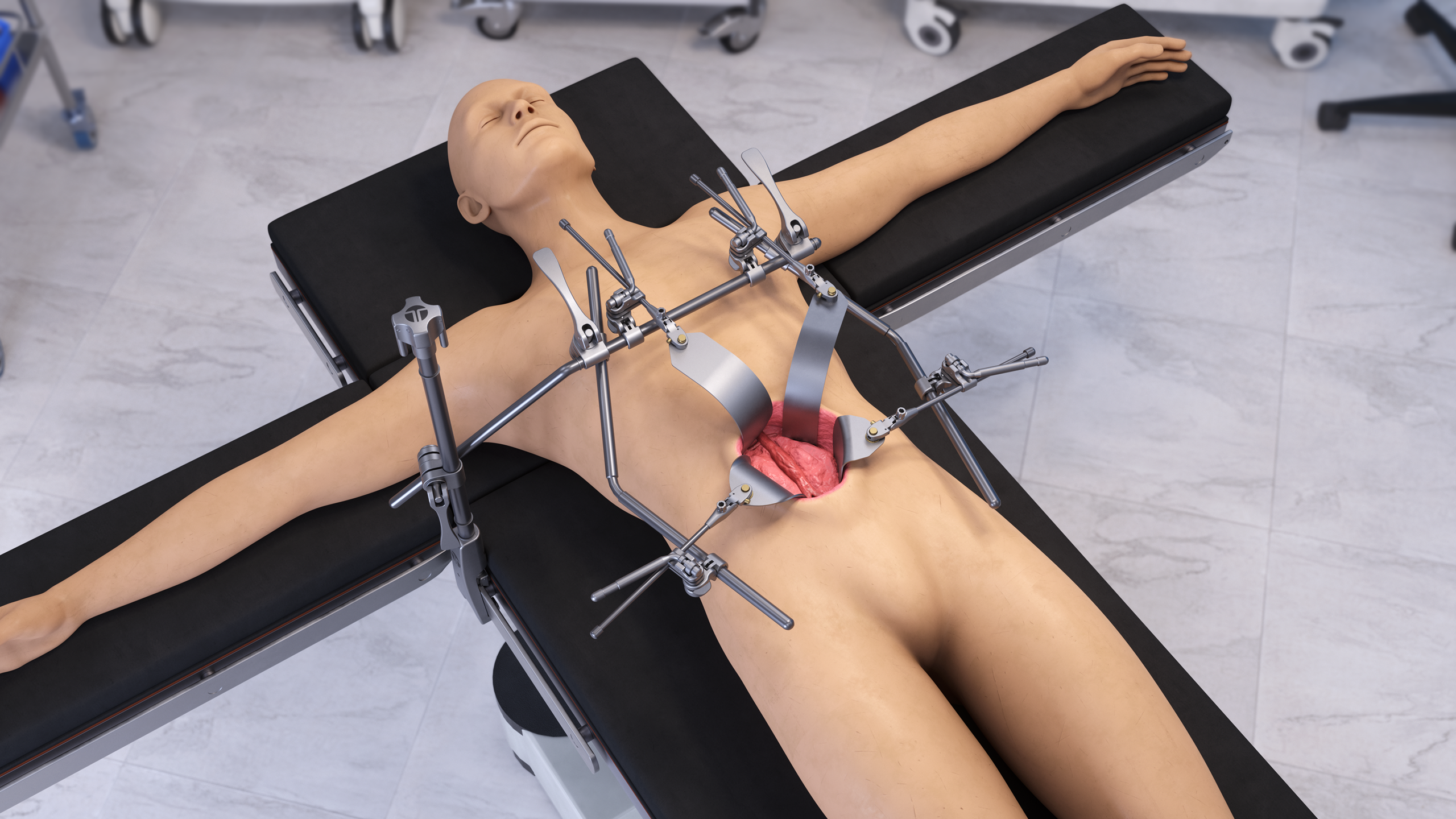
Thompson’s AAA OneFrame™ Retractor Set is a table-mounted retractor frame designed to provide stable, multi-planar surgical access in abdominal and trauma procedures. When evaluating table-mounted retractor sets, buyers should compare frame rigidity, arm configurability, blade ecosystem, positioning control, and OR footprint.
Understanding how frame architecture affects access over time helps surgical teams select retractors built for long, complex vascular procedures rather than short-duration exposures.
Why Frame Architecture Matters in Table-Mounted Retractor Sets
Table-mounted retractor sets are structural platforms that determine how surgical access is created, maintained, and adjusted. The frame serves as the mechanical foundation. Its rigidity, attachment method, and arm interface directly influence stability in deep operative fields.
In long thoracoabdominal or abdominal vascular procedures, exposure must remain consistent across extended durations. As anatomical focus shifts or depth increases, the retraction construct should allow controlled refinement without collapsing its overall geometry. Frame design dictates whether adjustments are incremental and precise or disruptive and time-consuming.
For this reason, evaluating table-mounted retractor sets begins with understanding the frame itself, how it mounts, how it distributes load, and how it supports modular arm positioning over time.
What Is Thompson’s OneFrame™?
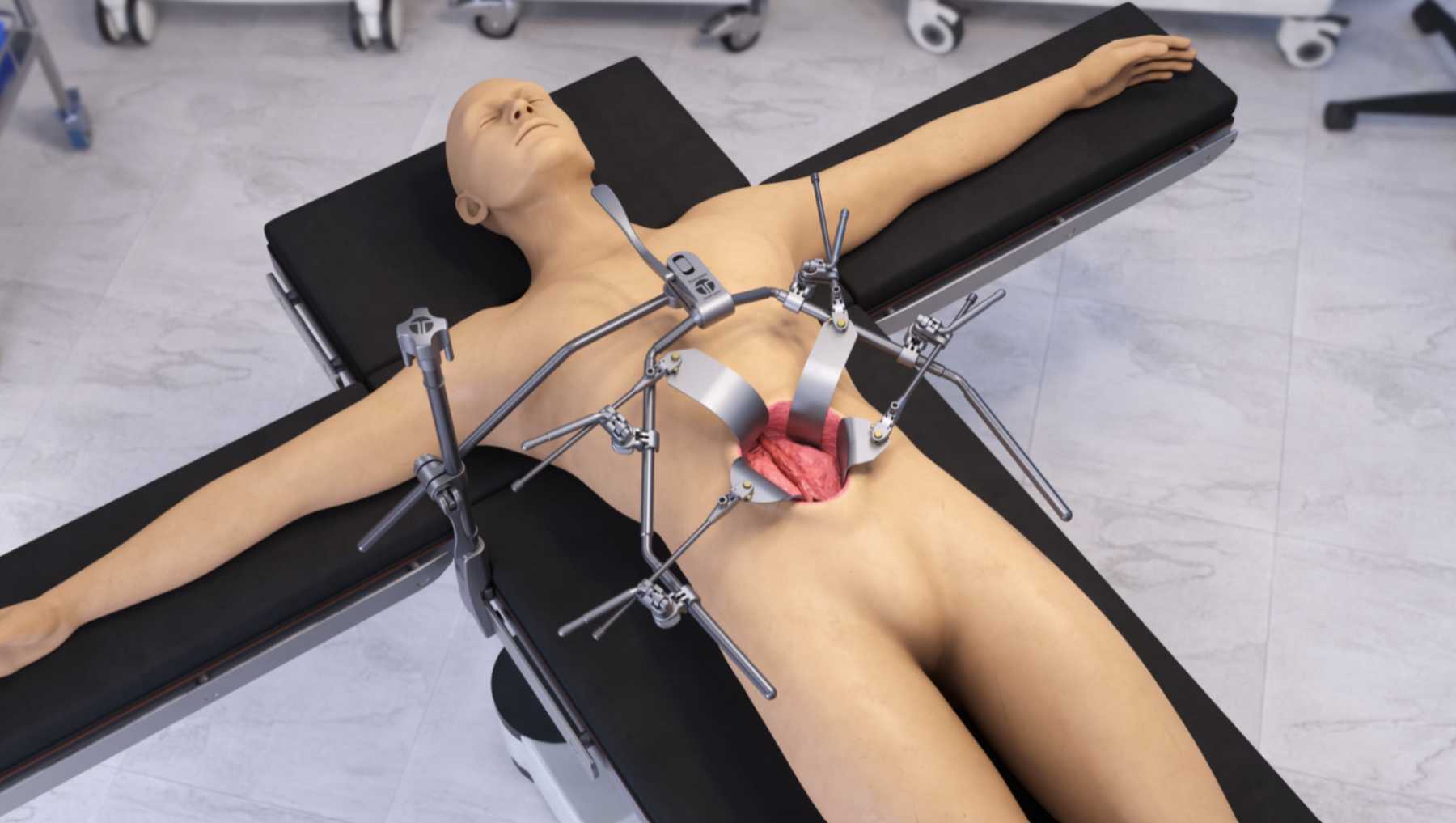
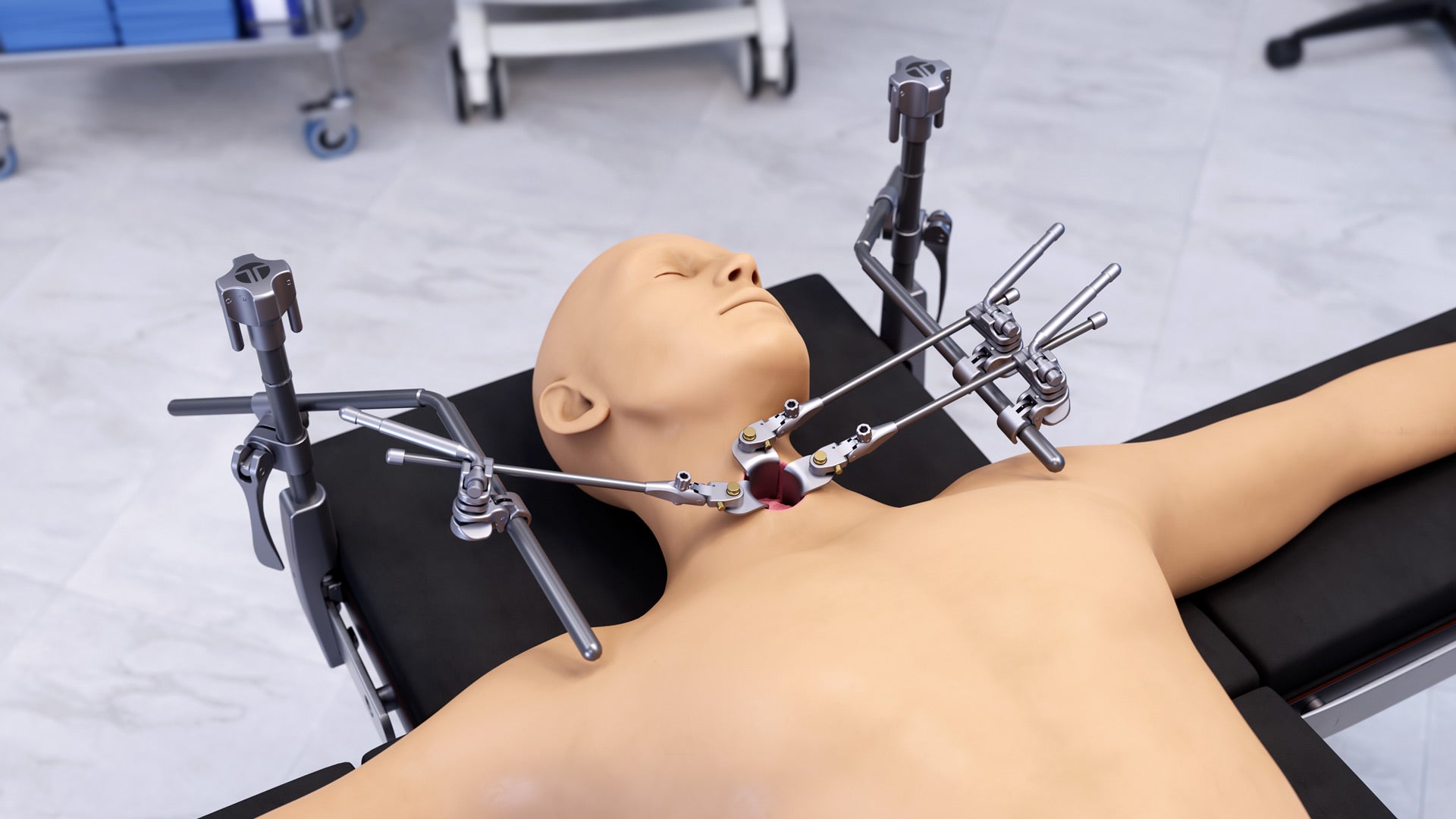
Thompson’s OneFrame is a table-mounted retractor frame designed to anchor directly to the OR bedrail and provide a stable, configurable platform for surgical access. As part of Thompson Surgical Instruments’ broader table-mounted ecosystem, OneFrame functions as the structural backbone of a retractor set, supporting adjustable arms and specialty-specific blade kits.
The design emphasizes:
● Secure bedrail mounting for sustained procedural stability
● A rigid frame structure engineered to resist flex under load
● Modular attachment points for independent retractor handle and blade positioning
● Configurable geometry that adapts to incision size and access depth
Rather than relying on a fixed, predefined shape, OneFrame allows surgical teams to position retractor handles along the frame to create controlled pull vectors. This structure supports multi-planed retraction and localized adjustments without requiring full disassembly when access demands change.
In abdominal, vascular, and trauma procedures, particularly those that extend in duration, a stable frame foundation helps maintain predictable surgical access as the case progresses.
What OneFrame Is Designed For
OneFrame is engineered for procedures in which surgical access must remain stable as anatomy, depth, and operative focus shift over time. This includes abdominal trauma, complex general surgery, and vascular exposure scenarios where a multi-hour duration is expected.
This high-quality retractor set is designed to support:
● Deep abdominal and retroperitoneal access
● Multi-directional retraction across broad incisional fields
● Controlled, incremental repositioning during extended procedures
● Reduced reliance on continuous manual retraction
Because OneFrame operates within Thompson’s table-mounted architecture, it integrates with Quick Angle Handles and SL/SO blade options to provide controlled engagement across planes. This modularity allows surgical teams to refine access without rebuilding the entire construct.
Blade Interface Options: Understanding SL and SO
Retractor blade design directly affects how surgical access is controlled during long procedures. In Thompson table-mounted retractor sets, blades connect to handles using one of two primary configurations: Swivel-Lock (SL) or Swivel-Only (SO).
Swivel-Lock (SL) blades can swivel during positioning and then lock into a fixed plane once the ideal angle is established. These blades feature small engagement teeth around the gold connection point (“nipple”), which allows the handle to secure the blade firmly in place. When locked, SL blades provide controlled, single-plane retraction, particularly useful when consistent directional pull is required over extended operative time.
Swivel-Only (SO) blades swivel freely but do not lock. They do not contain engagement teeth around the gold connection point. Instead of fixing the blade to a single plane, SO blades allow the retractor blade to align naturally with patient anatomy under sustained tension. This adaptive behavior can support balanced tissue engagement when prolonged, steady retraction is required.
In long thoracoabdominal or multi-phase abdominal procedures, the choice between SL and SO typically depends on the surgical team's preference for fixed directional control versus anatomical conformity during a specific phase of the case.
In cases involving prolonged exposure or evolving anatomical demands, OneFrame’s structural stability and configurability support repeatable setup and consistent geometry, two critical factors when evaluating table-mounted retractor sets for complex procedures.
What to Compare When Evaluating Table-Mounted Retractor Sets
When buyers evaluate table-mounted retractor sets, the decision should extend beyond basic specifications. The frame must support surgical access stability, configuration flexibility, and long-term reliability under load.
A practical evaluation checklist includes:
1. Frame Stability Under Load
● Does the frame resist flex in deep cavities?
● Is the bedrail attachment secure and repeatable?
● Does geometry remain consistent over hours?
2. Arm Configurability
● Can arms be positioned independently?
● Are adjustments localized or disruptive?
● Do joints hold tension during prolonged retraction?
3. Blade Ecosystem Compatibility
● Does the retractor support multiple blade lengths and profiles?
● Are locking and/or swivel interfaces available to support different retraction needs?
● Can blade choice evolve intraoperatively without replacing the frame?
4. OR Footprint & Access Preservation
● Does the frame maintain an open working space?
● Does hardware stay out of the instrument corridor?
● Can teams avoid repeated repositioning during phase transitions?
5. Standardization & Repeatability
● Does the platform support modular setup strategies?
● Can surgical teams build consistent constructs across cases?
● Is the retractor set designed for predictable assembly and disassembly?
OneFrame is engineered to address all of these evaluation points within a single structural platform, providing stable, repeatable surgical access for long, complex abdominal or vascular procedures.
OneFrame Within the Thompson Ecosystem
Thompson’s table-mounted retractor sets are built around a common architectural philosophy: a rigid frame mounted to the table, modular arms, and specialty-driven blade sets.
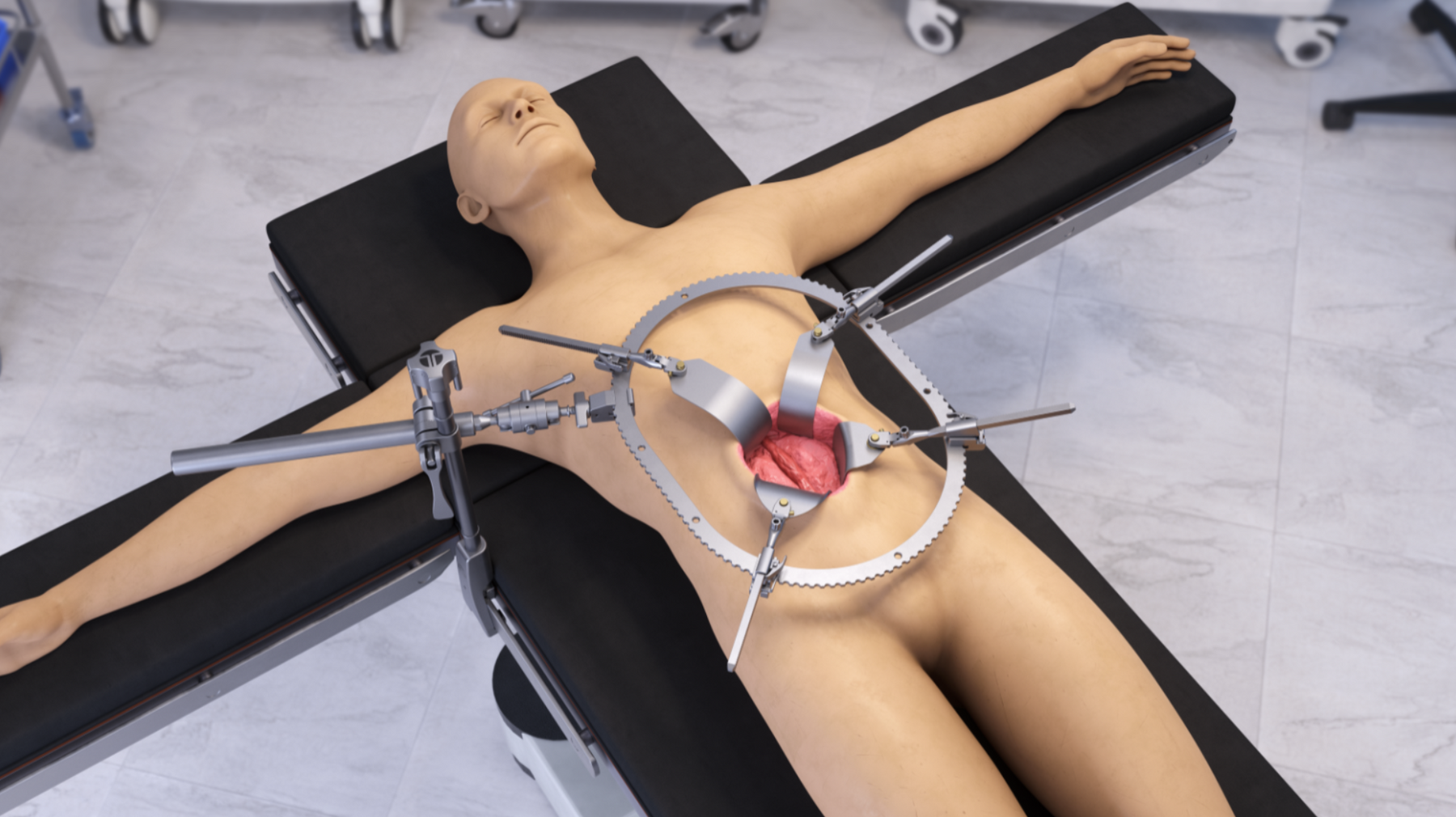
Within this ecosystem, OneFrame™, QuickFrame™, and RingTrack™ configurations each serve procedural needs based on anatomy and exposure goals. OneFrame emphasizes structural rigidity and configurable arm positioning in abdominal and trauma environments where deep access and multi-planar control are essential.
Rather than limiting the surgeon to a fixed geometry, OneFrame provides a stable foundation that adapts through arm placement and blade configuration, without compromising overall construct integrity.
This modular approach supports the broader question buyers are asking:
What retractor options exist for long, combined thoracoabdominal procedures?
The answer begins with a stable, table-mounted platform that maintains consistent surgical access across procedural phases. Evaluating table-mounted retractor sets requires more than comparing component lists. Frame architecture, arm configurability, blade interface options, and OR footprint directly influence how surgical access is created and maintained during complex procedures. This is why Thompson table-mounted retractors can be evaluated on a 30-day free trial, so surgical teams can see firsthand why 97% of users agree that the Thompson Retractor delivers better patient outcomes.
OneFrame is designed for sustained stability, modular positioning, and repeatable setup in demanding operative environments. When surgical teams standardize around a mechanically sound platform, they reduce variability, protect workflow continuity, and support consistent access throughout extended abdominal and vascular cases.
Thompson Surgical Instruments has led the advancement of table-mounted retraction for more than 60 years, guided by our mission of the Relentless Pursuit of Perfection. We design stable, configurable retractor sets that deliver uncompromising performance across long, complex procedures while supporting a predictable workflow in the operating room. Contact us to learn how Thompson’s table-mounted retractor sets support reliable surgical access.
Share:
A Buyer’s Checklist for Retractors for Long TAAA Surgeries: Stability, Reach, and OR Footprint
Sterile Processing & Turnover for Large Table-Mounted Retractor Sets in Long Aortic Cases: What SPD Teams Should Standardize