



Trauma Procedures
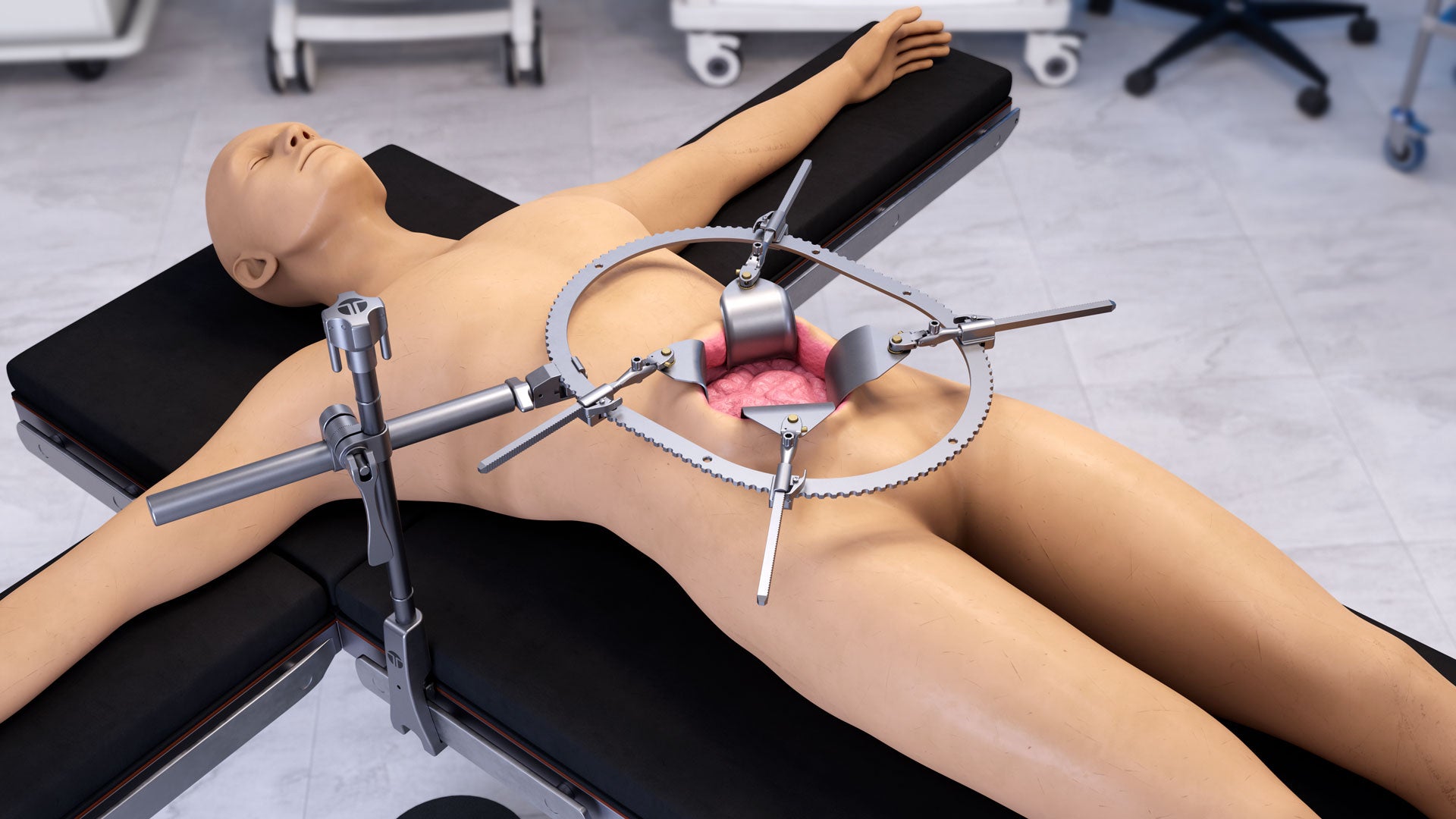
Table-Mounted Retractor Sets for Trauma Procedures
Trauma procedures require stable exposure under high-pressure conditions. In abdominal trauma cases, surgical teams may need to manage changing anatomy, significant tissue load, and limited time to establish reliable access. Table-mounted retractor sets provide hands-free retraction for trauma surgeries by anchoring directly to the operating room table, allowing the team to maintain stable exposure without continuous manual retraction
Thompson Retractor Instruments offers trauma retractor sets for abdominal trauma procedures, including RingTrack, Quick Frame, and OneFrame configurations. Each set supports a different approach to trauma exposure while maintaining table-mounted stability, controlled visualization, and trauma-specific blade positioning.
Why Trauma Procedures Require Stable, Hands-Free Retraction
Trauma surgeries demand fast setup, strong retraction, and reliable visibility. Unlike elective procedures with more predictable anatomy and workflow, trauma cases can change quickly as exposure deepens or the surgical team addresses additional injury patterns.
Abdominal trauma procedures may involve wide operative fields, heavy tissue load, and shifting access requirements. Retraction must hold steady while still allowing the team to adapt as the case evolves.
Effective trauma retraction must support:
- Stable exposure under heavy retraction
- Hands-free positioning that reduces dependence on manual holding
- Controlled visualization of the surgical site
- Fast adaptation as exposure needs change
This balance of strength, stability, speed, and control is central to abdominal trauma exposure.

What Is a Table-Mounted Retractor Set for Trauma Surgery?
A table-mounted retractor set attaches to the operating room bedrail to provide stable, hands-free retraction throughout the procedure. This setup provides surgical teams with a fixed-frame foundation that maintains exposure throughout the case.
Each trauma retractor set may include:
- A rail-mounted frame foundation
- Retractor handles or arms for positioning
- Trauma blade kit options
- Specialized blades in a range of sizes and shapes
Compared to handheld retraction, a table-mounted trauma retractor set helps maintain exposure without continuous manual force. This matters in trauma procedures where the team needs stable access while managing visualization, instrumentation, and changing workflow demands.
Retraction Strategy Across Abdominal Trauma Procedures
Abdominal trauma retraction strategy depends on the operative field, tissue load, setup speed, blade positioning needs, and team familiarity with the components. Some cases require broad ring-style exposure around the surgical site, while others benefit from a stable frame platform or a fast, low-profile setup.
Thompson’s trauma procedure configurations include:
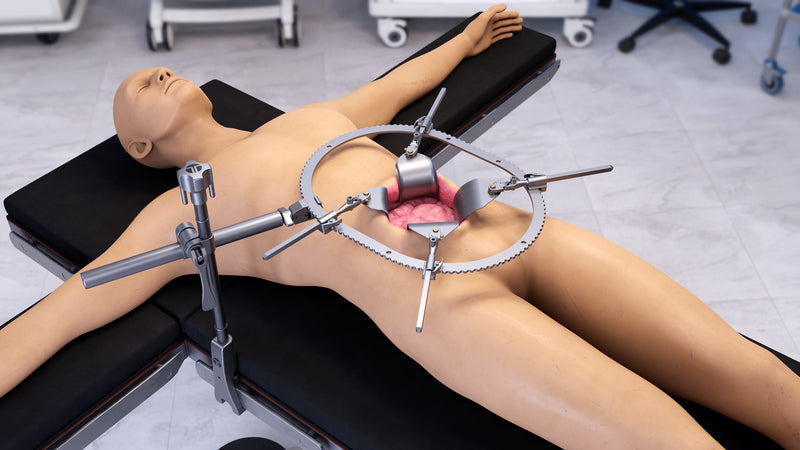
- Trauma RingTrack Retractor Set
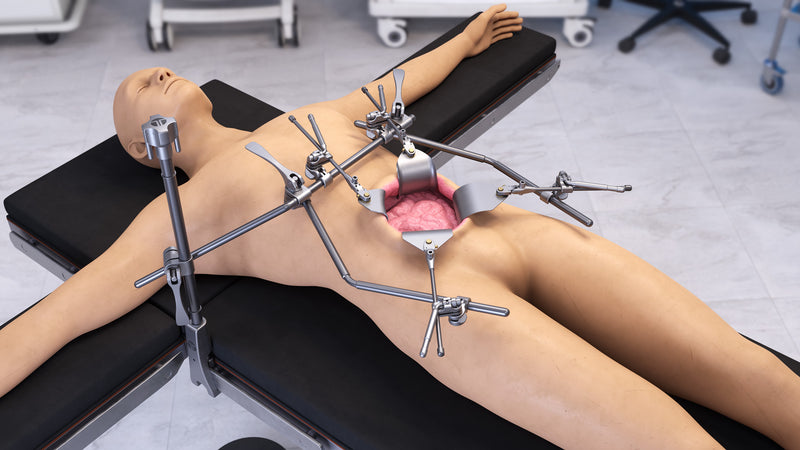
- Trauma Quick Frame Retractor Set
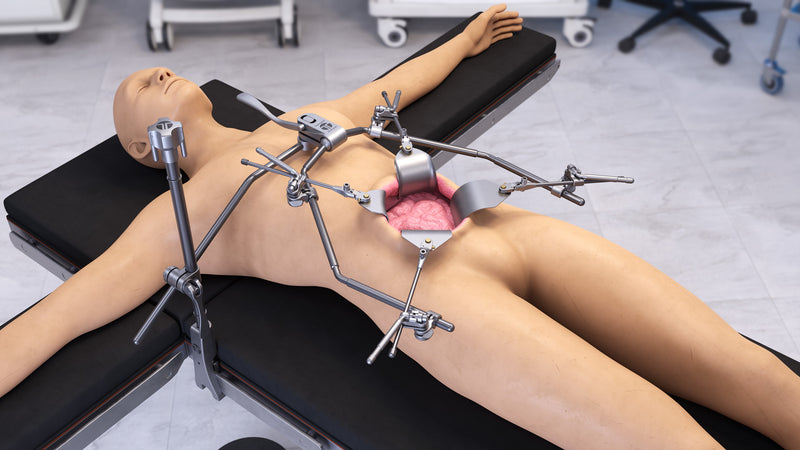
- Trauma OneFrame Retractor Set
Each configuration supports stable, hands-free retraction, but each organizes exposure differently based on the demands of the procedure. The trauma blade set also provides surgical teams with a variety of blade options for general, vascular, and liver-style exposures, so the team can adapt quickly when trauma anatomy or access requirements change.
Trauma RingTrack Retractor Set
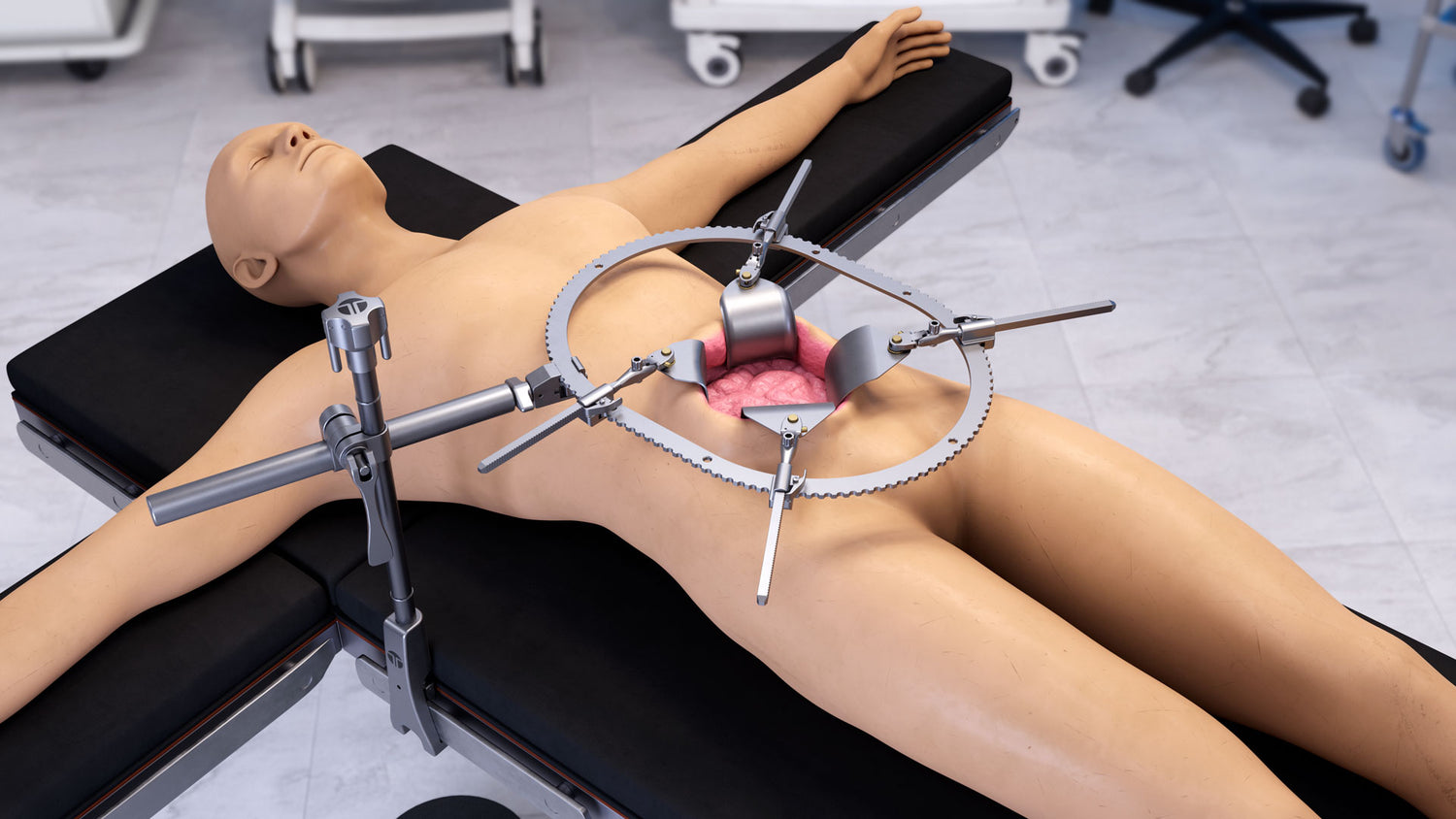
What Is the Trauma RingTrack Retractor Set?
The Trauma RingTrack Retractor Set combines a familiar ratcheted ring design with specialized trauma blades. This configuration is commonly used because a ring-style frame can support a wide variety of abdominal trauma procedures while giving surgeons multiple retraction points around the operative field.
RingTrack retraction can be especially useful when the team needs broad access, fast adaptation, and strong retraction under changing conditions. The trauma blade set gives surgeons a wide range of blade sizes and shapes, supporting quick adjustments when exposure needs shift during the case.
Retraction Requirements for Ring-Based Trauma Exposure
Trauma procedures using ring-style retraction require:
- Broad access around the operative field
- Stable positioning under heavy retraction
- Flexible blade placement around the surgical site
- Low-profile handle positioning that preserves working space
- Fast adaptation when exposure needs change
The Trauma RingTrack Retractor Set supports these requirements with ring-style positioning and specialized trauma blades. It gives surgeons flexibility around the operative field while maintaining stable, hands-free exposure in demanding abdominal trauma procedures
Thompson’s RingTrack Quick Angle Handles adjust at the head of the retractor to help keep the handle profile low and clear of the operative field. This can help preserve working space around the surgical site when surgeons need to angle blades during demanding trauma exposure.
Sterile processing readiness matters in trauma workflows. OR and SPD teams should be familiar with the RingTrack components, blade set, and setup sequence so that the correct parts are ready when both time and exposure matter. Thompson provides training and support for the consistent setup of retractor sets for trauma surgeons.
Trauma Quick Frame Retractor Set
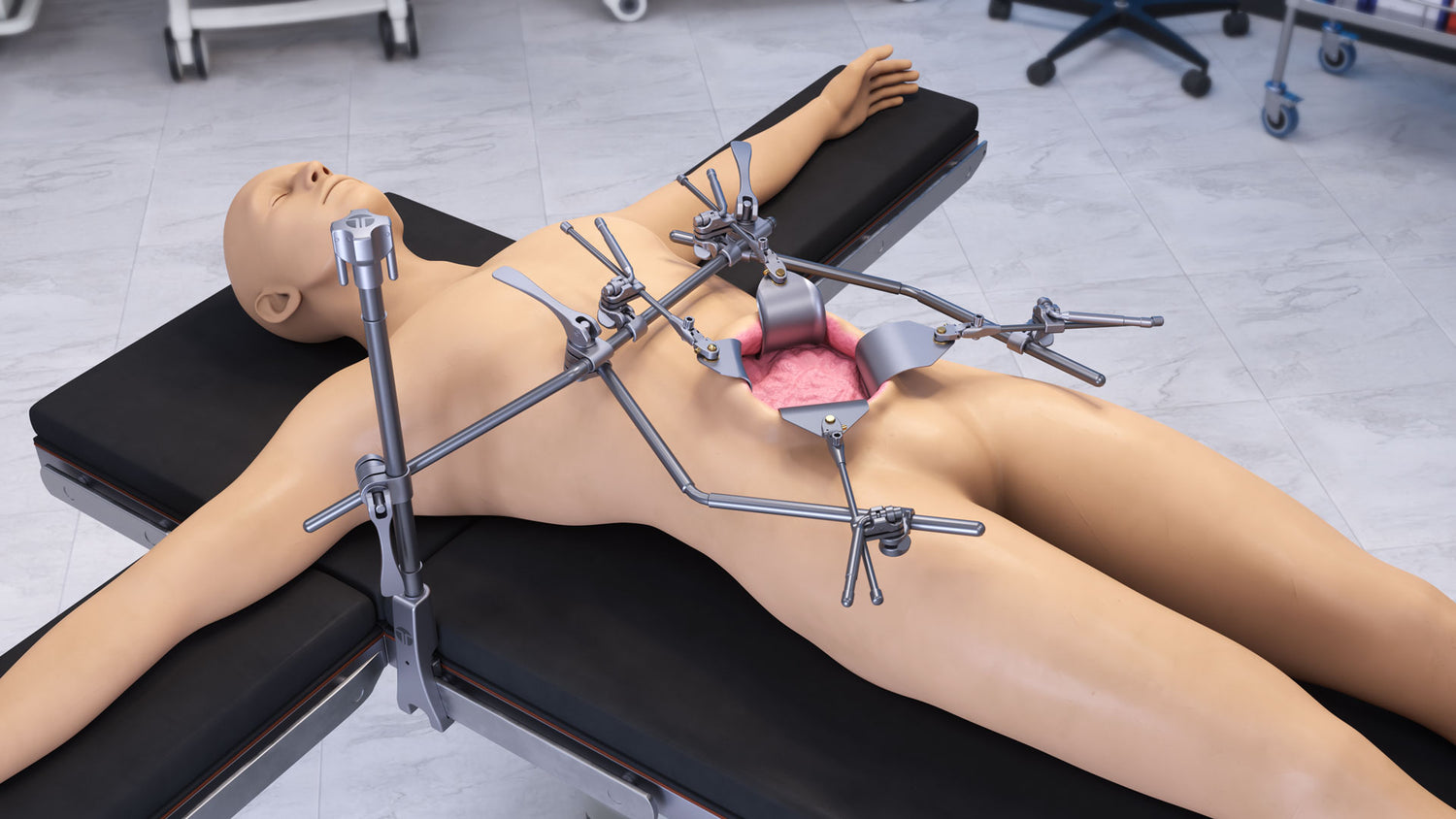
What Is the Trauma Quick Frame Retractor Set?
The Trauma Quick Frame Retractor Set pairs a familiar setup with blades designed specifically for trauma procedures. Built on the Quick Frame platform, this retractor set provides secure, stable retraction with strength designed to withstand heavy tissue loads.
For complex trauma surgery, the Quick Frame configuration supports stable control and efficient exposure. It provides the surgical team with a table-mounted foundation while allowing the surgeon to position trauma blades according to the case's exposure requirements.
Retraction Requirements for Quick Frame Trauma Exposure
Trauma procedures using Quick Frame retraction require:
- Stable table-mounted exposure
- Low-profile blade control
- Customizable trauma blade positioning
- A blade set that supports quick adaptation
The Trauma Quick Frame Retractor Set supports these requirements with a low-profile frame and controlled blade placement. This configuration is designed to deliver stable exposure and surgical control while helping teams move efficiently during trauma procedures.
The variety of blades also supports practical trauma needs. Surgical teams may need general exposure, vascular access, or liver-oriented blade options depending on the injury pattern and operative field. Having the right blades ready, organized, and familiar to both OR and SPD teams can support faster setup and smoother case flow.
Trauma OneFrame Retractor Set
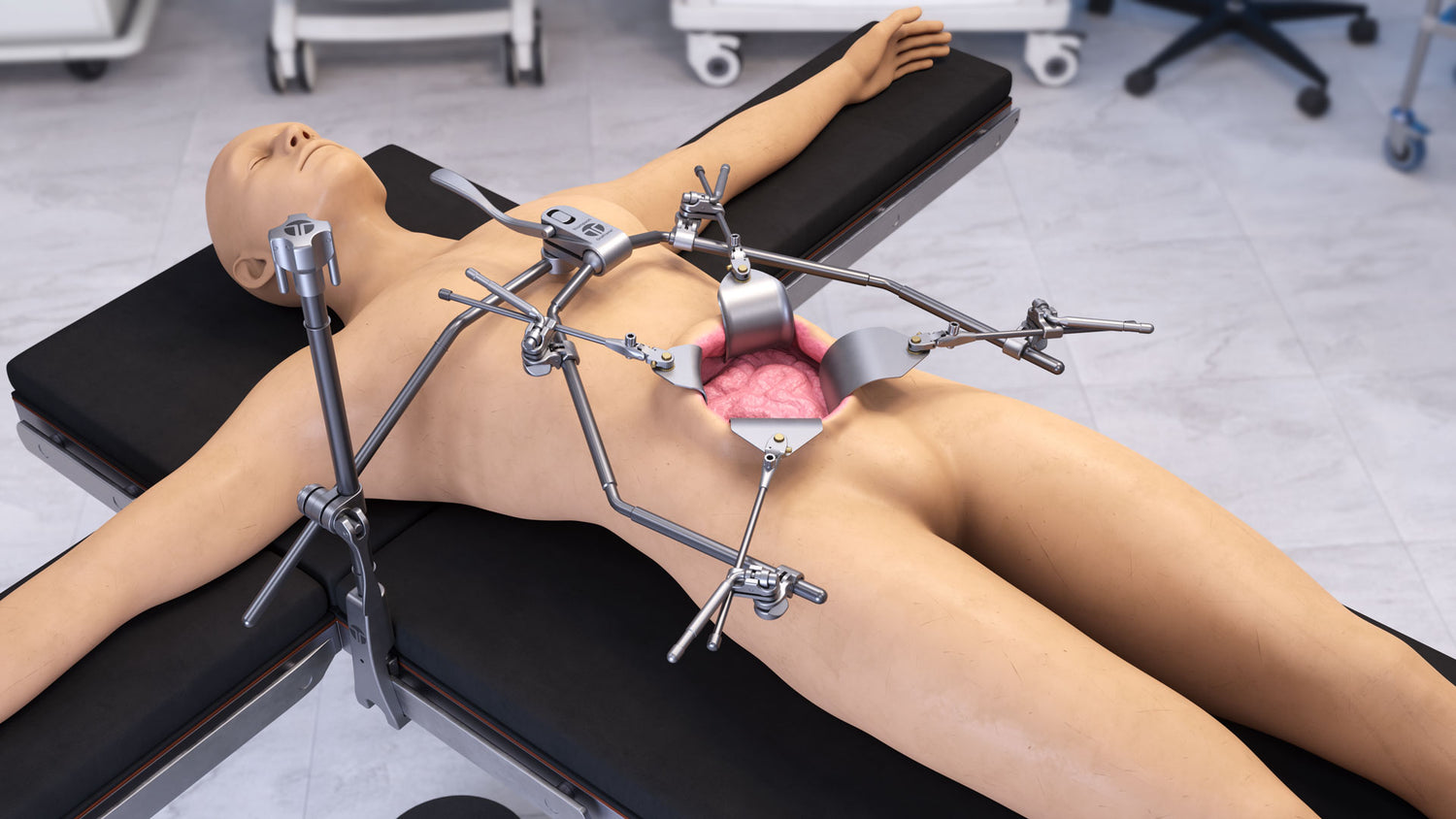
What Is the Trauma OneFrame Retractor Set?
The Trauma OneFrame Retractor Set is designed for fast, easy setup in the OR. This low-profile, table-mounted frame supports visibility needs across many trauma procedures and uses trauma blades with S-Lock Quick Angle Handles to help surgeons control each blade’s exact placement.
OneFrame retraction is useful when the surgical team needs stable exposure without slowing setup. In trauma cases, that combination matters because the team must establish access quickly while preserving working space around the field.
Retraction Requirements for OneFrame Trauma Exposure
Trauma procedures using OneFrame retraction require:
- Fast, efficient setup
- Stable control in high-intensity procedures
- Strong retraction under heavy tissue load
- Streamlined exposure for complex trauma surgery
- Reliable blade positioning as the case evolves
- Team familiarity with frame and blade components
The Trauma OneFrame Retractor Set supports these needs with a stable table-mounted configuration and trauma-specific blade options. This setup is designed to help surgical teams maintain reliable exposure while managing the demands of complex abdominal trauma cases
OneFrame retraction may be especially useful when the team needs a familiar platform with dependable control. As with any trauma retractor set, success depends on more than just the frame. OR and SPD teams should understand the components, blade options, and setup process so the set is ready for use when needed.
Comparing Trauma Retractor Set Configurations
The right trauma retractor set depends on the procedure, working space, tissue load, setup needs, blade requirements, and surgeon preference. Each Thompson configuration provides stable, hands-free retraction, but each organizes exposure differently.
The Trauma RingTrack Retractor Set supports ring-style exposure in high-demand trauma cases requiring controlled visualization, broad access, and rapid adaptation. The Trauma OneFrame Retractor Set supports fast setup, low-profile blade control, and customizable trauma blade positioning. The Trauma Quick Frame Retractor Set provides a stable frame platform for complex trauma surgery and heavy tissue loads.
This allows surgical teams to match the retractor set to the demands of the case rather than forcing a single setup for every trauma procedure.
Optimizing Retraction for Trauma Procedures
Choosing the Right Retractor Set for Trauma Procedures
Selecting a table-mounted retractor for trauma surgery depends on urgency, exposure depth, tissue load, available working space, and the type of blade control required. In abdominal trauma cases, the retractor set must provide stable access while allowing the team to adapt quickly as the case changes.
RingTrack configurations support familiar ring-style exposure with broad access around the operative field. Quick Frame configurations support fast setup with low-profile blade control and flexible blade positioning. OneFrame configurations provide stable control for heavy tissue loads and complex trauma surgery.
Trauma cases require a variety of blade sizes and styles, including general, vascular, and liver-oriented exposure options. Longer or more specialized blades may be needed when exposure deepens, while low-profile handles and precise blade control help preserve working space around the field.
Sterile processing and readiness should be considered as part of the retractor strategy. Trauma teams benefit when OR and SPD staff are familiar with the parts, setup sequence, blade options, and reprocessing workflow before the case begins.
Evaluate Trauma Retractor Sets in Your OR
Thompson Retractor designs and manufactures table-mounted retractor sets for abdominal trauma procedures. These configurations are built to support stable, hands-free exposure with trauma-specific blade options and reliable frame control.
Surgical teams can evaluate Thompson retractor sets through a 30-day clinical trial, with training and case support included. This allows teams to assess performance directly in their own operating environment before making a long-term decision.
Thompson Retractor engineers table-mounted retractor sets designed to provide stable, hands-free exposure in complex trauma procedures. We support surgical teams with configurations designed by surgeons for strength, control, and efficient setup. Contact Us today to learn more about a table-mounted retractor for trauma surgery.
Clinical Evaluation & Quotes
Experience the Thompson Retractor with a complimentary 30-day Clinical Evaluation.
Select the procedure that best fits your needs, and our team will help coordinate the appropriate table-mounted retractor set for your facility. We will provide training for your OR and SPD teams, support your evaluation, and help ensure your team has what it needs throughout the trial period.
Available for U.S. customers only.
Select the procedure that best fits your clinical needs.
Thompson Surgical Instruments engineers table-mounted retractor sets designed to provide stable, hands-free retraction in complex open procedures.
We support surgical teams with modular configurations, training, and clinical evaluations.
Contact us today to learn more about our table-mounted retractor sets for liver procedures.