



Cardiothoracic Procedures
Cardiothoracic Retractor Sets for Cardiac and Chest Wall Procedures
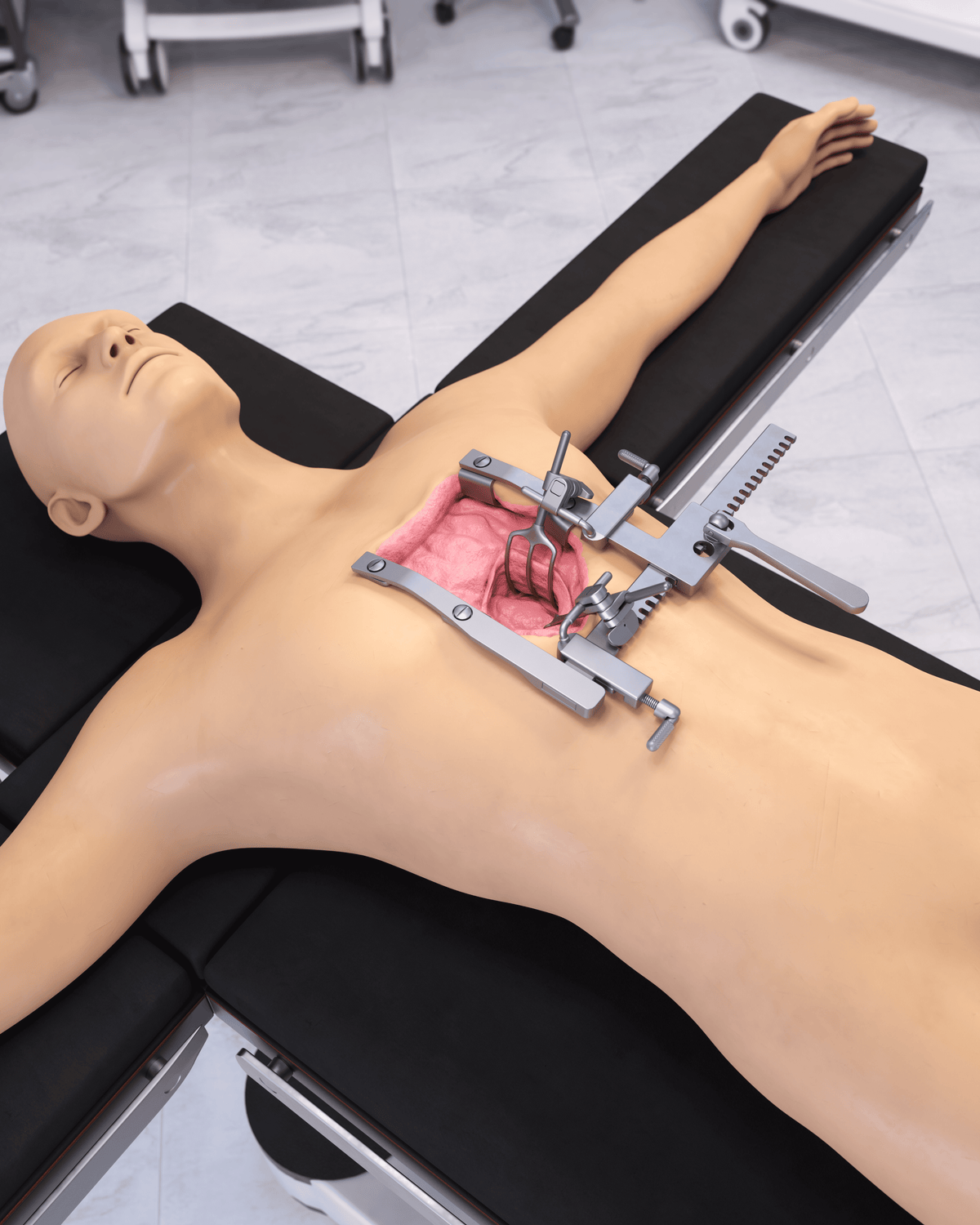
Thompson cardiothoracic retractor sets support distinct exposure requirements in cardiac and chest wall surgery. The Bolling Mitral Valve Retractor Set provides low-profile, independently positioned retraction for mitral valve and related cardiac procedures, while the PectusAssist® and Pectus Elevator Retractor Sets provide table-mounted support for chest wall correction.
Thompson cardiothoracic configurations support procedures including:
- Mitral valve repair and replacement
- MAZE procedures
- Coronary artery bypass grafting (CABG)
- Pectus excavatum correction
- Pectus carinatum correction
The appropriate configuration depends on the surgical access, operative target, and whether the procedure requires intracardiac retraction, chest wall elevation, or compression.
Why Cardiothoracic Procedures Require Procedure-Specific Retraction
Cardiac and chest wall procedures require very different retraction strategies. Mitral valve surgery requires controlled access within a deep cardiac field while preserving working space above a sternotomy or thoracotomy. Pectus procedures require controlled movement of the sternum or anterior chest wall through elevation or compression.
Effective cardiothoracic retraction may need to support:
- Stable positioning throughout the required exposure phase
- Controlled retraction direction and incremental adjustment
- Low-profile access around the cardiac field
- Working space for instrumentation and procedural steps
- Components selected for the surgical approach and patient anatomy
The mounting architecture also differs. Bolling cardiac attachments integrate with a compatible sternal or rib spreader, while Thompson pectus configurations use a bilateral frame mounted directly to the OR table.
Types of Cardiothoracic Retractor Sets

Thompson offers three primary cardiothoracic configurations:
- Bolling Mitral Valve Retractor Set: Low-profile cardiac retraction for sternotomy and thoracotomy access
- PectusAssist® Retractor Set: Table-mounted elevation or compression for pectus excavatum and pectus carinatum
- Pectus Elevator Retractor Set: Table-mounted 2-in-1 elevation or compression support for pectus excavatum
Each configuration is built around a different exposure requirement rather than a common frame design.
Bolling Mitral Valve Retractor Set
Developed with Steven F. Bolling, MD
The Bolling Mitral Valve Retractor was developed through collaboration between Thompson Retractor Instruments and Steven F. Bolling, MD, a cardiac surgeon specializing in mitral valve repair and reconstruction. The collaboration focused on creating the low-profile, stable exposure required for complex mitral valve techniques.
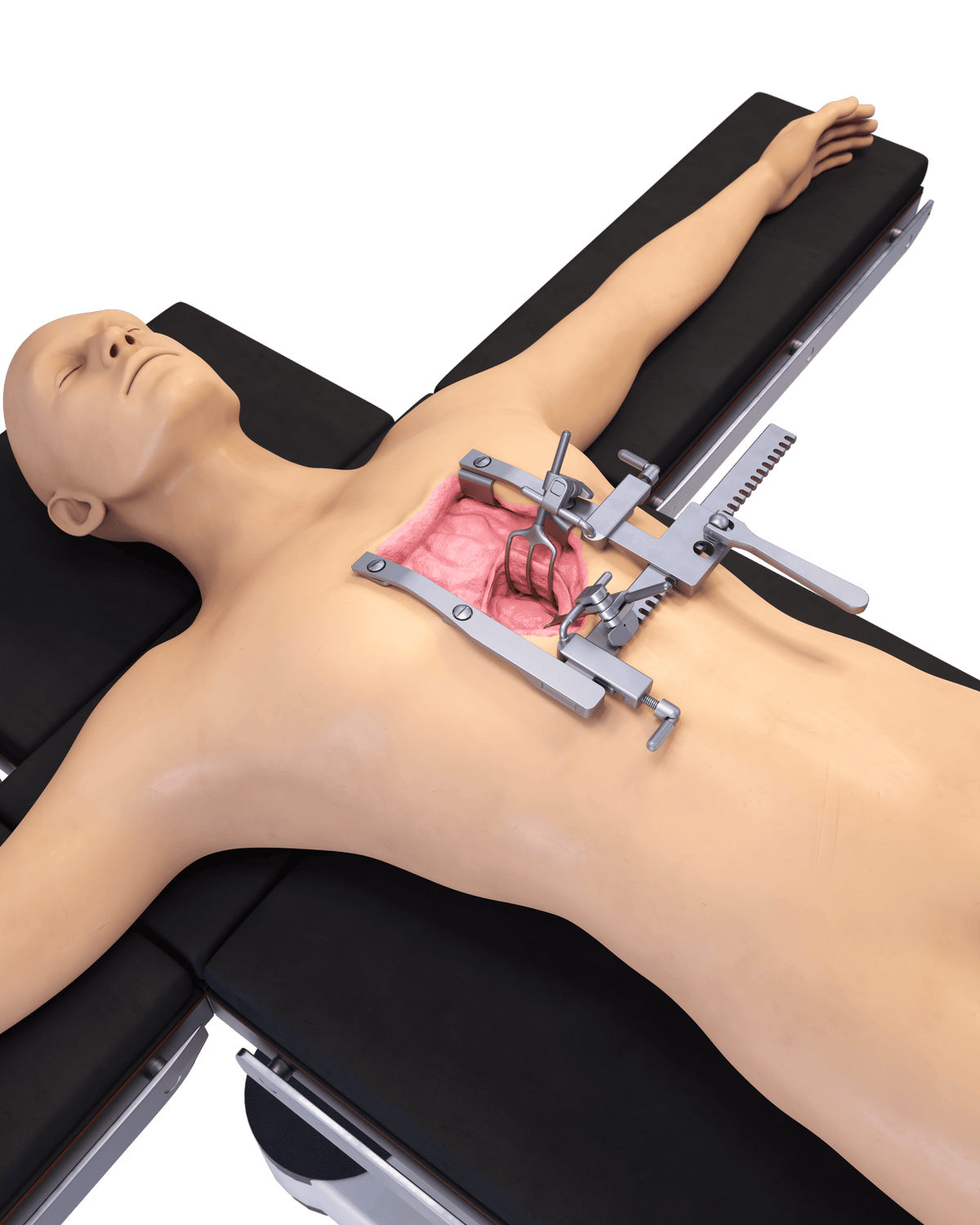
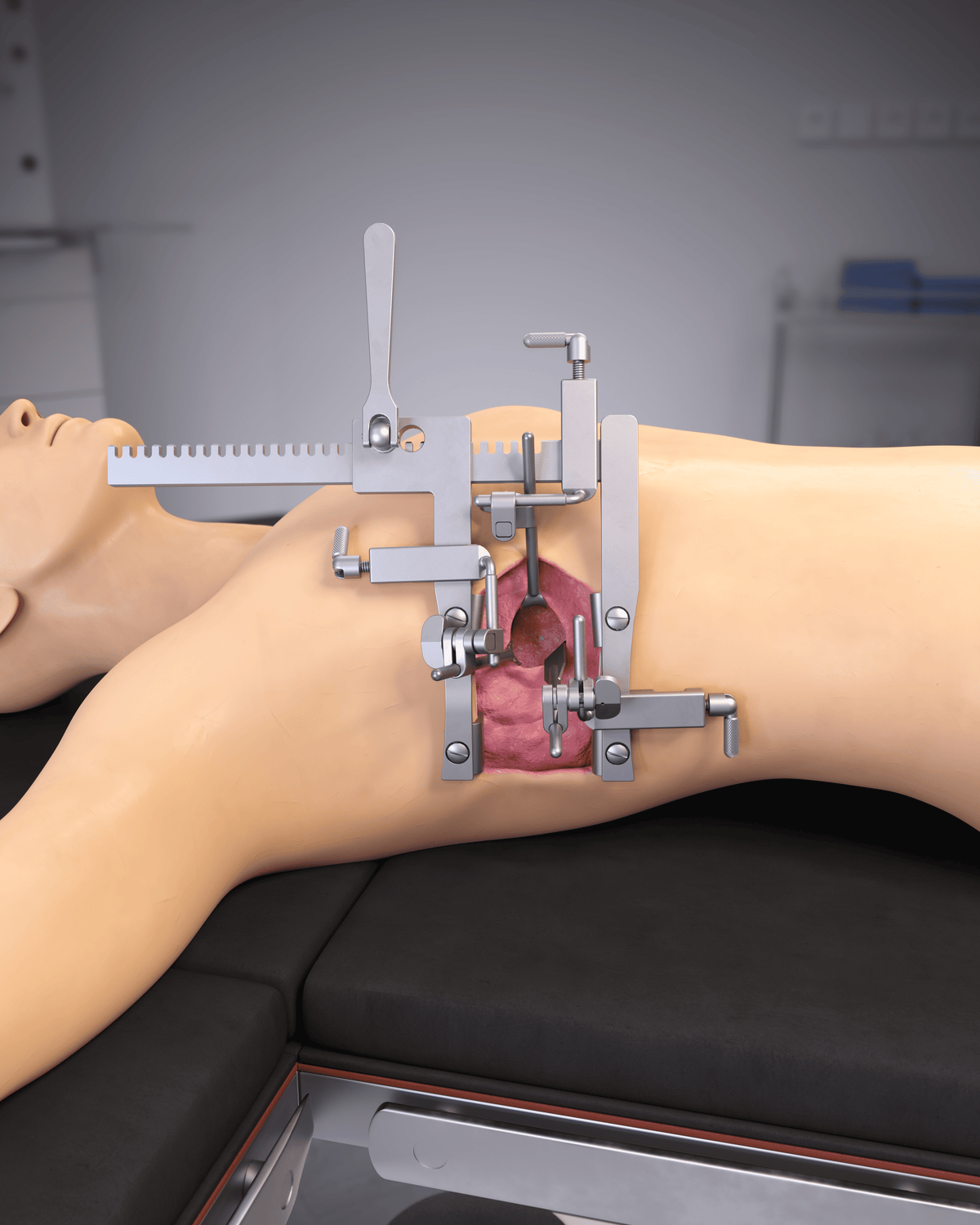
The resulting configuration mounts directly to compatible sternal or rib spreaders, keeping the attachment architecture close to the chest rather than adding a separate frame above the surgical field. Short retractor handles, configurable CV Clamp attachments, and independently positioned Universal Joints allow the setup to be adapted to the surgical access and chest depth.
Sternotomy and Thoracotomy Access
The Bolling Mitral Valve Retractor Set can be configured for both sternotomy and thoracotomy access. Thompson’s sternotomy configuration integrates the Bolling attachments with a sternal spreader, while the thoracotomy configuration uses compatible attachments with a rib spreader.
Within those access routes, the configuration can support different approaches to mitral valve exposure, including:
- Direct atrial / left atrial approach
- Transseptal approach
This distinction allows the frame, blade, and handle arrangement to be matched to both the route into the chest and the specific cardiac exposure required.
Retraction Requirements for Mitral Valve Procedures
Mitral valve repair and replacement require direct access to deep cardiac anatomy while maintaining room for valve assessment, reconstruction, or replacement.
Mitral valve retraction may need to support:
- Low-profile positioning for sternotomy or thoracotomy access
- Controlled atrial or septal retraction
- Independent positioning of multiple retraction points
- Blade and handle lengths matched to chest depth
- Compatibility with the selected sternal or rib spreader
Low-Profile, Configurable Cardiac Retraction
CV Clamp L-Bar, Mini L-Bar, and T-Bar options mount to compatible sternal or rib spreaders and provide attachment points for Universal Joints. Multiple attachment styles allow the configuration to be adapted to surgeon preference, operative access, and the available working area.
Universal Joints allow individual retractors to be positioned independently. The joints may also be oriented so the adjustment knob remains below the attachment bar, helping keep the retractor handles and hardware close to the spreader and clear of the primary surgical workspace.
The Bolling set is designed for use with a wide variety of sternal and rib spreaders, supporting multiple cardiac configurations and approaches.
Bolling Retractor Blade Options
The Bolling Blade Kit includes several cardiac blade styles:
- Malleable Paddle retractors for atrial or septal retraction
- Cushing retractors for atrial retraction during a transseptal approach
- Basket retractors for left atrial wall retraction
Malleable Paddle, Cushing, and Basket retractors are available with 5-inch, 6½-inch, and 8-inch handles. Basket retractors are also available in small, medium, and large widths, allowing blade and handle selection to match patient anatomy and chest depth.
The Bolling configuration supports mitral valve repair, mitral valve replacement, MAZE, CABG, and related cardiac procedures requiring focused, independently controlled retraction.
Table-Mounted Retraction for Pectus Procedures
The Thompson Laparoscopic Retractor Set provides hands-free support for compatible scopes, laparoscopic instruments, and Nathanson hooks. Quick attachment changes allow the surgical team to select the holder and attachment that best fit the procedure, port placement, and required range of movement.
The set can be configured with flexible, rigid, or articulating holding options. A single holder may support one scope, instrument, or Nathanson hook, while two independently positioned holders can support separate components when the procedure requires more than one support point.
PectusAssist® Retractor Set
Elevation and Compression for Chest Wall Correction
The PectusAssist® Retractor Set is a 2-in-1 configuration designed for surgical correction of both pectus excavatum and pectus carinatum.
The reversible attachment includes:
- A lifter plate for controlled elevation
- A compression plate for controlled downward pressure
- A Micro-Adjustable mechanism for incremental positioning
For pectus excavatum, the lifter configuration supports controlled elevation of the depressed chest wall. For pectus carinatum, the attachment can be reversed to provide compression over the protruding sternum.
A published report describing the use of Thompson’s PectusAssist® during minimally invasive pectus carinatum repair details a table-mounted configuration used to maintain controlled mechanical compression during the Abramson procedure.
Retraction Requirements for Pectus Correction
Pectus correction may require:
- Bilateral support from the OR table
- Controlled chest wall elevation or compression
- Alignment with the intended correction point
- Incremental adjustment during the procedure
- Working space for tunneling, bar measurement, or placement
The table-mounted frame allows the attachment to remain established while the chest wall position is adjusted according to the procedure.
Pectus Elevator Retractor Set
Controlled Support for Pectus Excavatum
The Pectus Elevator Retractor Set is designed for pectus excavatum procedures and uses the same bilateral table-mounted foundation.
The 2-in-1 Pectus Elevator includes both a lifter and compression plate. Flipping the attachment changes the direction of support, allowing controlled elevation or compression according to the requirements of the correction. A Micro-Adjustable mechanism allows the surgical team to refine positioning incrementally.
Retraction Requirements for Pectus Excavatum
Pectus excavatum correction may require:
- Stable bilateral support
- Controlled elevation of the sternum and anterior chest wall
- Incremental positioning during correction
- Alignment with the planned elevation point
- Clearance for thoracoscopic visualization and bar placement
The table-mounted frame provides a stable foundation while the Pectus Elevator is positioned according to the planned correction and patient anatomy.
Comparing Cardiothoracic Retractor Configurations
These configurations are designed for different surgical requirements. Selection begins with the procedure, surgical access, mounting architecture, and required direction of retraction.
| Configuration | Mounting Foundation | Primary Application | Retraction Function |
|---|---|---|---|
| Bolling Mitral Valve Retractor Set | Compatible sternal or rib spreader | Mitral valve repair/replacement, MAZE, CABG | Low-profile atrial, septal, and cardiac retraction |
| PectusAssist® Retractor Set | Bilateral table-mounted frame | Pectus excavatum and pectus carinatum | compression |
| Pectus Elevator Retractor Set | Bilateral table-mounted frame | Pectus excavatum | Controlled elevation or compression |
Optimizing Retraction for Cardiothoracic Procedures
Cardiothoracic setup should begin with the surgical access and required exposure.
For Bolling cardiac procedures, OR teams should consider the sternotomy or thoracotomy setup, compatible sternal or rib spreader, chest depth, blade style, handle length, and atrial or septal exposure requirements.
For pectus procedures, setup centers on bilateral table access, crossbar alignment, the intended correction point, and whether elevation or compression is required.
A repeatable setup also helps OR and SPD teams identify the appropriate attachments, blades, frame components, and tray configuration before the case.
Choosing the Right Cardiothoracic Retractor Set
Cardiothoracic retractor selection should begin with the procedure rather than a common frame preference.
Key considerations include:
- Cardiac versus chest wall procedure
- Sternotomy or thoracotomy access
- Direct atrial or transseptal exposure
- Required elevation, compression, or intracardiac retraction
- Spreader or OR-table compatibility
- Patient anatomy and chest depth
- Blade or attachment requirements
- OR setup and SPD workflow
The appropriate cardiothoracic retractor set should provide the required exposure or chest wall support while preserving working space around the operative field.
Why Stable Retraction Matters in Cardiothoracic Procedures
Cardiac valve exposure and chest wall correction place very different mechanical demands on a retractor configuration. Mitral valve procedures require low-profile, independently controlled retraction around a confined cardiac field, while pectus correction requires stable elevation or compression from a bilateral table-mounted foundation.
Thompson cardiothoracic retractor sets provide procedure-specific configurations for these distinct requirements, allowing the surgical team to select the mounting architecture, blades, attachments, and adjustment strategy that best fit the case. Our experienced team offers consultation and assistance in choosing the right cardiothoracic retractor set for your procedures. We work with surgeons and OR teams to continually improve the design and engineering of our retractor set configurations.
Clinical Evaluation
A clinical evaluation allows surgeons and OR teams to assess a cardiothoracic retractor set during representative procedures before making a long-term decision.
Thompson offers a 30-day Clinical Evaluation for U.S. customers. The evaluation includes coordination of the appropriate configuration, OR and SPD training, and support throughout the trial period. Thompson’s current procedure pages use this same clinical-evaluation pathway across specialty retractor sets.
Teams can assess mounting compatibility, blade or attachment selection, working space, setup repeatability, staff familiarity, tray organization, and reprocessing workflow.
Frequently Asked Questions
What retractor is used for mitral valve surgery?
Mitral valve surgery may use a sternal or rib spreader with specialized atrial and septal retractors. The Bolling Mitral Valve Retractor Set attaches to compatible spreaders and provides low-profile, independently positioned retractors for sternotomy and thoracotomy access, including direct atrial and transseptal approaches.
What is the difference between PectusAssist® and the Pectus Elevator?
Both use a bilateral table-mounted frame and provide controlled elevation or compression. PectusAssist® is designed for both pectus excavatum and pectus carinatum correction, while the Pectus Elevator Retractor Set is typically used for pectus excavatum procedures.
Are all Thompson cardiothoracic retractor sets table-mounted?
No. The PectusAssist® and Pectus Elevator Retractor Sets mount directly to the operating table through bilateral rail clamps and a crossbar. The Bolling Mitral Valve Retractor Set attaches to compatible sternal or rib spreaders.
Thompson Cardiothoracic Retractor Sets
Thompson cardiothoracic configurations support distinct exposure requirements in cardiac and chest wall surgery. The Bolling Mitral Valve Retractor Set provides low-profile retraction for sternotomy and thoracotomy access, while PectusAssist® and the Pectus Elevator provide table-mounted support for controlled chest wall correction.
For more than 60 years, Thompson Retractor Instruments has focused on advancing surgical exposure through surgeon-driven engineering and durable retractor design. Our employee-owned team supports cardiothoracic surgical programs with procedure-specific configurations, training, and clinical evaluation support. Contact us to learn more about Thompson cardiothoracic retractor sets.