




Lumbar spine procedures require stable surgical access in a deep, narrow operative field where visualization and instrument movement must be maintained for extended periods. Retraction systems create and maintain the working corridor, allowing the procedure to proceed safely and efficiently. The structure of a table-mounted retractor frame plays a significant role in how surgical access is established, maintained, and adjusted during lumbar surgery.
Thompson’s Anterior Lumbar Ring and Integra’s Omni-Flex Wishbone™ retractor sets are both used in spine procedures, but their frame designs create surgical access in different ways. These structural differences influence stability, directional retraction, procedural adjustments, and the overall workflow during deep lumbar exposure.
Why Retractor Selection Matters in Lumbar Spine Procedures
Lumbar procedures require controlled access within a confined, deep operative field. Retraction must hold tissue steadily without shifting or repeated adjustment as the case progresses.
Compared with broader abdominal exposures, lumbar access depends on maintaining a narrow working corridor with clear visualization and stable engagement. Small changes in retraction force or blade angle can affect visibility, instrument access, and control within the field.
Retractor selection directly affects how well a system:
● Maintains access under sustained load
● Supports precise blade positioning in a limited space
● Allows controlled adjustment without disrupting the setup
● Reduces interruptions during critical procedural steps
● Maintains a consistent working corridor as depth increases
How Do Ring and Wishbone Retractors Compare in Lumbar Spine Surgery?
Ring and wishbone retractor sets differ primarily in their frame structures and in how retraction force is applied around the surgical site.
Thompson’s Ring systems use a circular frame that surrounds the operative field and allows retraction to be applied from multiple directions. Wishbone systems use a two-arm structure that applies retraction from fewer attachment points.
In deeper lumbar exposures, these structural differences affect how stable the retraction remains over time and how easily exposure can be adjusted without repositioning the entire system.
What Is a Ring Retractor Set?
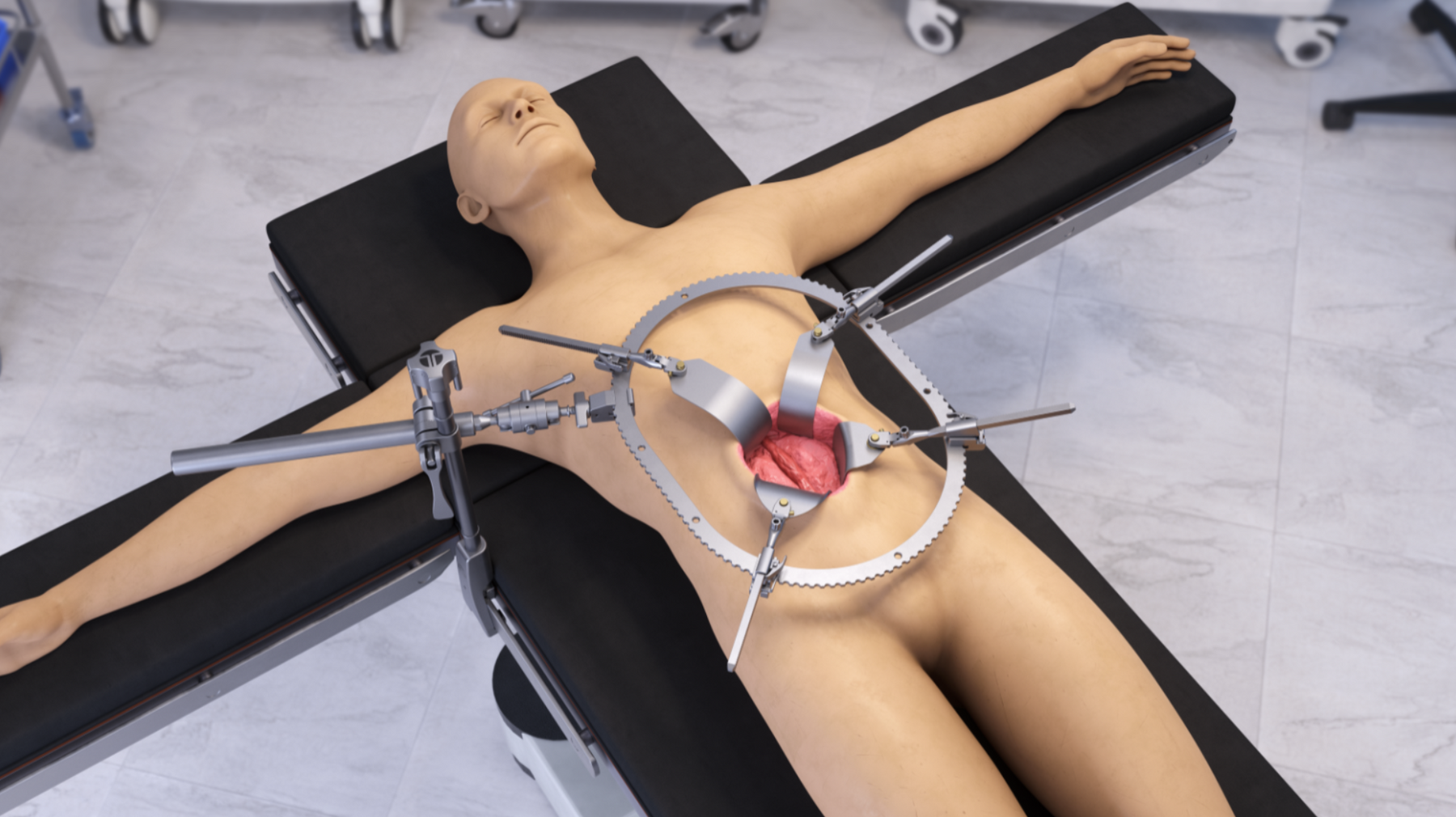
A ring retractor set uses a circular frame mounted to the operating room table to create a stable structure for surgical access around the operative field. The frame serves as a platform for positioning multiple arms, handles, and blades around the incision.
Because the ring surrounds the surgical site, retraction can be applied from multiple directions simultaneously. Each blade can be positioned independently, allowing surgical teams to build a multi-point retraction construct that maintains a narrow but stable working corridor.
How Ring Systems Function
The ring attaches to the OR table using a rail clamp and frame components such as crossbars and angled arms. Retractor handles connect to the frame, and blades attach to the handles to engage tissue. Arms are modular and articulating, allowing blades to be positioned precisely and then locked into place once exposure is established.
Because the frame is continuous around the operative site, adjustments can be made at individual blades without affecting the overall structure. This allows exposure to be refined gradually instead of repositioning the entire system.
Why Ring Systems Work Well in Lumbar Access
In lumbar spine procedures, depth and limited working space require stability and precise control. Ring systems support this by:
● Distributing retraction forces across multiple points
● Maintaining consistent frame geometry under sustained tension
● Allowing multi-directional retraction without moving the frame
● Supporting controlled, localized adjustments as exposure needs change
● Maintaining a stable working corridor during long procedures
This structure helps maintain stable surgical access throughout the procedure, especially when depth, angle, and visualization requirements change over time.
What Is a Wishbone Retractor Set?
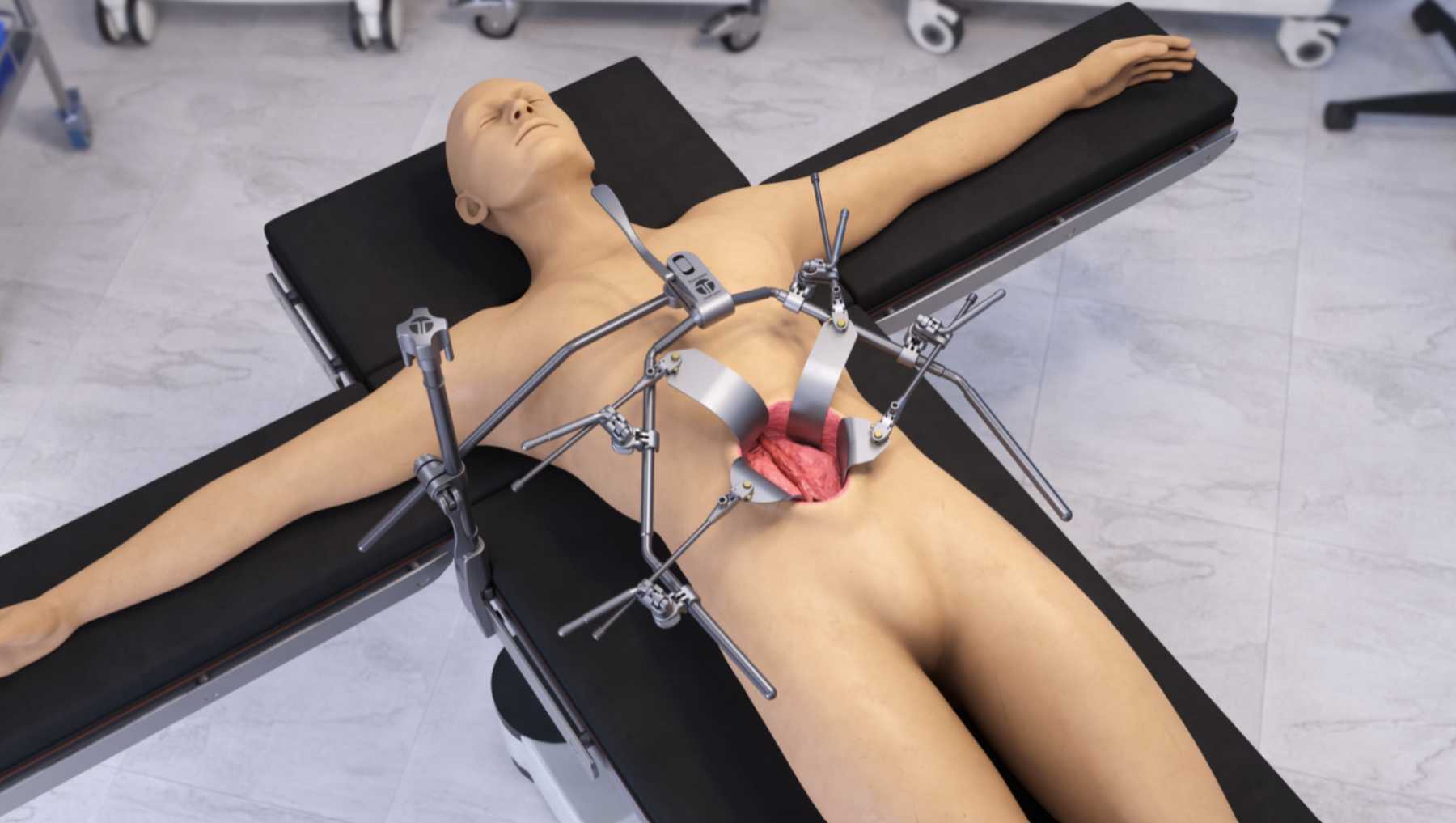
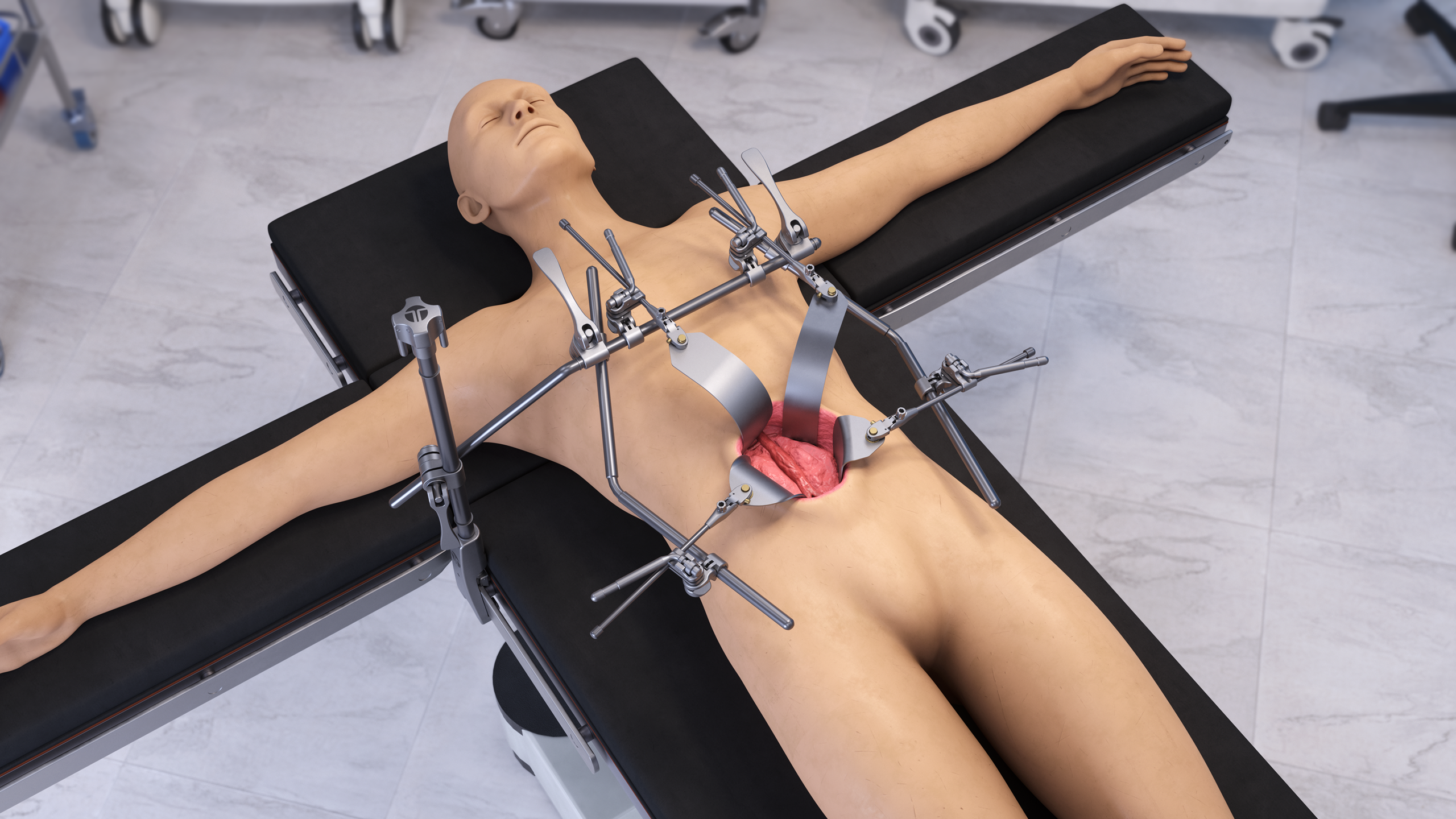
A wishbone retractor set uses a two-arm frame mounted to the OR table to provide retraction from a limited number of attachment points. The frame extends outward from a central mount, and arms are positioned to create directional pull across the operative field.
How Wishbone Systems Function
Wishbone systems apply retraction primarily from two directions. Blades are positioned to pull tissue away from the incision, typically in opposing or angled directions to open the surgical site.
Because the structure does not surround the surgical site, retraction is applied from fewer positions. Adjustments often require repositioning the arms or modifying the setup to change the direction of pull.
How This Affects Lumbar Procedures
In lumbar spine cases, this structure influences how retraction is performed over time:
● Retraction is applied from fewer directional points
● Adjustments may require repositioning rather than fine adjustment
● Retraction force is more concentrated
● Maintaining access may require more active management during the procedure
Wishbone systems can be effective in less complex exposures or procedures that do not require multi-directional retraction. As depth and procedural demands increase, limitations in attachment points and directional control may become more noticeable.
What Is the Difference Between Modular and Articulating Retractor Arms?
In table-mounted retraction systems, arm design affects how precisely blades can be positioned and how easily exposure can be adjusted during the procedure.
Modular arms allow components to be added, removed, and configured based on patient anatomy, incision location, and procedural requirements.
Articulating arms allow the blade to be positioned at specific angles and depths. Once positioned, the joints lock to create rigid, stable retraction.
Systems that are both modular and articulating allow surgical teams to:
● Position blades precisely in deep operative fields
● Adjust one blade without moving the entire system
● Configure the frame for different patient anatomies
● Maintain stable positioning once exposure is established
This combination is particularly important in lumbar spine surgery, where small adjustments in blade angle or depth can significantly affect visualization and instrument access.
Ring vs Wishbone: Key Differences in Lumbar Access
Frame design determines how surgical access is created, maintained, and adjusted during the case. In lumbar procedures, these differences become more apparent as depth increases and exposure must remain stable over time.
Frame Geometry and Structure
Ring systems create a continuous platform around the operative field, allowing arms and blades to be placed at multiple points. Wishbone systems rely on a two-arm structure, which limits placement options and affects how evenly retraction force is distributed.
Stability Over Time
Ring systems maintain consistent geometry under sustained load by distributing force across multiple attachment points. Wishbone systems depend more on individual arm positioning, which may require adjustment as tissue tension changes.
Directional Control and Adjustability
Ring systems allow multi-directional retraction without moving the frame. Blades can be repositioned independently while the overall construct remains stable. Wishbone systems typically require repositioning to change direction, which can interrupt workflow.
Consistency of Surgical Access
Ring systems support consistent access through incremental adjustments without disrupting the structure. Wishbone systems may require more frequent intervention to maintain exposure.
RingTrack™ vs Wishbone™ Retractor Sets: Side-by-Side
|
Evaluation Factor |
RingTrack Retractor Set |
Wishbone Retractor Set |
|
Frame Structure |
Continuous circular frame |
Two-arm structure |
|
Attachment Points |
Multiple around field |
Limited |
|
Force Distribution |
Even, multi-point |
More concentrated |
|
Stability Under Load |
Maintains geometry |
Dependent on arm positioning |
|
Directional Control |
Multi-directional without repositioning |
Requires repositioning |
|
Adjustment Style |
Incremental, localized |
Broader repositioning |
|
Access Consistency |
Stable over long procedures |
May require ongoing adjustment |
|
Suitability for Lumbar Depth |
Well-suited for deep access |
Better for simpler exposures |
How Does Retractor Frame Design Affect Surgical Workflow?
Retractor frame design affects more than surgical exposure. It affects how often adjustments are required, how easily instruments move within the field, and how consistently surgical access is maintained throughout the procedure.
In lumbar spine surgery, systems that require frequent repositioning can interrupt workflow during critical phases of the procedure. Systems that allow incremental adjustment without moving the entire frame help maintain procedural flow and consistent visualization.
Frame design determines whether exposure can be refined gradually or must be reset as conditions change. In deeper lumbar exposures, this difference can affect control, visibility, and overall procedural efficiency.
Thompson AL Ring Retractor Set
The Thompson AL Ring Retractor is a table-mounted ring system designed to provide stable, multi-point retraction for procedures requiring deep, consistent surgical access, including lumbar spine surgery.
The AL Ring retractor set uses a rigid circular frame that mounts directly to the OR table, creating a stable platform for multi-point retraction. Modular arms allow blades to be positioned precisely and locked into place, while the ring frame enables retraction from multiple directions without moving the frame.
Design Characteristics
● Rigid ring frame that resists flex under sustained retraction
● Modular and articulating arms for precise positioning
● Independent blade positioning
● Compatibility with Swivel-Lock (SL) and Swivel-Only (SO) blades
● Radiolucent blade options for imaging during procedures
● Stable geometry that supports consistent access over time
Impact on Surgical Workflow
In lumbar procedures, maintaining stable retraction without repeated repositioning supports a more controlled workflow.
The AL Ring Retractor Set allows:
● Multi-directional retraction without moving the frame
● Incremental adjustments at individual blades
● Consistent access across long procedures
● Reduced need for manual retraction or intraoperative repositioning
● The ability to refine exposure gradually while maintaining stability
Because the frame surrounds the operative field, exposure can be adjusted gradually while the overall structure remains stable.
Choosing Between Ring and Wishbone Systems for Lumbar Surgery
Both set designs can be used in lumbar procedures, but their structural differences result in distinct performance characteristics.
Wishbone retractors may be appropriate in cases with limited exposure requirements and straightforward retraction needs. As procedural complexity increases, particularly in deeper lumbar cases, limitations in attachment points and directional control may become more significant.
Retractors that support distributed retraction, controlled adjustment, and stable geometry tend to provide more consistent performance over time in deep operative fields.
Table-Mounted Retractor Frame Design and Surgical Access
Lumbar procedures require retraction systems that maintain control in confined spaces without introducing variability. Frame architecture determines whether access can be adjusted precisely or requires broader repositioning.
Ring retractor sets support multi-point retraction and stable geometry throughout the case. This allows surgical teams to maintain consistent access while adapting to changes in anatomy and exposure requirements.
Table-Mounted Retraction Designed for Consistent Surgical Access
Thompson Surgical Instruments develops table-mounted retractors in collaboration with surgeons to address real exposure challenges encountered in the operating room. Surgeon feedback plays a direct role in the design of frames, articulating arms, and blade systems, with a focus on stability, adjustability, and consistent exposure over time.
Thompson Surgical Instruments offers a 30-day clinical evaluation program that allows surgical teams to trial retractor configurations in real cases before full adoption. This allows teams to evaluate setup, blade selection, and positioning strategies within their own workflow and procedural mix. It also supports measured standardization based on actual OR use, rather than theoretical planning.
Thompson Surgical Instruments has manufactured table-mounted retraction systems for more than 60 years. The company focuses on building systems that maintain stable exposure, support precise blade positioning, and integrate into the surgical workflow. Contact Thompson to learn more about table-mounted retraction systems that maintain surgical access during long lumbar procedures.
Share:
Sterile Processing & Turnover for Large Table-Mounted Retractor Sets in Long Aortic Cases: What SPD Teams Should Standardize
Why Table-Mounted Retractors are Ideal for Complex Open Oncologic Resections