




Open oncologic procedures often require surgical teams to work within a shared operative field where exposure must remain stable while multiple clinicians and instruments move throughout the case. In these environments, the structure of the retraction system affects not only exposure but also visibility, instrument access, and overall workflow.
Ring-style and low-profile frame retraction systems create surgical access in different ways. Ring systems provide circumferential stability and multi-point retraction, while low-profile systems prioritize workspace efficiency and reduced obstruction near the incision. In open oncology procedures such as hepatopancreatobiliary (HPB), colorectal, and pelvic surgery, frame architecture plays a significant role in how surgical access is created, maintained, and adjusted throughout the procedure.
Why Retractor Architecture Matters in Open Oncologic Surgery
Open oncologic resections often involve multiple surgeons, assistants, and instruments working within the same operative field. Exposure must remain stable while still allowing continuous movement, clear visualization, and coordination across the field.
In procedures such as HPB, colorectal, and pelvic oncology, retraction systems do more than hold tissue. They influence how the surgical field is organized and how efficiently teams can work within it.
Frame design affects:
● How access is created and maintained
● How instruments move within the field
● Whether retraction interferes with visualization or workflow
● How easily exposure can be adjusted during the procedure
● How much space remains available for multiple clinicians
Retractor sets that limit movement or require frequent repositioning can interrupt workflow. Sets that support stable, adaptable access allow teams to maintain control as procedural demands change.
Choosing between ring-style and low-profile, modular retractor sets determines how the field functions throughout the case, not just how exposure is established at the beginning of the procedure.
What Is a Ring-Style Retractor Set?
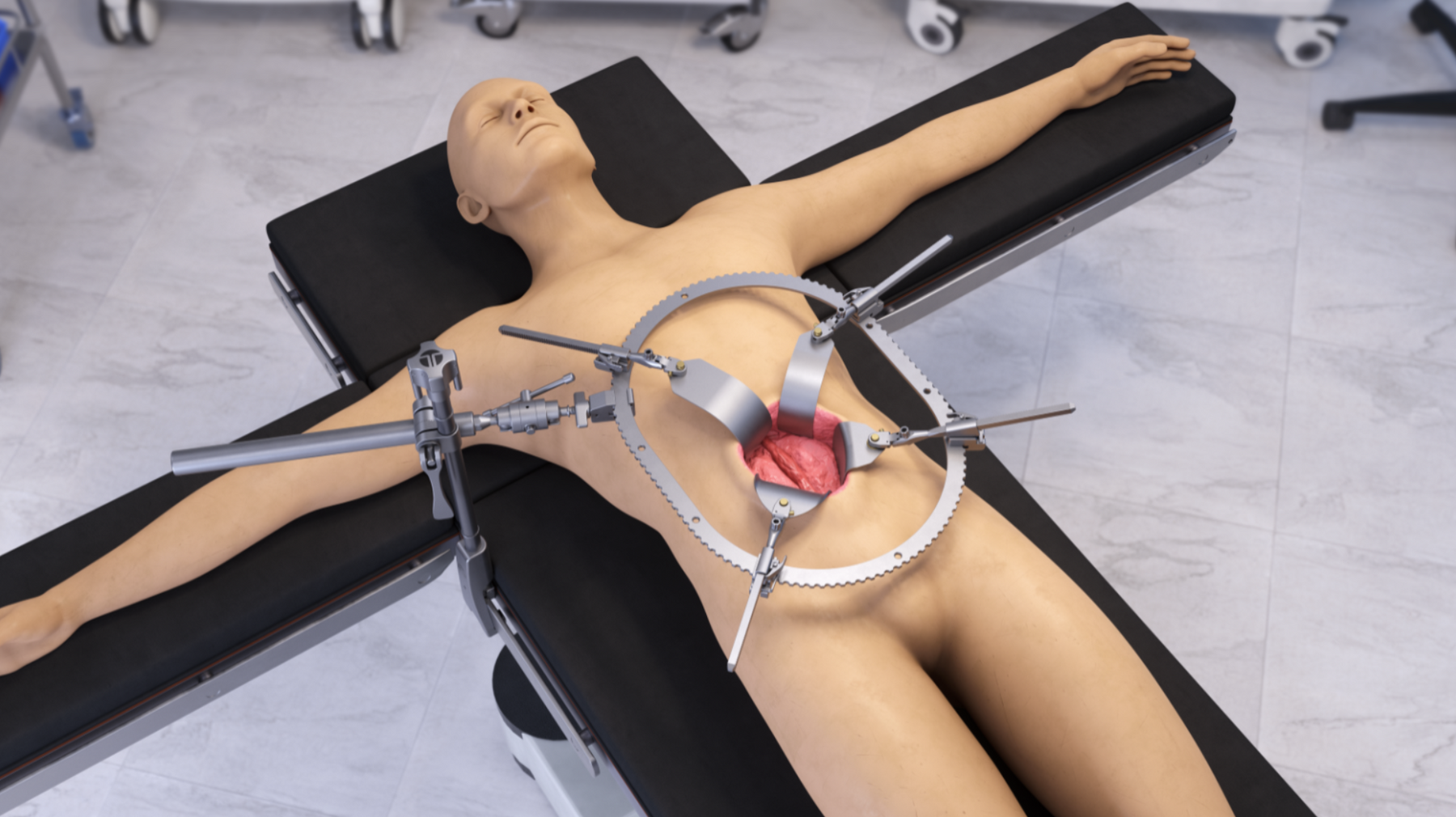
Ring-style retractor sets use a circular or semi-circular frame mounted to the OR table to create a stable structure around the operative field. The frame provides multiple attachment points for arms, handles, and blades, allowing retraction to be applied from several directions at once.
How Ring Systems Function
The ring anchors to the operating table using a rail clamp and frame components such as crossbars and angled arms. Retractor handles attach to the frame, and blades attach to the handles to engage tissue.
Because the structure surrounds the operative field, arms and blades can be positioned at multiple points around the incision. Retraction force is distributed across the frame rather than concentrated in one or two locations.
Adjustments can be made at individual blades without affecting the overall structure, allowing surgical teams to refine exposure gradually instead of repositioning the entire retractor set.
Why Ring Retractor Sets Are Used in Open Oncology
Open oncologic resections often require broad exposure across multiple anatomical regions and dissection planes. Ring-style retractor sets support these procedures by:
● Providing multiple attachment points for flexible blade placement
● Distributing retraction forces across the field
● Maintaining stable geometry during long procedures
● Allowing multi-directional retraction without moving the frame
● Supporting incremental adjustment as exposure needs change
This structure helps maintain consistent surgical access during procedures where exposure must be preserved across multiple regions of the operative field.
Thompson offers a ratcheted ring-style retraction set for broad surgical exposure, designed to support multi-point retraction and stable access in complex open procedures.
What Is a Low-Profile. ModularFrame System?
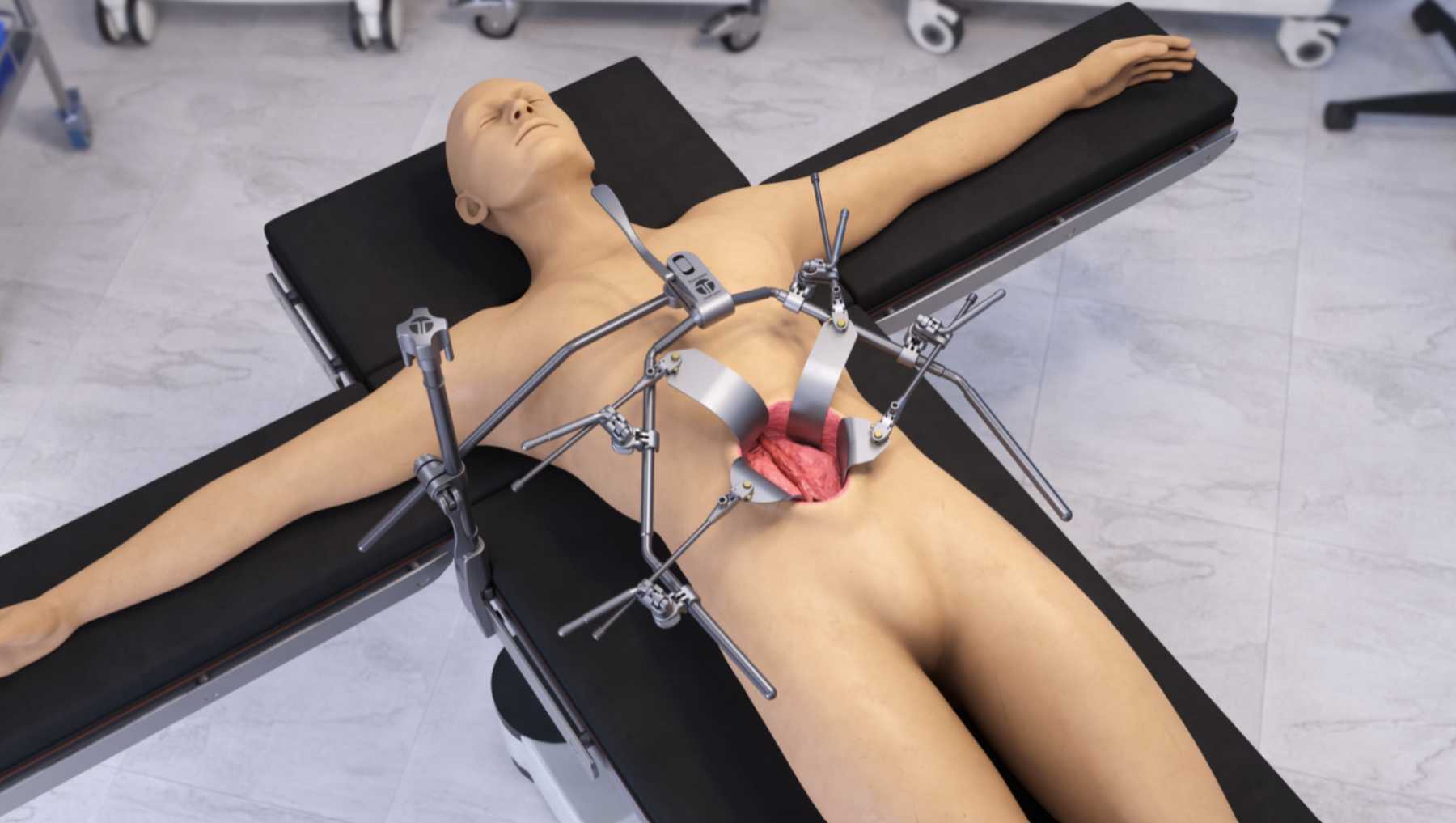
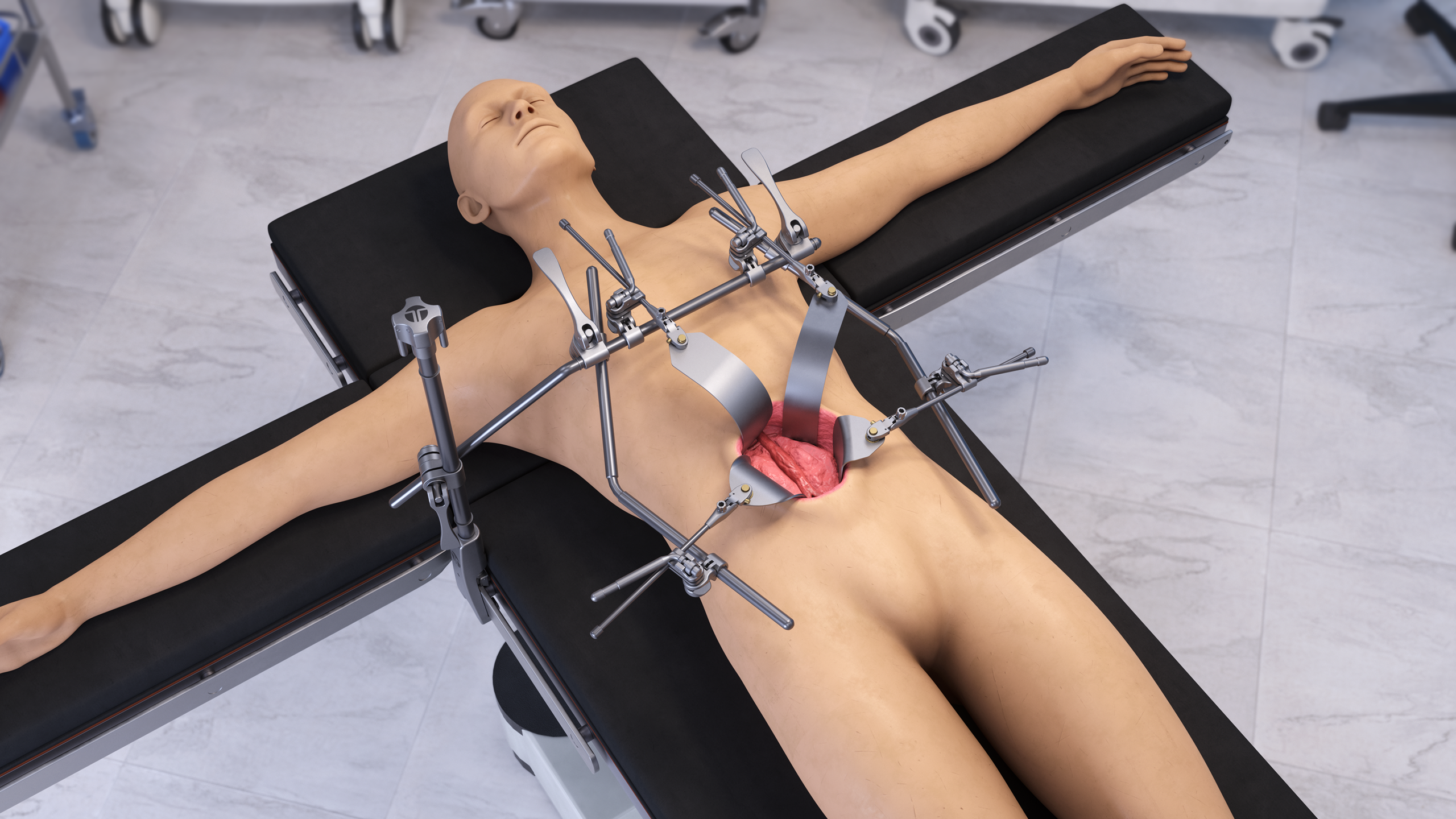
Low-profile, modular frame systems use a compact, table-mounted structure positioned outside the primary working corridor. Instead of surrounding the field, these retractor sets rely on arms that extend inward from a smaller frame or crossbar to create retraction.
How Low-Profile Systems Function
The frame mounts to the OR table and serves as a base for modular arms that apply directional pull. Because the structure remains outside the central operative space, less hardware is required around the incision.
Arms can be adjusted to refine retraction and reposition blades as exposure needs change. With fewer attachment points than a ring system, positioning typically occurs along a more limited set of axes.
Why Low-Profile, Modular Systems Are Used in Oncology
Open oncologic procedures often involve multiple clinicians working simultaneously. In these cases, maintaining a clear working corridor becomes as important as maintaining stable retraction.
Low-profile, modular systems support this by:
● Keeping the operative field less obstructed
● Allowing more freedom of movement for surgeons and assistants
● Supporting instrument exchange without interference
● Maintaining access while reducing crowding around the incision
These systems are often selected when workspace efficiency and team coordination are primary considerations.
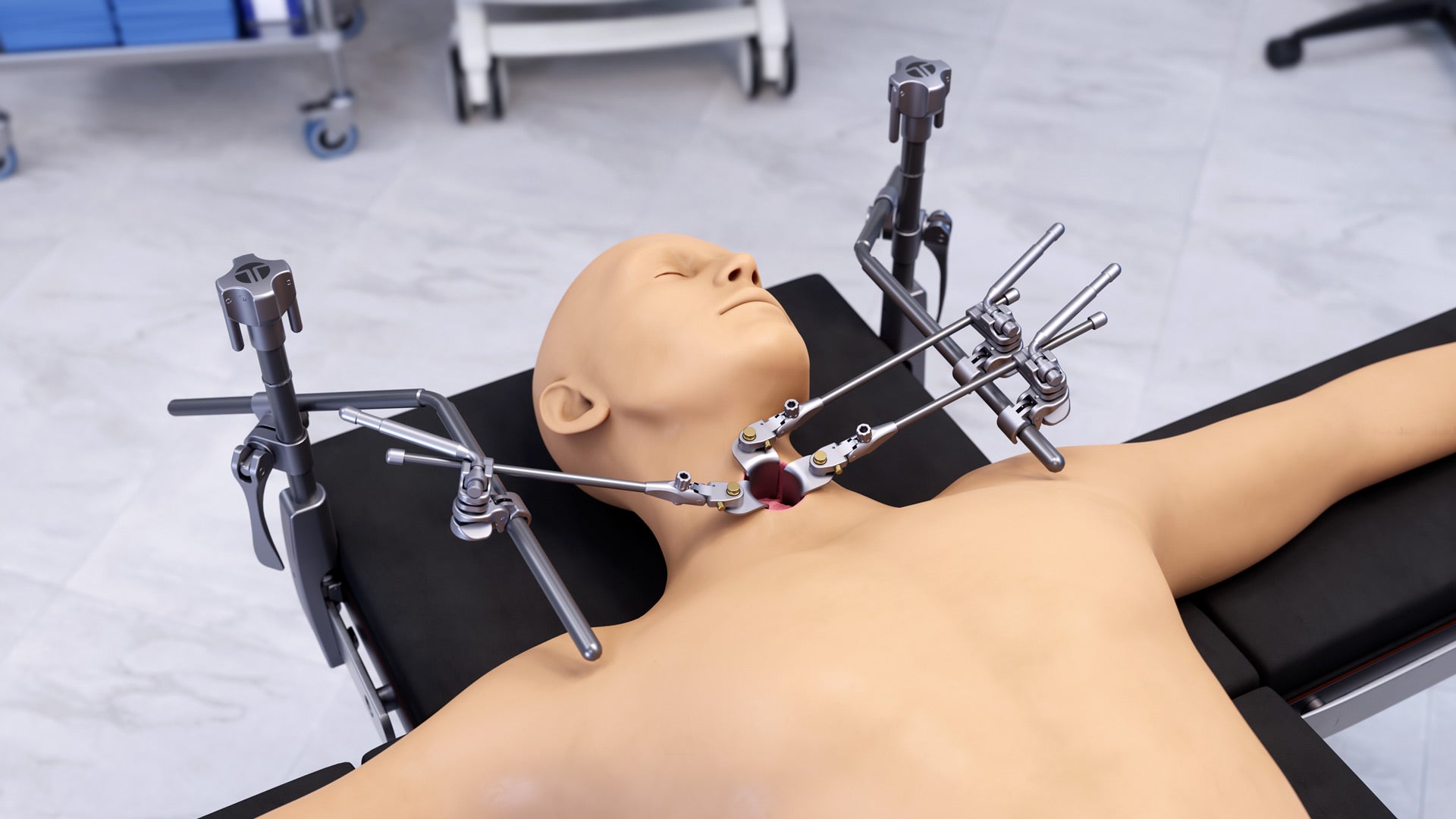
For teams prioritizing workspace and flexibility, Thompson provides a low-profile, General OneFrame™ Retractor Set, designed to support controlled retraction without crowding the field.
Ring vs Low-Profile, Modular: Impact on Surgical Workflow
Frame design determines how surgical access behaves over time, especially in complex oncologic procedures where exposure must remain stable while multiple clinicians work within the same space.
Workspace and Visibility
Ring retractor sets position hardware around the perimeter of the operative field, supporting multi-point access but introducing more structure near the surgical site. Low-profile, modular systems reduce hardware near the incision, preserving workspace and improving instrument mobility.
Blade Positioning Flexibility
Ring retractor sets provide a greater number of attachment points, allowing blades to be positioned from multiple directions. Low-profile, modular retractor sets rely on modular arms with more centralized positioning options that are still adjustable.
Multi-Team Access
Low-profile retractor sets often make it easier for multiple surgeons or assistants to work simultaneously by reducing obstruction near the incision. Ring retractor sets provide a stable platform for multi-directional retraction, particularly in broader exposures.
Adjustment During the Procedure
Ring retractor sets allow localized adjustments without affecting the entire structure. Low-profile, modular systems also allow adjustment, though changes may require repositioning within a more limited framework.
Blade Compatibility and the Importance of a Blade Kit Ecosystem
Frame design defines structure, but blade selection determines how effectively retraction is applied within that structure.
In open oncologic procedures, blade requirements vary based on depth, anatomy, and procedural phase. Retractor sets should support a range of blade types to maintain consistent access as conditions change.
Key considerations include:
● Blade length for deep access
● Blade width and contour to match anatomy and incision type
● Swivel-Lock (SL) and Swivel-Only (SO) blade configurations
● Compatibility across both ring-style and low-profile frame systems
A flexible blade system allows surgical teams to adapt retraction strategy without changing the overall setup. Thompson supports this with a comprehensive blade kit ecosystem that integrates with both ring-style and modular table-mounted retractor sets.
Evaluation Checklist: Choosing the Right Architecture
When selecting between ring-style and low-profile, modular systems for open oncologic procedures, it is helpful to evaluate how each set performs during the procedure, not just during setup.
Stability Under Load
Does the retractor set maintain consistent geometry during long procedures?
Adjustability
Can retraction be refined incrementally without disrupting the overall setup?
Blade Kit Breadth
Does the retractor set support a wide range of blade types and configurations?
Setup Efficiency
How quickly can the complete retractor set be configured and adjusted?
OR Footprint
Does the retractor set provide access without overcrowding the surgical field?
Workflow Integration
Can multiple clinicians work efficiently within the same space?
These factors help determine which frame architecture best supports the surgical procedure being performed.
When to Choose Ring vs Low-Profile, Modular Retractor Sets
Both architectures support open oncologic procedures, but each aligns with different procedural priorities.
Ring-Style Retractor Sets Are Often Used When:
● Broad exposure spans multiple anatomical regions
● Multi-directional retraction is required
● Stability over long duration is a primary concern
● Exposure must be maintained across multiple dissection planes
Modular Retractor Sets Are Often Used When:
● Workspace around the incision is limited
● Multiple clinicians need simultaneous access
● Minimizing obstruction near the incision is a priority
● Retraction is primarily needed from fewer directions
Understanding how each set performs during a procedure helps surgical teams select the architecture that best supports exposure, workflow, and procedural control.
Choosing the Right Retractor Architecture for Open Oncology
Open oncologic procedures require retractor sets that maintain stable surgical access while supporting coordinated movement across the operative field. As case complexity increases and more clinicians work within the same space, frame architecture plays a larger role in how effectively exposure can be maintained.
Ring-style retractor sets support multi-directional retraction and stable frame geometry across long procedures. Low-profile, modular sets help preserve workspace and reduce obstruction near the incision. The appropriate choice depends on the type of exposure required, the number of clinicians working in the field, and whether exposure must be maintained throughout the procedure.
Designed Around Surgical Workflow
Thompson Surgical Instruments works closely with surgeons to refine table-mounted retraction systems based on real procedural demands. Feedback from the field informs frame design, arm articulation, and blade configurations so systems continue to evolve alongside surgical techniques and operating room workflow.
For more than 60 years, Thompson Surgical Instruments has designed and manufactured table-mounted retractors in the USA. Thompson retractor sets are built to provide stable surgical access, controlled blade positioning, and consistent exposure across procedures. Contact Thompson Surgical Instruments to learn more about table-mounted retractor sets for open oncologic surgery.
Share:
Why Table-Mounted Retractors are Ideal for Complex Open Oncologic Resections
Colorectal Oncology Cases: Repeatable Exposure Strategies Using Table-Mounted Retractor Sets