



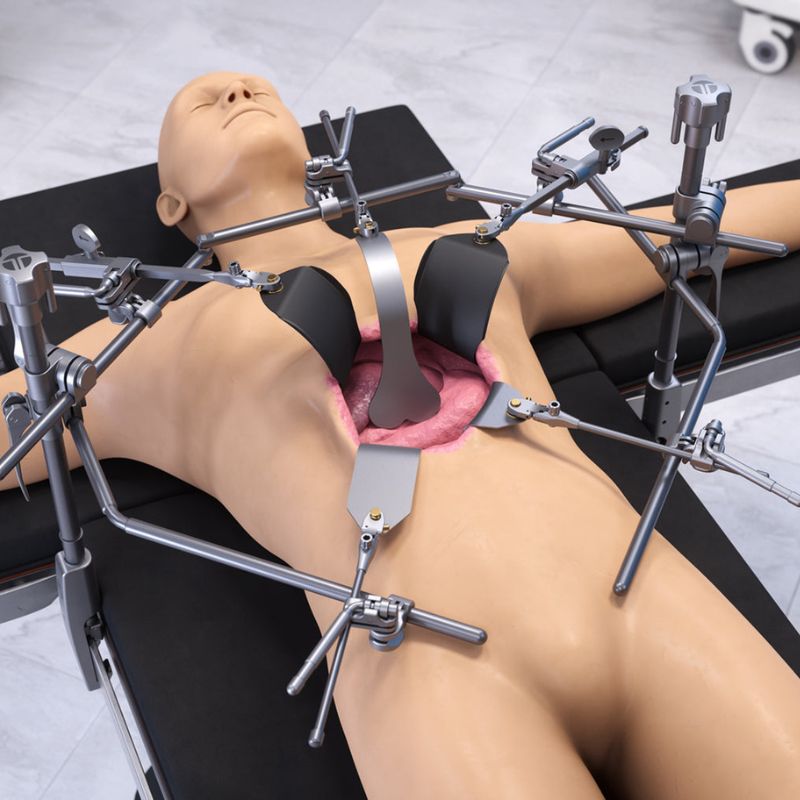
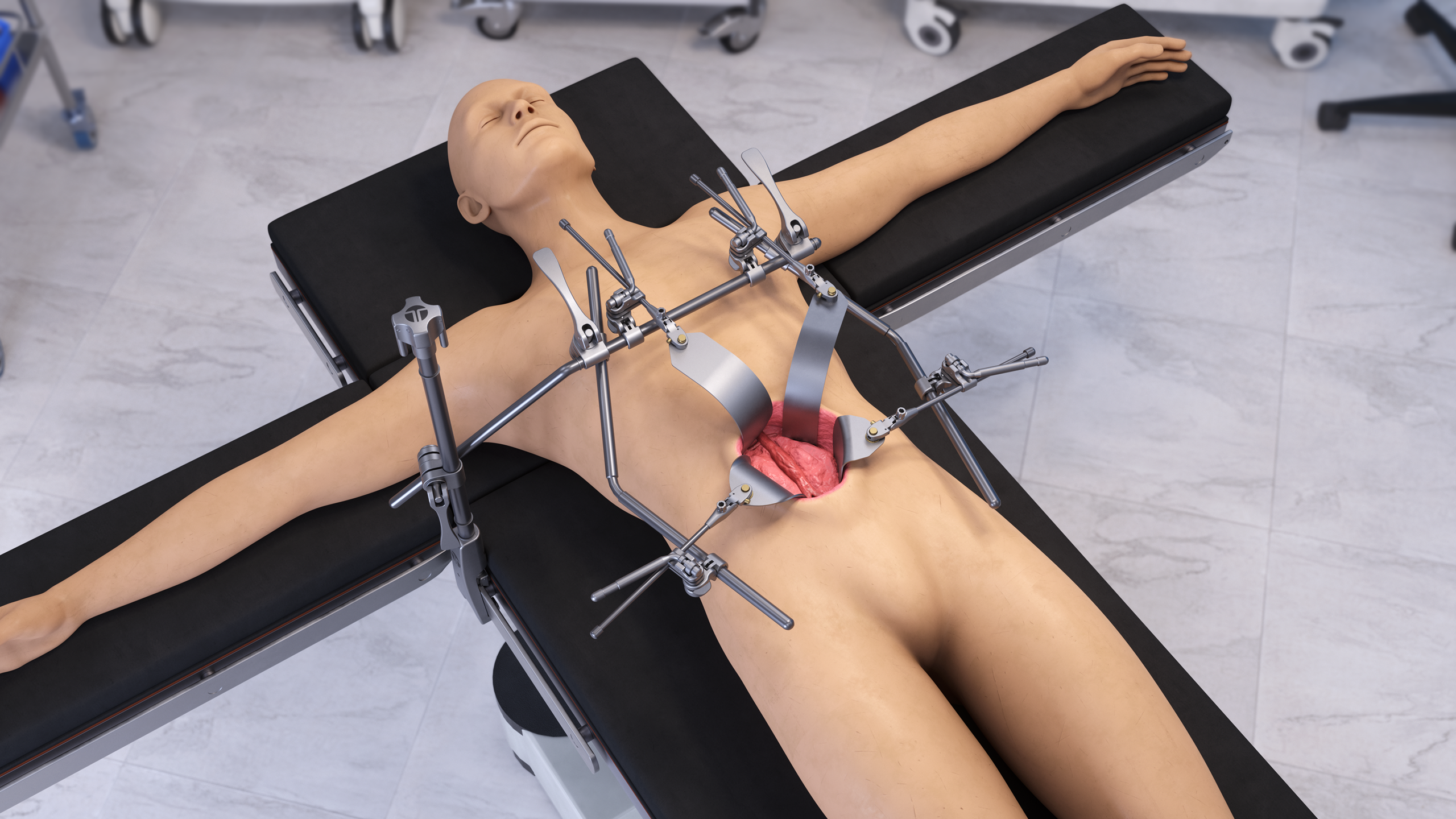
The right HPB surgery retractors follow the surgical approach. Open HPB procedures typically require broad, deep exposure with a table-mounted frame and independently positioned blades. Laparoscopic procedures rely on focused liver elevation and secure positioning of scopes or instruments through limited access points. Procedure type, anatomy, access strategy, and OR workflow determine the appropriate configuration.
HPB surgery includes procedures involving the liver, biliary system, and pancreas. These cases may be performed through open, laparoscopic, or robotic approaches, each creating a different set of exposure requirements. Matching the retractor to those requirements gives the surgical team a stable foundation for the procedure.
Start With the Surgical Approach
The surgical approach establishes how the team reaches the target anatomy, where instruments enter the field, and how retraction is maintained.
Open HPB Surgery
Open procedures provide direct access through an abdominal incision. Retraction must create and maintain a working corridor across deep upper-abdominal anatomy while leaving room for the surgeon, assistants, instruments, and visualization equipment.
Complex liver resection, liver transplant, oncology, biliary, and Whipple procedures may require several independently positioned blades. The team can adjust specific areas of exposure as tissue shifts and the case moves through different phases.
Laparoscopic HPB Surgery
Laparoscopic procedures use ports, long instruments, and a camera to reach the operative field. Retraction is more targeted, often focusing on liver elevation and secure positioning of a scope, instrument, or laparoscopic blade.
Port placement shapes the available working space. The retractor holder and attachment must maintain the required position while preserving the planned paths for the camera and working instruments.
Robotic HPB Surgery
Robotic HPB procedures also use minimally invasive access. Port spacing, robotic arm movement, patient position, and bedside assistance all influence retractor placement.
The bedside team may manage liver elevation or auxiliary instrument positioning as the robotic surgeon works through the console. A stable holder can support that workflow when its position aligns with the port and instrument plan.
Retraction Requirements in Open HPB Surgery
Open HPB procedures often involve deep anatomy, broad exposure, and long case durations. The retractor setup must hold the field while allowing the surgeon to refine access as the procedure progresses.
Deep Upper-Abdominal Exposure
The liver, biliary system, and pancreas sit high in the abdomen near vascular, gastric, and intestinal structures. Open exposure may extend beneath the costal margin and across several areas of the upper abdomen.
A table-mounted frame provides the foundation for positioning blades around the operative field. Blade reach, angle, and contour help establish access based on the incision, target anatomy, and patient body habitus.
Stable Table-Mounted Retraction
Table-mounted retractor sets attach directly to the operating room bed rail. This connection supports stable, hands-free exposure throughout the case.
For a long liver or pancreatic procedure, the frame must maintain blade position under sustained retraction. Stable positioning helps the team preserve the working corridor as dissection, mobilization, imaging, resection, or reconstruction progresses.
Multi-Planar Blade Positioning
Open HPB cases may require retraction in several directions. One blade may support subcostal exposure while other blades control the abdominal wall, stomach, colon, or nearby tissue.
Independent blade positioning allows the team to refine one part of the field while maintaining the other established retraction points. This gives the surgeon control over a broad and changing operative field.
Procedure-Specific Blade Selection
Blade length, shape, angle, and contour affect tissue engagement and working space. The selected blades must fit the exposure depth and the anatomy being retracted.
Liver resection, Whipple, transplant, oncology, and biliary procedures may each call for a different blade arrangement. Patient anatomy, prior surgery, incision strategy, and tissue depth also shape the configuration.
Retraction Requirements in Laparoscopic HPB Surgery
Laparoscopic retraction works through a smaller number of access points. The retractor must provide focused support while leaving the camera and working ports available for the procedure.
Controlled Liver Elevation
Liver elevation can create access to upper-abdominal anatomy during laparoscopic procedures. The blade or instrument must engage the liver at the intended point and maintain the surgeon’s preferred elevation angle.
The holder position affects both exposure and the space available around the ports. A stable attachment to the bed rail helps maintain the selected position during the procedure.
Secure Scope and Instrument Positioning
Some laparoscopic cases require a scope or instrument to remain at a consistent angle. A rigid or flexible holder can support that positioning while allowing adjustments when the visual or working angle changes.
The grip, holder, and table attachment function as one configuration. Each component must fit the instrument diameter, required reach, and available space around the patient.
Port and Instrument Access
Port placement defines the instrument paths in laparoscopic surgery. Retractor holders and attachments must fit around those paths while supporting the required exposure.
The team can plan holder location alongside patient position, camera access, working ports, and the movements expected during the procedure. This keeps the retraction setup integrated with the laparoscopic workflow.
Attachment and Position Changes
Laparoscopic access needs may shift as the surgeon moves through the procedure. Quick attachment changes allow the team to adjust the holder or move between supported components.
A repeatable setup helps the scrub team anticipate which attachments will be needed and how each component connects to the table-mounted holder.
Nathanson Hook Positioning
A Nathanson-style hook provides focused liver elevation during laparoscopic upper-abdominal procedures. Hook size, angle, insertion point, holder position, and patient anatomy all influence the exposure.
The hook and holder must maintain the selected liver position while preserving access for the camera and working instruments. Its placement becomes part of the port and equipment plan.
Open and Laparoscopic HPB Retraction at a Glance
|
Selection Factor |
Open HPB Retraction |
Laparoscopic HPB Retraction |
|
Exposure goal |
Broad, deep operative access |
Focused liver elevation and port-based access |
|
Retraction setup |
Table-mounted frame with multiple blades |
Rail-mounted holder with laparoscopic attachments |
|
Positioning |
Multi-planar, independently controlled blades |
Targeted blade, scope, or instrument positioning |
|
Working-space priority |
Access across a large operative field |
Clear camera and instrument paths |
|
Typical adjustment |
Refining blade position as anatomy shifts |
Changing holder angle or attachment as access changes |
|
Team workflow |
Frame and blade setup across long cases |
Holder placement, attachment changes, and port coordination |
|
Blade selection |
Length and contour based on depth and anatomy |
Blade size and angle based on liver elevation needs |
Matching HPB Surgery Retractors to the Procedure
A practical selection process begins with the exposure required for the scheduled procedure.
First, define the access strategy. Open procedures need a frame and blade configuration that can establish exposure across the incision and deep operative field. Laparoscopic and robotic procedures need targeted positioning that works with ports, cameras, and long instruments.
Next, map the exposure target. The team may need broad abdominal access, subcostal elevation, deep pancreatic exposure, focused liver elevation, or stable scope positioning.
Working space then determines where the frame, holders, handles, and attachments can be placed. Patient position, incision or port location, imaging equipment, instrument paths, and assistant access all belong in this plan.
The final configuration brings those requirements together through the appropriate frame or holder, blade selection, attachment options, and staff workflow.
Thompson Retractor Sets for Open HPB Procedures
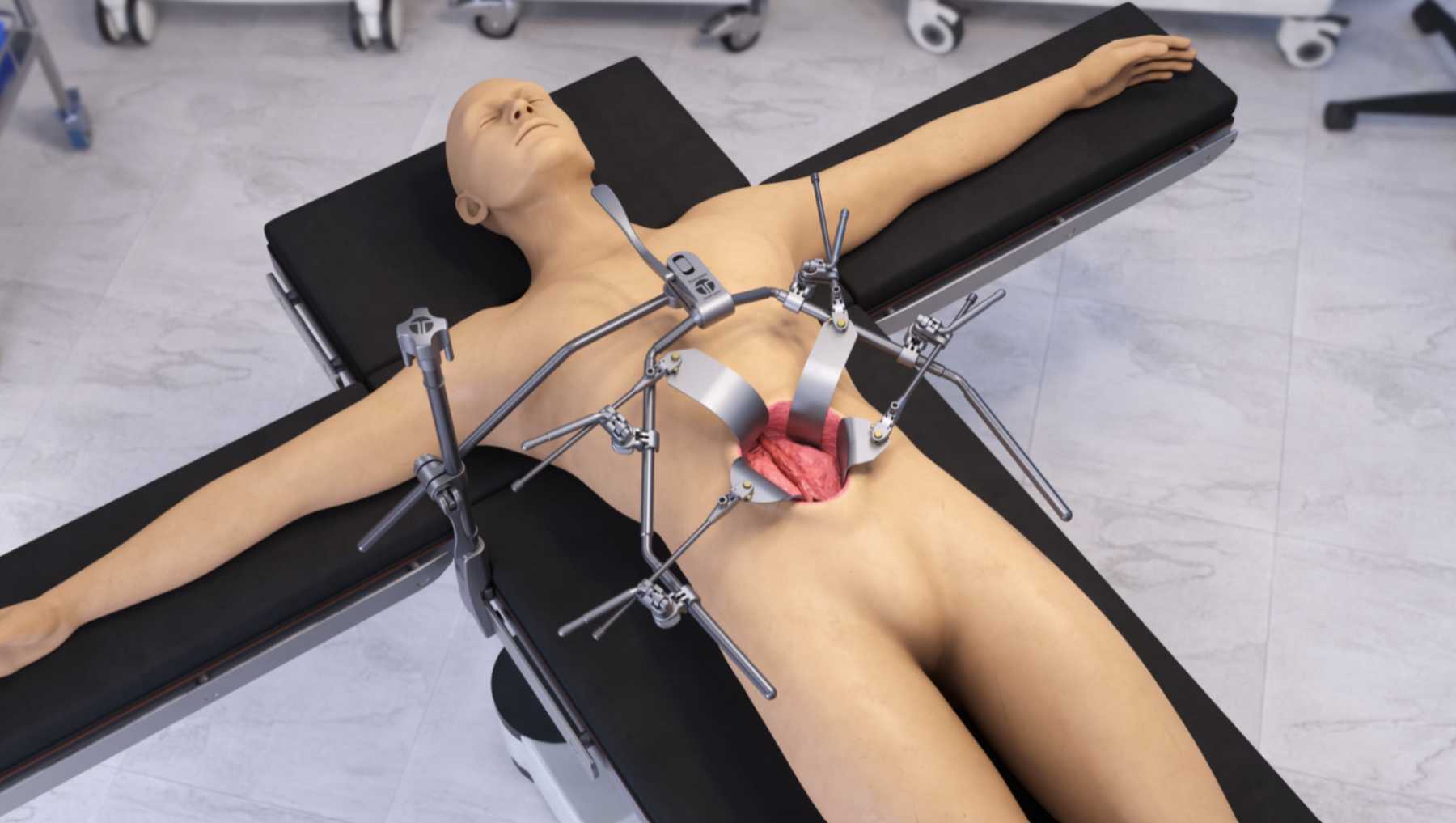
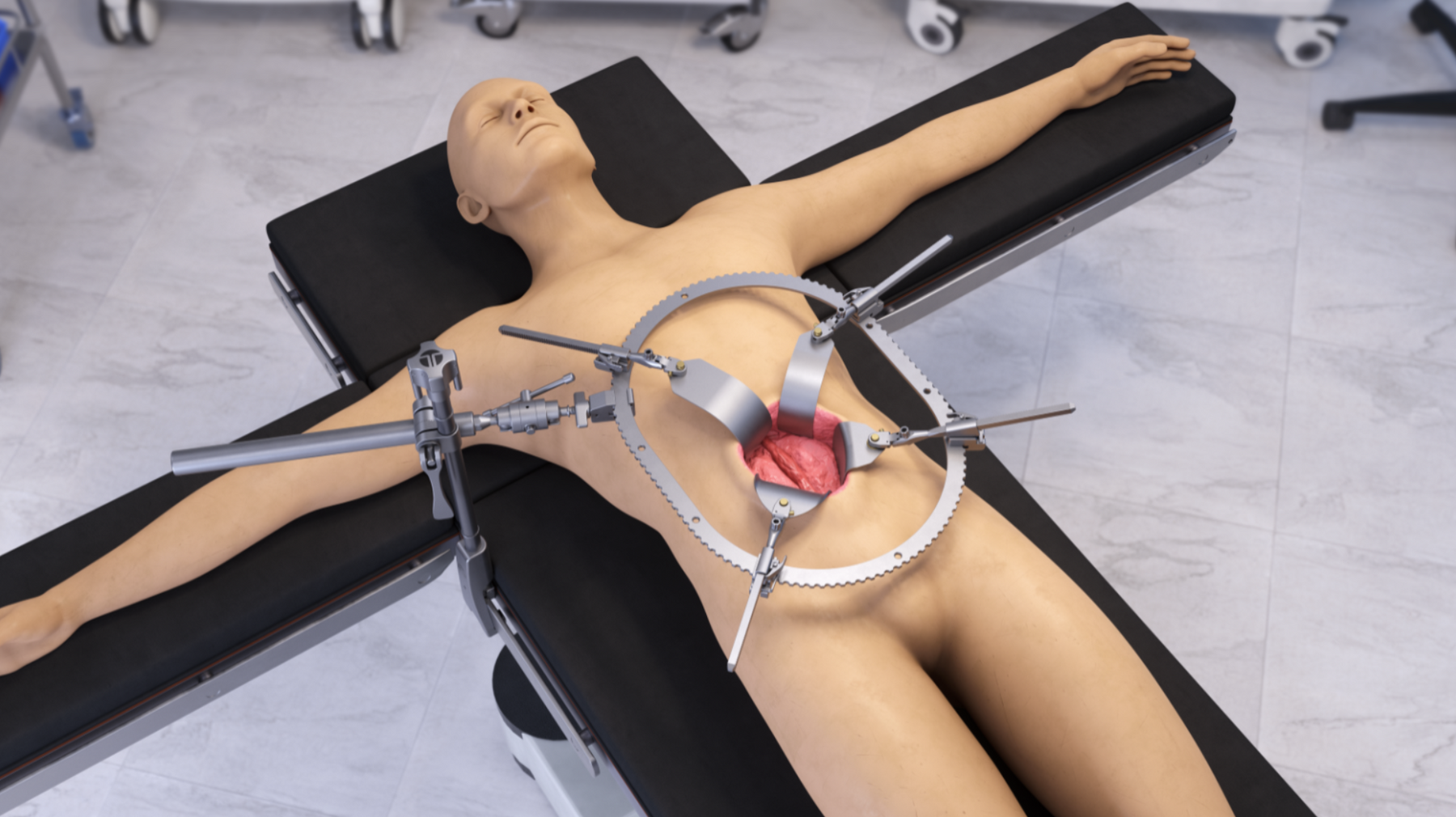
Thompson’s table-mounted retractor sets for liver procedures include configurations for HPB, Whipple, liver transplant, oncology, and other complex open procedures.
HPB Retractor Set
The HPB Retractor Set provides stable, hands-free exposure for complex liver, biliary, and pancreatic procedures. Its table-mounted frame supports independent blade positioning across deep upper-abdominal anatomy.
The set includes Liver-Oncology and Radiolucent Liver-Oncology blade kit options. Radiolucent blades can support cholangiogram workflow when a blade needs to remain within the imaging field.
Whipple Retractor Set
The Whipple Retractor Set combines Thompson’s Liver/Oncology Retractor with a Lower Abdominal Bar setup and Whipple blade kit.
This configuration supports stable, multi-planar exposure through the changing access requirements of a pancreaticoduodenectomy. The frame, bar, and procedure-specific blades give the team a coordinated setup for deep upper-abdominal work.
Liver Transplant/Oncology Retractor Set
The Liver Transplant/Oncology Retractor Set uses a bilateral table-mounted frame for liver transplant, resection, oncology, obesity, and other complex abdominal cases.
Its broad blade selection and independent positioning support wide exposure across large or changing operative fields.
Thompson Laparoscopic Retractor Set
The Thompson Laparoscopic Retractor Set provides table-mounted, hands-free support for laparoscopic procedures. The configuration attaches to the operating table through the Thompson Power Rail Clamp.
Available components include rigid and flexible laparoscopic holders, adjustable scope grips, and a variety of Nathanson Hook sizes. These options support secure positioning of scopes, instruments, and laparoscopic retractor blades.
The holder configuration can be selected around the needs of the case. A rigid holder provides firm positioning, while a flexible holder supports a different range of placement and adjustment. Adjustable scope grips accommodate supported scope sizes, and the Nathanson Hook Kit provides a dedicated option for liver elevation.
For laparoscopic HPB procedures, this configuration brings the holder and liver retractor off the working ports and onto a stable table-mounted foundation. The surgical team can preserve port access while maintaining the selected exposure or instrument position.
OR Workflow for Open and Laparoscopic Retraction
Open and laparoscopic HPB procedures place different responsibilities on the OR team.
In an open case, the team assembles the frame, selects the blades, and builds exposure around the incision. Scrub staff need familiarity with frame components, handle placement, blade attachment, and independent adjustments throughout the case.
In a laparoscopic case, the workflow centers on rail-clamp placement, holder selection, instrument or scope grip, hook attachment, and coordination with the port plan. The bedside team may need to adjust the holder or change attachments as the procedure progresses.
Preference cards should identify the surgical approach and the specific retractor configuration. Clear tray organization also helps staff locate the correct frame, holder, blade kit, and attachments before the case begins.
SPD workflow remains part of both configurations. Component identification, disassembly, cleaning, inspection, organization, and tray preparation all affect whether the setup can be repeated consistently.
Evaluating HPB Surgery Retractors in Representative Cases
HPB surgery retractors are best evaluated in the procedures where the team plans to use them. Open and laparoscopic configurations can then be assessed against the exposure and workflow demands of each approach.
A useful evaluation includes:
● Stability of the required exposure
● Blade, holder, or attachment adjustments
● Working space for instruments and assistants
● Port access in laparoscopic cases
● Setup repeatability across the OR team
● Surgeon, assistant, scrub, and circulator feedback
● Tray organization and SPD processing
Teams performing both open and laparoscopic HPB surgery can document each configuration separately. This creates a practical record of which setup supports each procedure, surgeon, and exposure strategy.
Thompson offers a 30-day clinical evaluation for U.S. customers, including OR and SPD training and support throughout the trial. The evaluation allows teams to test the appropriate configuration in their own operating environment.
Choosing HPB Surgery Retractors by Surgical Approach
Open HPB procedures require broad, stable exposure with multi-planar blade control across a deep operative field. Laparoscopic procedures require focused liver elevation and secure scope or instrument positioning that works with the port plan. Robotic procedures add arm movement and bedside responsibilities to the minimally invasive setup.
Matching the retractor configuration to the surgical approach gives the team the frame, holder, blades, and attachments needed for the procedure in front of them. It also gives OR and SPD teams a clearer path to repeatable setup and support.
Thompson Surgical Instruments has spent more than 60 years refining table-mounted retraction for stable, hands-free surgical exposure. Our employee-owned team supports open and laparoscopic procedures with approach-specific frames, holders, blades, and attachments. Contact us to learn more about selecting HPB surgery retractors for your program.
Share:
Whipple Retractor Set Selection: What Matters for Stable, Multi-Planed Exposure
Table-Mounted Retractor for ALIF: What Surgeons and OR Leaders Should Evaluate