



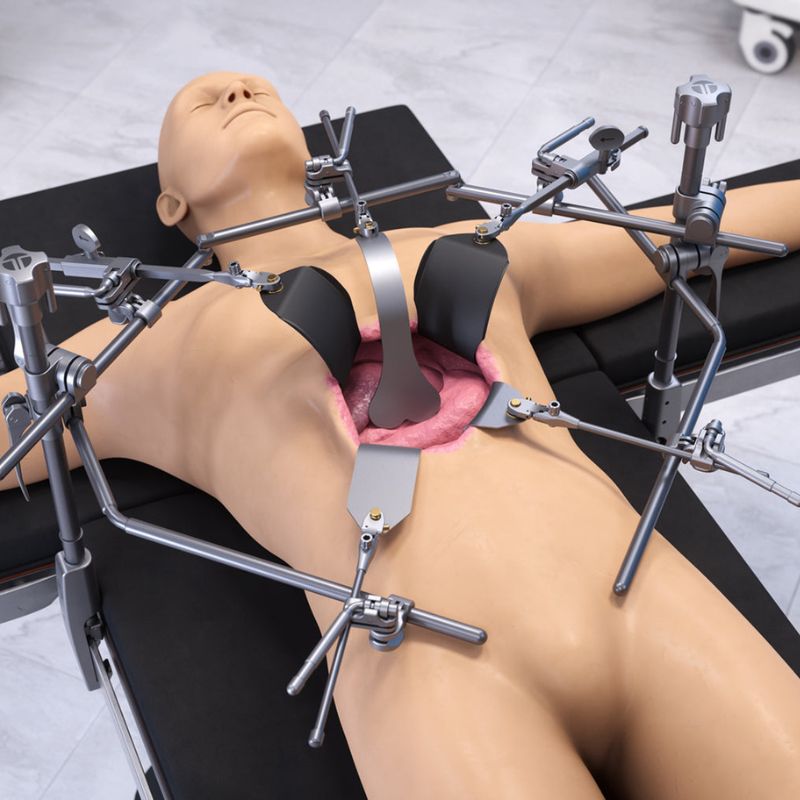
A liver transplant retractor should help preserve the surgical field as exposure changes during complex open liver surgery. Stable frame support, bilateral positioning, blade placement, working space, and adjustability all affect how well the field remains visible, accessible, and usable throughout the case.
In liver transplant surgery, exposure is not created once and left alone. The field may need to support broad upper-abdominal access, deep retraction, shifting anatomy, changing sight lines, and multiple points of instrument access. Retractor design matters because the frame and blades have to work together as the procedure progresses.
Surgical Field Preservation Starts with Stable Retraction
Stable exposure is the foundation of surgical field preservation. In liver transplant and complex oncology procedures, the retractor set must support deep upper-abdominal access while leaving enough room for instrumentation, visualization, and team movement.
A Journal of Gastrointestinal Oncology article on hepatic resection identifies the Thompson Liver Retractor as the authors’ standard retractor for liver exposure. The article also describes upward rib retraction to support access around the suprahepatic and infrahepatic inferior vena cava and mobilization of the right lobe of the liver.
A liver transplant retractor should help maintain access in a deep operative field while allowing the surgeon to refine exposure as requirements change.
A Bilateral Frame Supports Broad Upper-Abdominal Access
A bilateral frame gives the surgeon multiple points of support around a large operative field. In liver transplant surgery, that can matter when exposure extends across the upper abdomen and the team needs access from more than one direction.
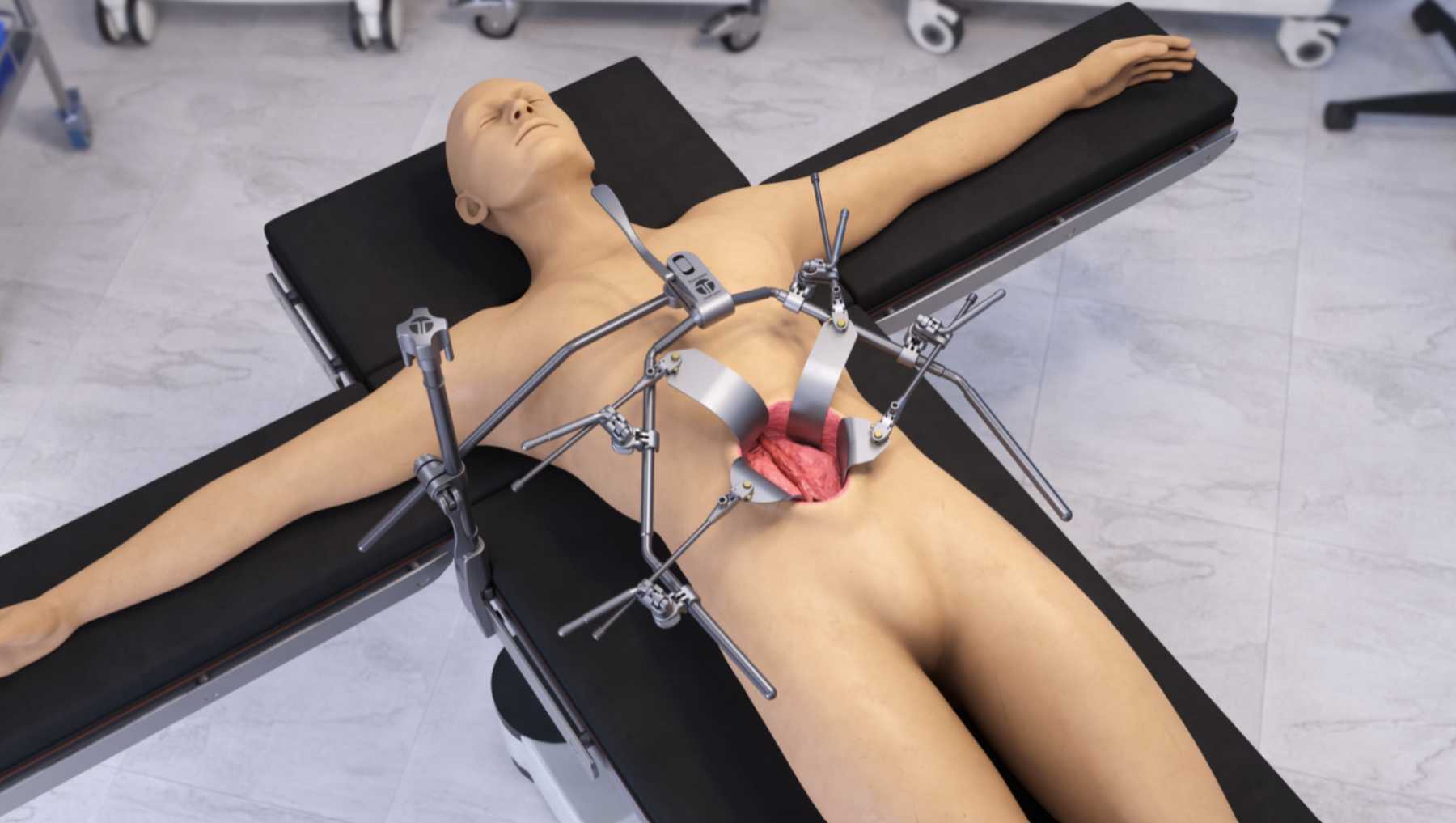
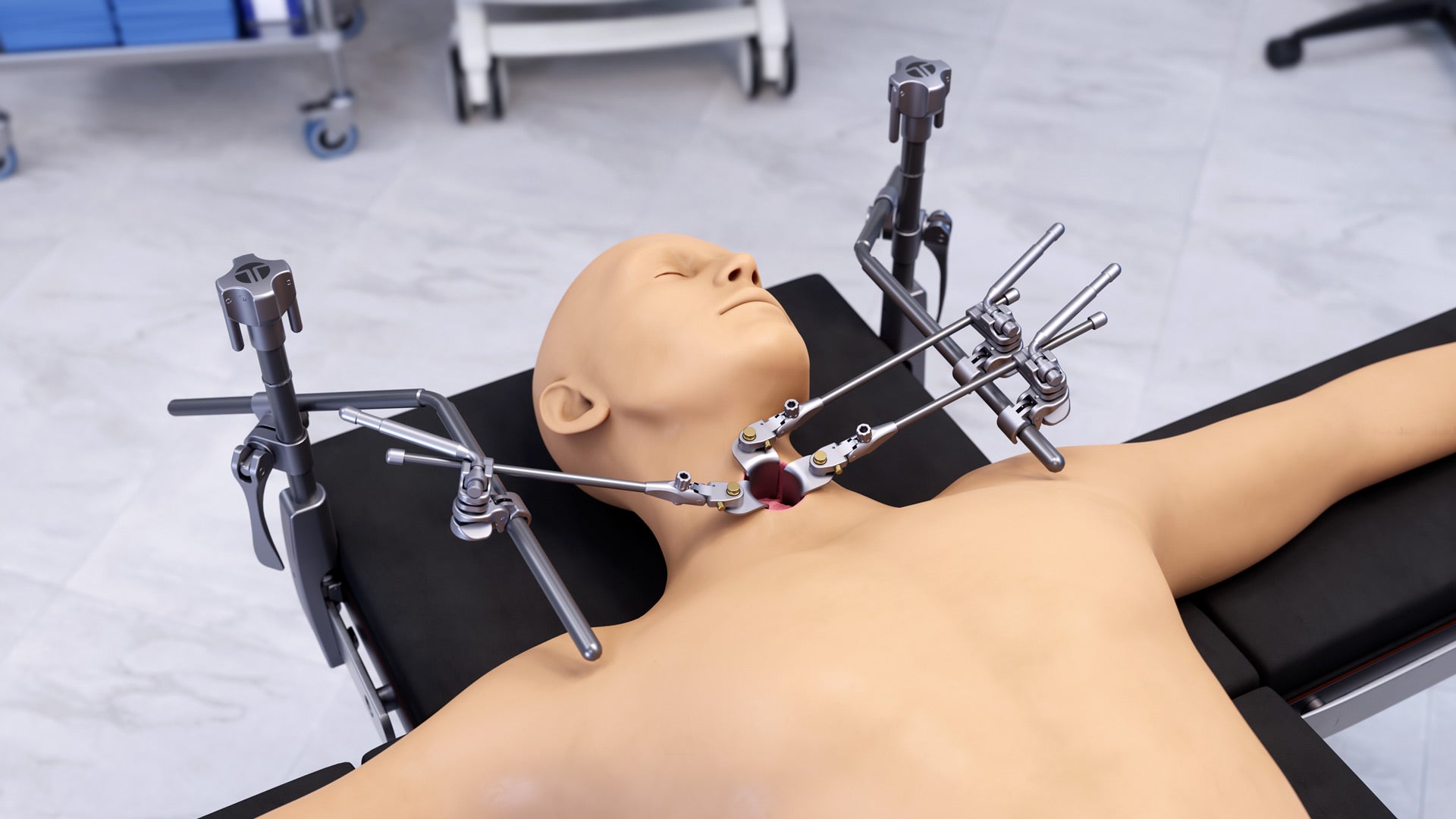
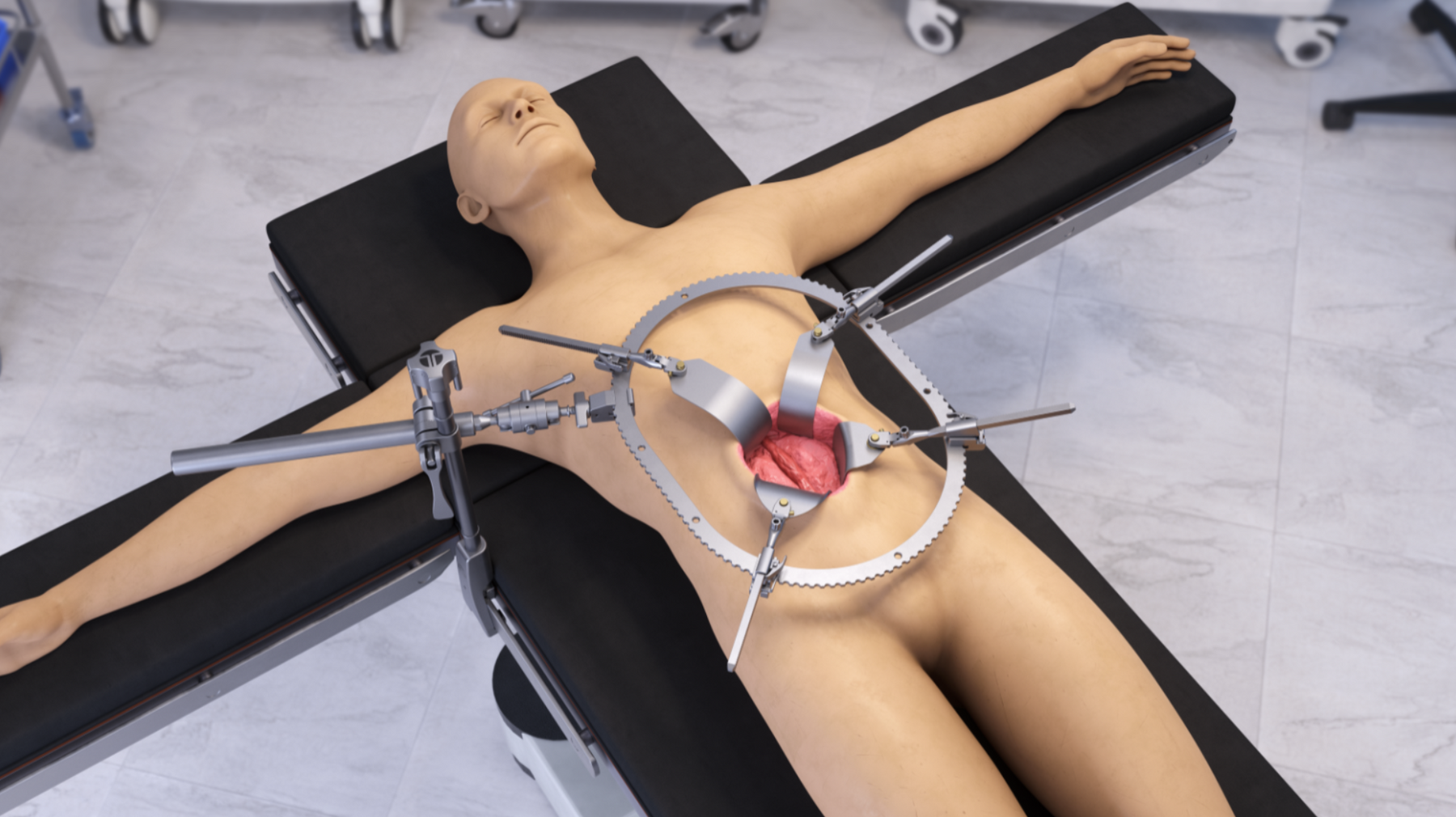
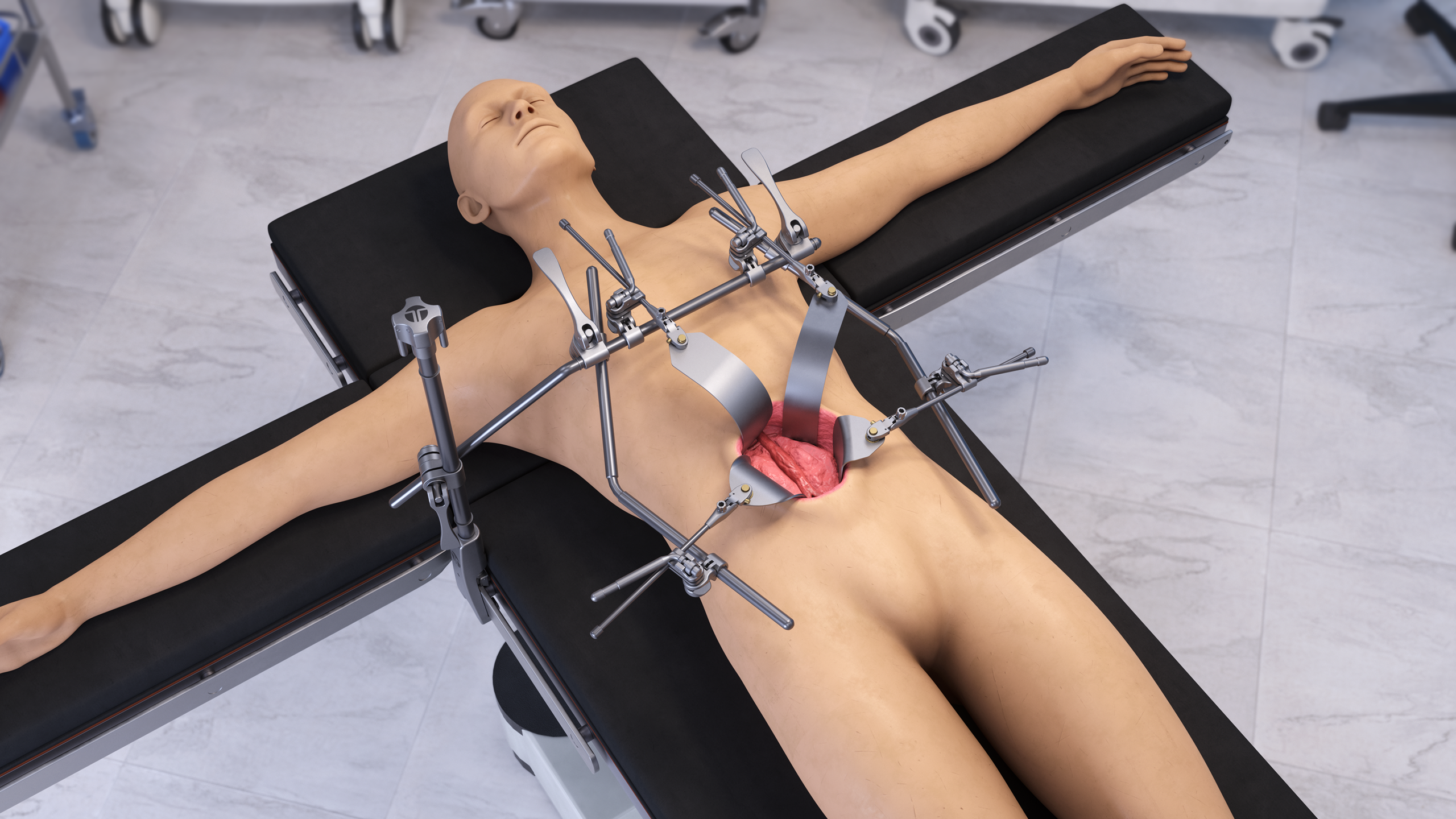
Thompson’s Liver Transplant/Oncology Retractor Set uses a bilateral table-mounted frame for liver transplants, liver resections, oncology, obesity, and complex abdominal cases. The configuration supports stable, versatile retraction with broad blade selection and multi-planed exposure.
Bilateral positioning helps the team organize the field around the incision, anatomy, body habitus, and surgeon preference. Instead of depending on one primary direction of pull, the setup can support multiple retraction points across a broad upper-abdominal exposure.
For transplant teams, that design feature is especially useful when the field must remain open and workable through different phases of the procedure.
Multi-Planed Retraction Helps Match the Field
Liver transplant exposure is rarely one-directional. The surgeon may need cephalad, lateral, abdominal wall, or deep retraction depending on the access required at a particular point in the case. Multi-planed retraction allows the team to position blades around the field using different vectors. This helps the retractor set match the exposure instead of treating the operative field as one uniform opening.
A table-mounted liver transplant retractor should support controlled positioning across these planes. The frame provides the foundation, while the blades and handles determine how the exposure is shaped. The design should support stable, controlled access without crowding the space the team needs to work.
Independent Blade Positioning Adds Control
Independent blade positioning gives the surgeon the ability to refine one area of exposure while maintaining surrounding access. In liver transplant surgery, that control can be important because the operative field and access requirements may change throughout the procedure.
A table-mounted retractor set for liver procedures should allow each blade to be adjusted independently so exposure can be refined without disrupting other areas of the field. This supports a more adaptable setup when anatomy, depth, or working angle changes during the case.
Independent blade positioning also supports surgeon preference. One surgeon may prefer a different blade angle, depth, or retraction point than another. A retractor set with adjustable blade positioning gives the team a stable platform while allowing the setup to match the surgeon’s exposure strategy.
Working Space Matters as Much as Exposure
A retractor can open the field and still interfere with the way the team works. Frame position, handle placement, blade angle, and setup profile all affect the usable space around the operative field.
In liver transplant surgery, working space matters for instruments, visualization, assistant access, and surgeon movement. The retractor should maintain exposure while preserving access around the table and within the field.
A strong liver transplant surgical retractor design accounts for:
● Frame position around the patient
● Blade depth and angle
● Handle placement
● Instrument corridors
● Surgeon sight line
● Assistant access
● Setup consistency across cases
Visibility is not created by one feature alone. It comes from the way stable mounting, blade placement, retraction angle, and working space come together during the procedure.
Blade Selection Completes the Retraction Strategy
Blade selection is part of liver transplant retractor design because the blades shape how the frame interacts with the operative field. Liver transplant and oncology procedures may require different blade lengths, widths, contours, and positioning options based on incision size, exposure depth, body habitus, and surgeon preference.
Thompson’s Liver Transplant/Oncology Retractor Set is paired with a broad blade selection for complex abdominal and pelvic cases. That blade ecosystem allows the team to configure exposure around the specific demands of the procedure rather than relying on a limited set of blade positions.
Blade strategy should be evaluated with the frame. The frame creates the foundation, but the blade kit determines how exposure is held, shaped, and adjusted during the case.
Radiolucent liver-oncology blade options may be relevant when imaging workflow is part of the surgical plan. For liver transplant retractor design, radiolucency should remain a supporting consideration unless the specific procedure and imaging workflow make it central to the evaluation.
How Design Features Work Together During Liver Transplant Surgery
Surgical retraction during liver transplant should be evaluated as a complete frame-and-blade setup. Stable table mounting provides the foundation. Bilateral frame geometry expands positioning options. Multi-planed retraction helps match the field. Independent blade control allows the surgeon to refine exposure as access needs change.
These design features work together during the full case. The retractor set must help establish initial exposure, maintain stability under sustained retraction, preserve working space, and allow controlled adjustment as the field changes.
For liver transplant procedures, design should be evaluated around practical questions:
● Does the frame hold stable exposure?
● Can blades be adjusted independently?
● Does the setup preserve room for instrumentation?
● Can the team maintain visibility in deep upper-abdominal exposure?
● Does the blade selection match the anatomy and exposure goals?
● Can the operating room team reproduce the setup consistently?
A good design review connects these details instead of looking at the frame, blades, and workflow as separate decisions.
Evaluating Liver Retractor Design in the OR
Product specifications can help narrow the options, but retractor design is best evaluated in representative cases. Surgeons and OR leaders should look at how the setup performs during use, including exposure stability, working space, blade adjustment, and staff workflow.
An evaluation should include:
● Stability of established exposure
● Blade positioning and adjustment
● Working space around the field
● Frame placement and access
● Setup repeatability
● Staff familiarity
● Sterile processing department workflow
● Training needs
A 30-day clinical evaluation allows U.S. customers to assess a Thompson retractor set in their own facility. Thompson coordinates the appropriate set, trains operating room and sterile processing department teams, and provides support during the evaluation.
That trial period gives transplant programs a practical way to determine whether the retractor design supports the field, the procedure, and the team’s workflow.
Open Liver Surgery Exposure
Open liver surgery exposure depends on the way the full retractor set works together. A liver transplant retractor should combine stable table-mounted support, bilateral frame positioning, multi-planed retraction, independent blade control, and working space around the operative field. When those design features are evaluated together, surgeons and OR leaders can determine how well the retractor set supports the procedure, the field, and the surgical team’s workflow.
Thompson Surgical Instruments has spent more than 60 years refining table-mounted retraction systems for stable, hands-free surgical exposure. Our employee-owned team supports surgeons and OR teams with liver transplant and oncology configurations, broad blade options, training, and clinical evaluation support. Contact us today to learn more about choosing a liver transplant retractor.
Share:
Self-Retaining vs. Table-Mounted Retractors for Liver Transplant Surgery: What Changes With Exposure?
Evaluating a Liver Transplant Retractor: Criteria for Surgeons and Value-Analysis Teams