




Self-retaining retractors and table-mounted retractors for liver transplant surgery are often discussed together because both are used to maintain exposure without continuous manual retraction. The important difference is how each retractor establishes support, controls blade position, preserves working space, and adapts as exposure needs change.
A self-retaining retractor holds tissue apart after setup through its own frame or blade-holding structure. A Thompson table-mounted retractor set anchors to the operating room table and supports exposure from an external foundation. For liver transplant surgeons, operating room leaders, and value-analysis teams, the comparison should focus on the mechanics of exposure rather than product category alone.
Comparing Setups: Self-Retaining and Table-Mounted Retractors for Liver Transplant Surgery
The Balfour Self-Retaining Abdominal Retractor is a familiar example of the self-retaining category in abdominal surgery. It holds exposure through its own retraction forces and does not attach to the operating room table.
In a Balfour-style setup, the retractor is positioned within the operative opening to hold tissue apart after placement. Surgeons and operating room teams still need to evaluate how the setup is supported, how blades or arms create exposure, how much working space remains around the field, and how easily exposure can be refined during the case.
Thompson table-mounted retractor sets approach exposure differently. The frame anchors to the table rail, creating an external foundation for stable hands-free retraction. Depending on the Thompson configuration, the setup may support bilateral exposure, independent blade positioning, S-Lock® blade control, Quick Angle adjustment, micro-adjustable handles, and broad blade compatibility.
For liver transplant procedures, those differences become important as exposure changes. The field must remain stable, usable, and adjustable as the procedure progresses.
Why Liver Transplant Exposure Requires More Than Basic Open Access
Liver transplant surgery requires broad, deep upper-abdominal exposure that must remain usable as the procedure progresses. The retraction setup may need to support access around the costal margin, liver hilum, hepatic veins, inferior vena cava, and surrounding anatomy while preserving room for instruments, visualization, and team movement.
A Journal of Gastrointestinal Oncology article on hepatic resection identifies the benefits of the Thompson Retractor for liver exposure, including upward rib retraction to support access around the suprahepatic and infrahepatic inferior vena cava and mobilization of the right lobe of the liver.
In complex open liver procedures, the retractor set helps maintain deep, stable exposure while allowing the surgeon to adapt access as the field changes.
How Table-Mounted Retractors Support Changing Liver Exposure
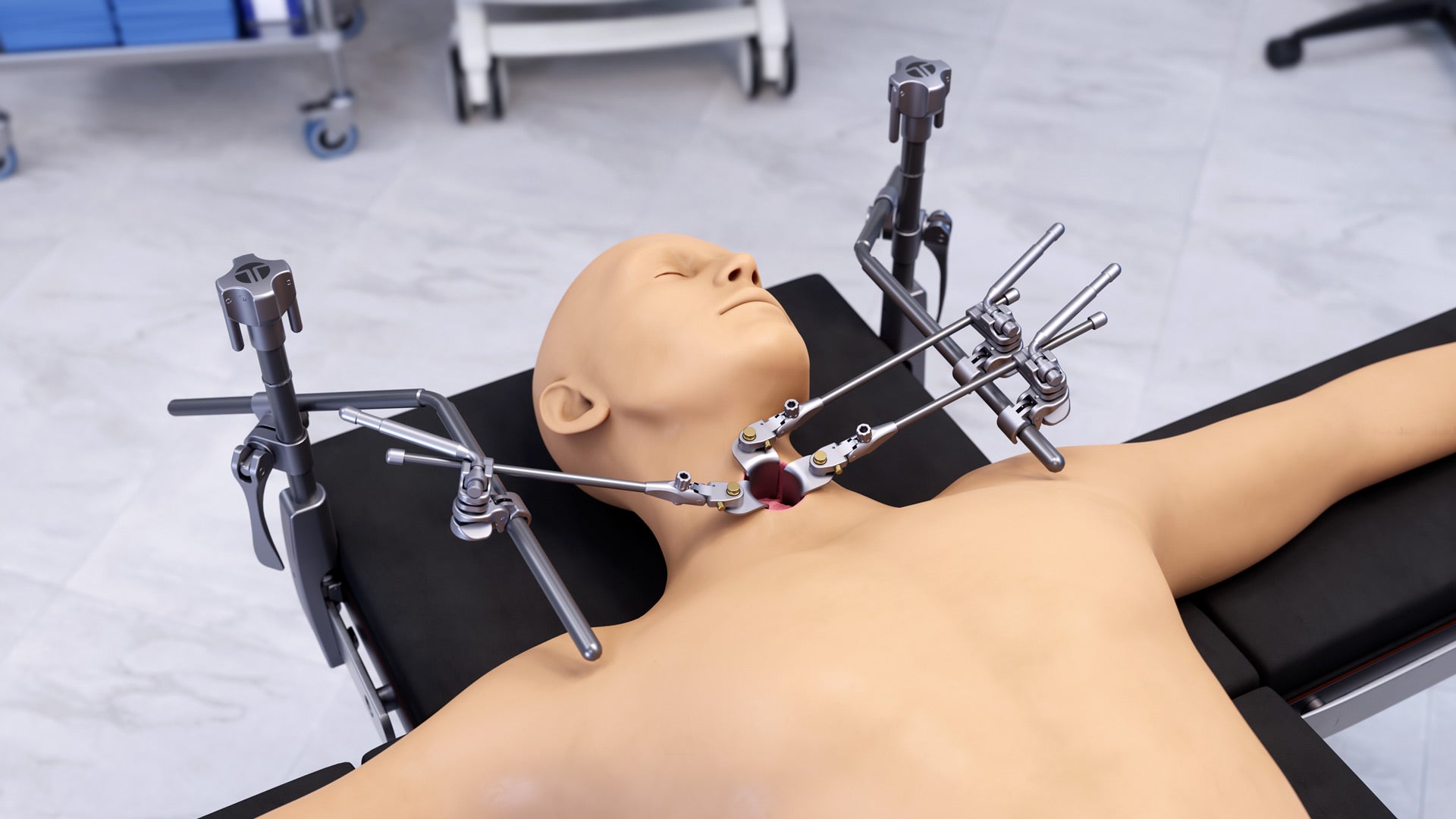
A table-mounted liver transplant retractor shifts the point of support from the incision to the operating room table. Instead of depending on the operative opening to hold the frame in place, the setup gives the surgeon a stable platform for building and adjusting exposure throughout the case.
Key comparison points for liver transplant retraction include:
● Table-mounted stability
● Bilateral frame positioning
● Multi-planed retraction
● Independent blade positioning
● Broad blade selection
● Working-space preservation
● Setup repeatability
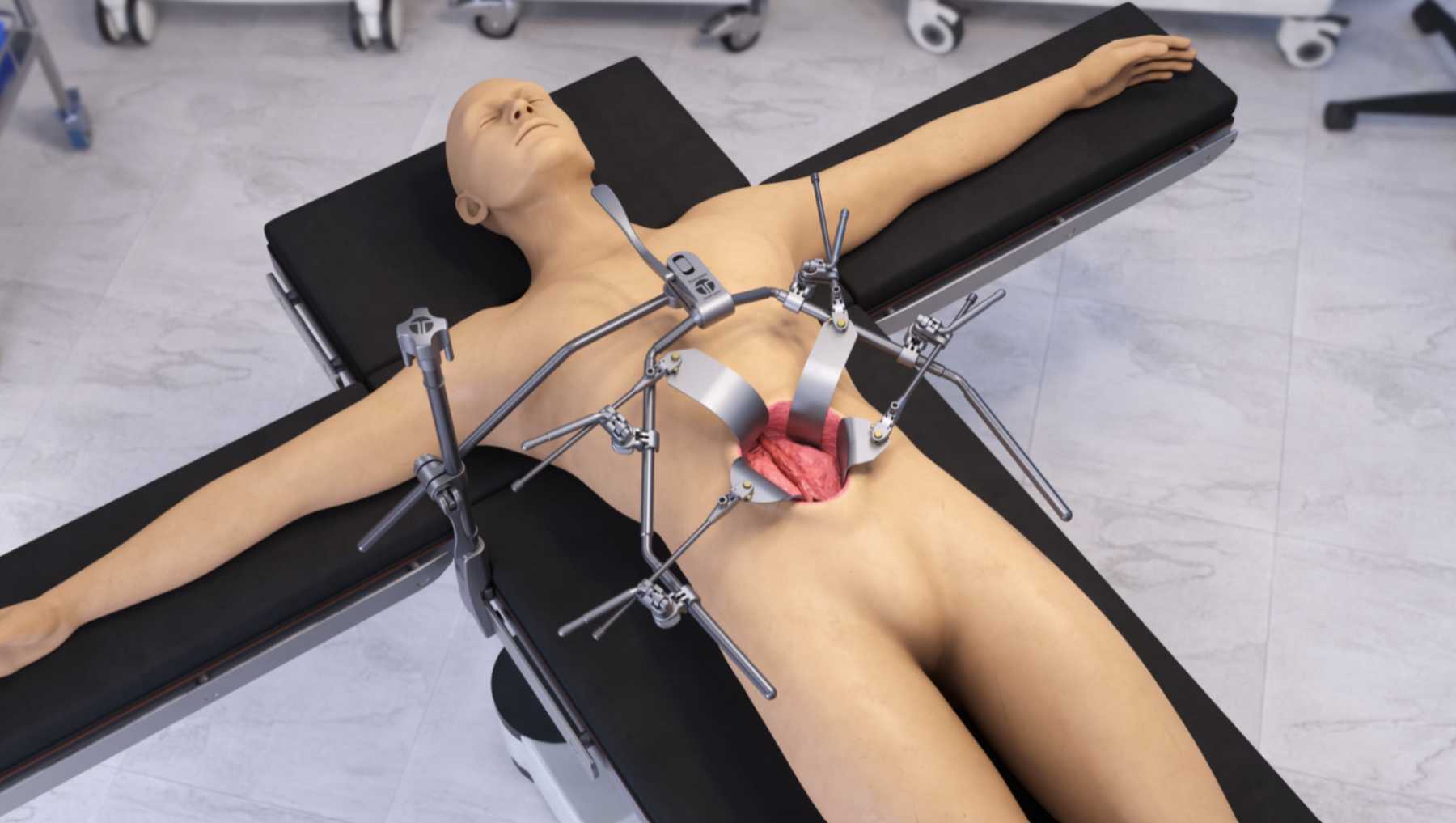
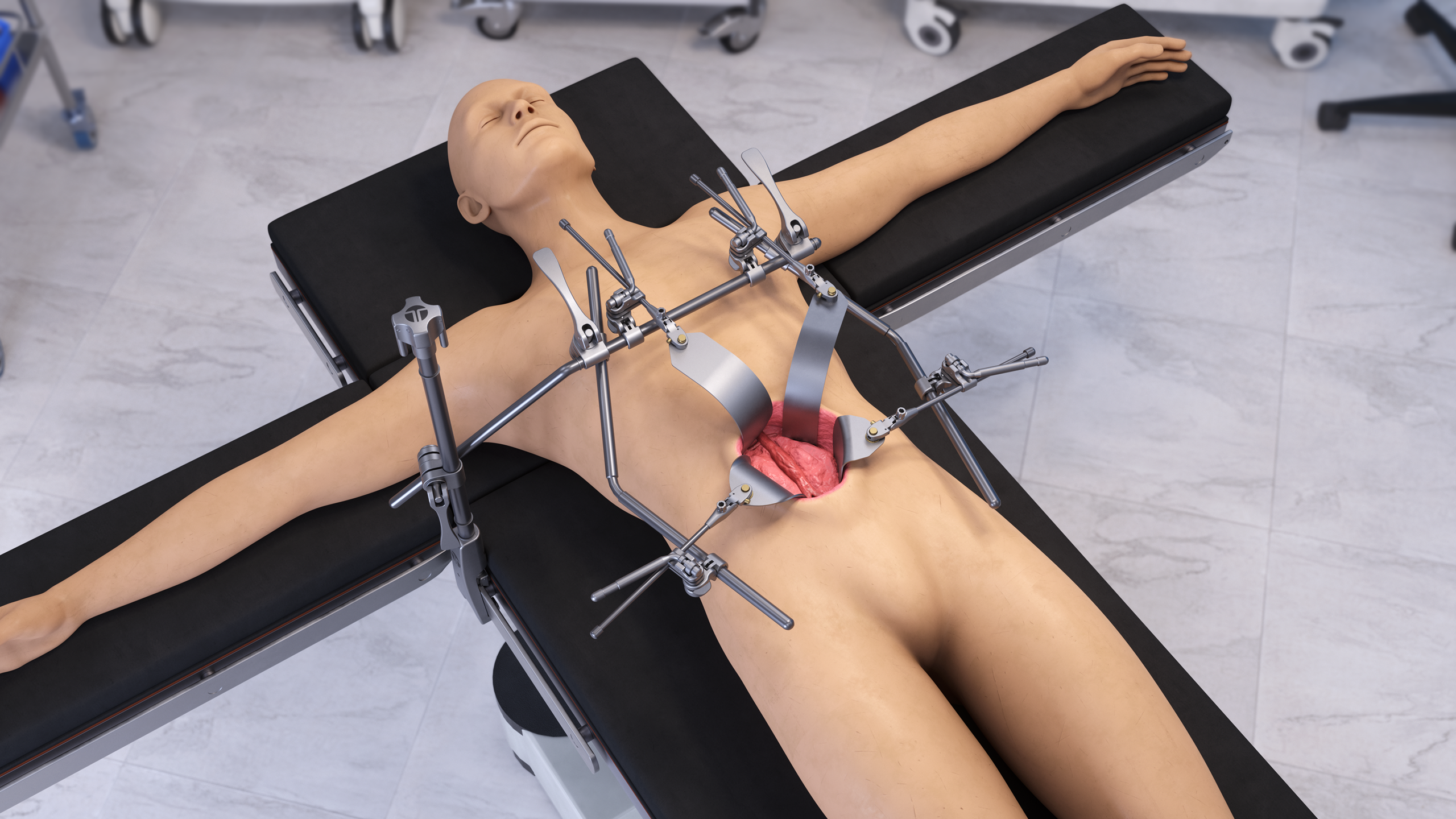
Thompson’s Liver Transplant/Oncology Retractor Set is designed for liver transplants, liver resections, oncology, obesity, and complex abdominal cases. Its bilateral table-mounted frame supports stable, versatile retraction across large and changing operative fields.
The strongest comparison considers whether the retractor set supports the surgeon’s exposure strategy, the team’s workflow, and the requirements of complex open liver surgery.
Mechanical Features That Affect Exposure
In liver transplant retractor selection, small mechanical details can affect how the field is created and maintained. Frame support, blade control, and handle placement all influence the usable exposure. Thompson’s S-Lock® Technology allows compatible blades to lock into position or swivel in the handle.
Quick Angle technology allows the blade to be angled in or out, supporting controlled blade positioning without adding unnecessary bulk around the field. Micro-adjustable handles allow fine adjustment when stronger, controlled retraction is needed.
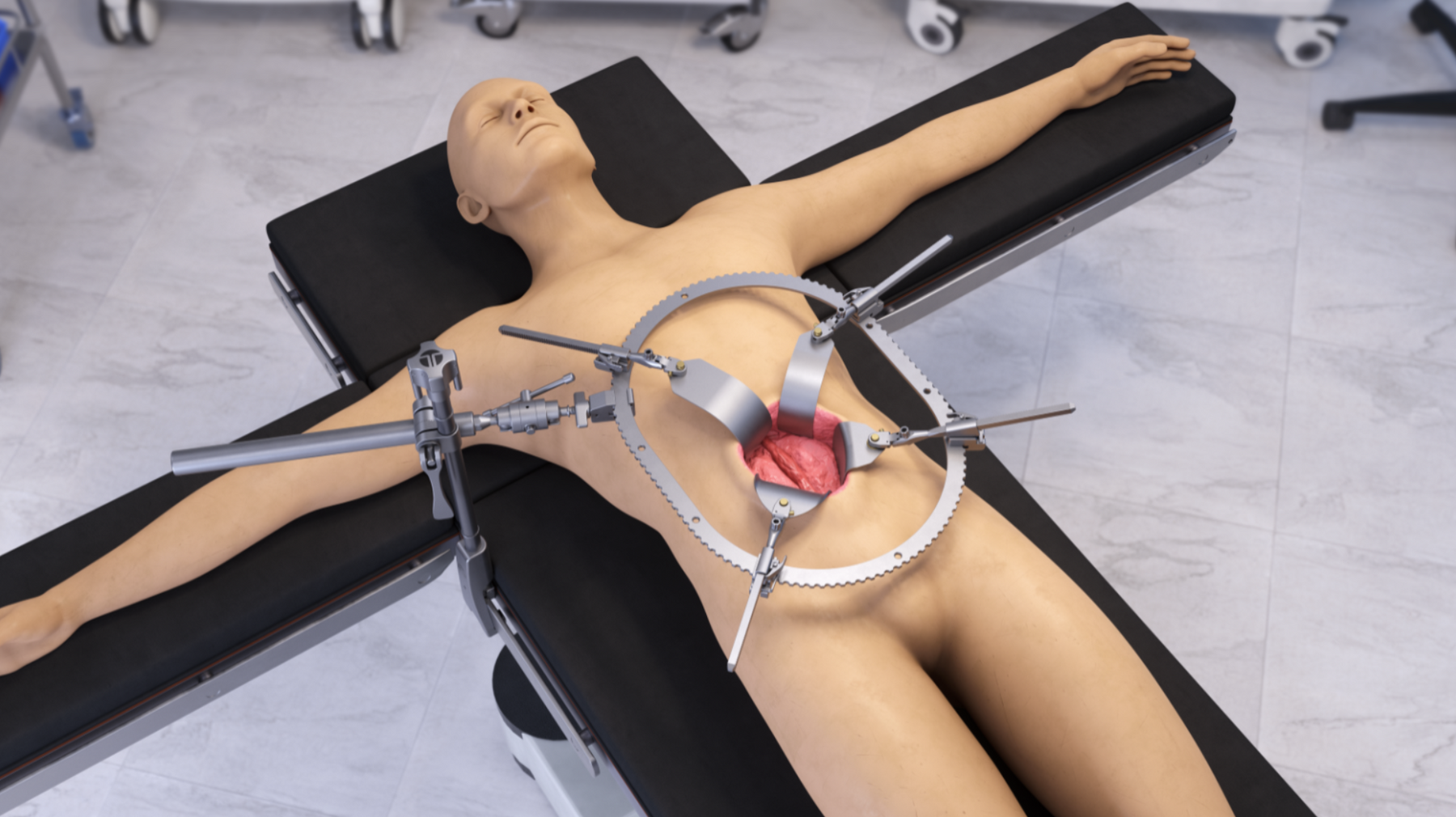
Thompson RingTrack® functions as a ratcheted ring platform while adding S-Lock® and Quick Angle features, fixed or S-Lock handle options, and compatibility with Thompson blade styles.
For surgeons comparing Balfour-style self-retaining retractors with Thompson table-mounted retractor sets, these details help surgeons evaluate which setup gives the team the most usable, adaptable exposure.
What to Evaluate During Liver Transplant Retractor Selection
A practical liver transplant retractor evaluation should focus on what the surgical team can observe during setup and use.
Surgeons and operating room leaders should compare:
● How the frame is anchored and supported
● Whether the setup supports unilateral or bilateral exposure
● How blades lock, swivel, angle, or reposition
● Whether one blade can be adjusted without rebuilding the full setup
● How much working space remains for instruments and visualization
● Whether the blade selection fits the exposure strategy
● How consistently the team can reproduce the setup
● How the components are organized for sterile processing department workflow
Sterile processing department workflow matters because liver transplant retractor sets include multiple components. Tray organization, cleaning, inspection, and case readiness affect whether the set can be used consistently across a transplant program.
What Thompson’s Liver Transplant/Oncology Set Is Designed to Support
The Liver Transplant/Oncology Retractor Set provides a bilateral table-mounted frame for complex liver transplant, liver resection, oncology, obesity, and abdominal cases. The configuration supports stable, versatile retraction with multiple options for blade positioning across a broad operative field. This supports evolving exposure requirements as the procedure progresses.
A bilateral table-mounted setup gives the surgeon multiple planes of retraction and allows the team to configure blades around the incision, anatomy, body habitus, and exposure goals. This stable, configurable exposure can be adapted as the case progresses and can be valuable to the surgeon and OR team.
Evaluating Retractors in Actual Liver Transplant Cases
Surgeons can compare Thompson’s table-mounted retractors against current retraction configurations, and even try out the retractor for a free 30-day trial. This is the best way to evaluate exposure stability, working space, blade adjustment, setup repeatability, and staff workflow.
A 30-day clinical evaluation allows U.S. customers to assess a Thompson retractor set in their own facility. Thompson coordinates the retractor set, trains operating room and sterile processing department teams, and provides support during the evaluation.
During the trial, teams should document how the frame holds exposure, how often adjustments are needed, whether blade changes interrupt workflow, how the setup affects working space, and how easily staff can prepare and reprocess the set.
Liver Transplant Retractor Selection
Liver transplant retractor selection should focus on how exposure is supported, adjusted, and maintained throughout the procedure. Balfour-style self-retaining retractors and Thompson table-mounted retractor sets can both be evaluated for open liver surgery, with comparison criteria centered on anchoring architecture, blade positioning, stability, working space, and repeatable workflow. A strong evaluation considers how well the retractor maintains open-field access while supporting stable positioning, usable working space, independent blade control, and controlled adjustment as exposure requirements change.
Thompson Surgical Instruments has spent more than 60 years refining table-mounted retraction systems for stable, hands-free surgical exposure. Our employee-owned team supports surgeons and OR teams with liver transplant and oncology configurations, broad blade options, training, and clinical evaluation support. Contact us today to learn more about table-mounted retractors for liver transplant surgery.
Share:
How to Build a Value-Analysis Case for an ALIF Table-Mounted Retractor Set
Liver Transplant Retractor Design: Features That Help Preserve the Surgical Field