



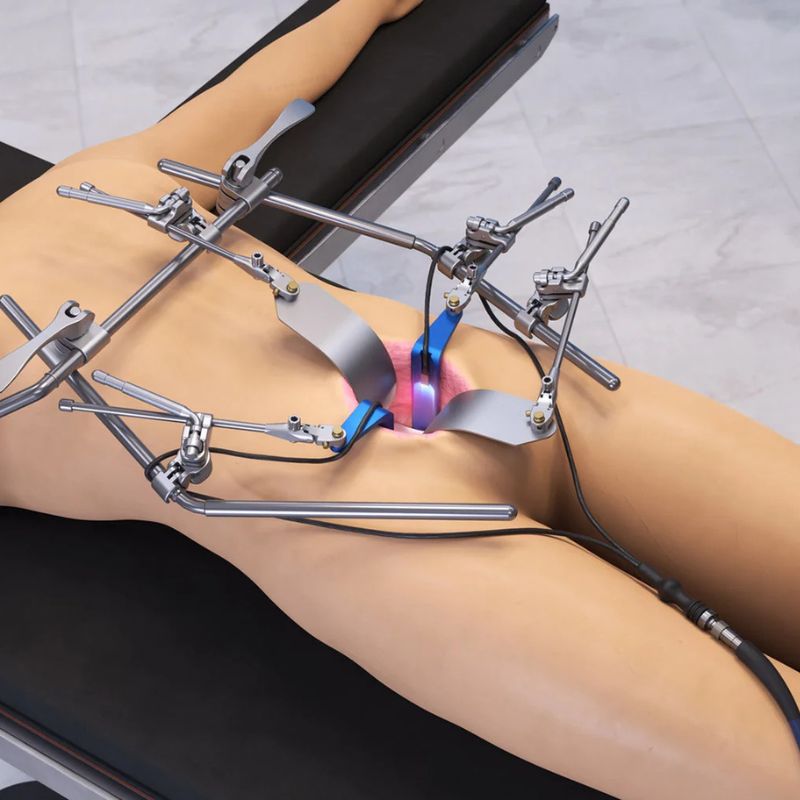
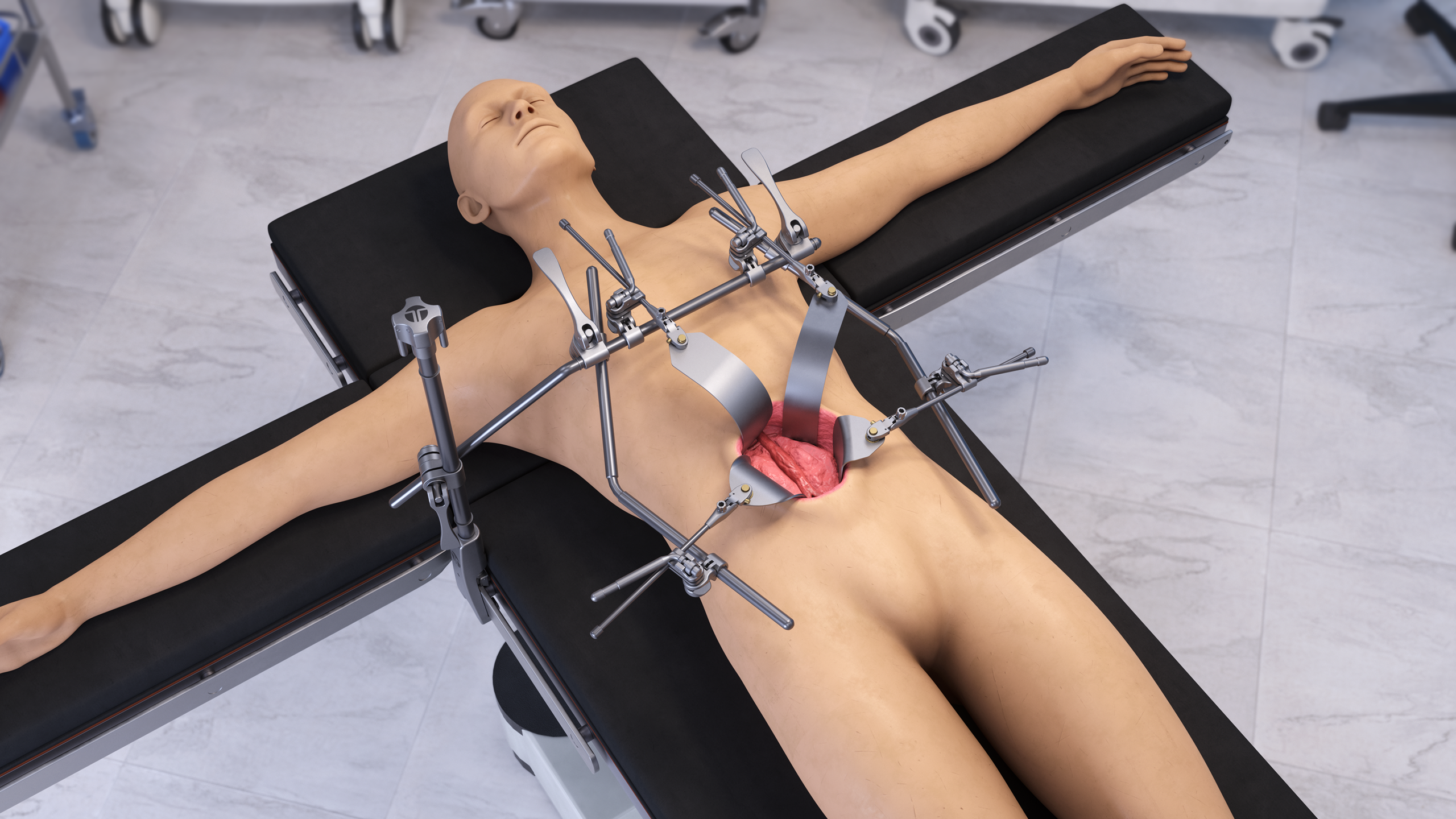
ALIF retractor set selection should begin with the exposure strategy. A ring-based configuration, one-piece frame, Spine Frame, RingTrack® , or Articulating Arm may each support anterior lumbar exposure in a different way.
The right choice depends on how the surgeon wants to establish access, how the team manages blade positioning, how much working space is needed, and how consistently the setup can be repeated in the OR. For surgeons and OR leaders, the goal is not to identify one universal ALIF retractor set. The goal is to select the configuration that best fits the procedure, the surgeon’s preference, and the team’s workflow.
Why ALIF Retractor Set Selection Starts with Exposure Strategy
Frame style matters, but it should not be the first question. The more useful starting point is how the surgeon wants to create and maintain exposure.
According to this article, ALIF Retractor Options for Anterior Lumbar Access Surgery, patient anatomy and surgical experience help determine the role of conventional open techniques, and risk mitigation should be the surgeon’s primary focus when selecting a retractor set. That makes retractor selection a practical decision about controlled exposure, blade positioning, visibility, and workflow rather than a simple frame comparison.
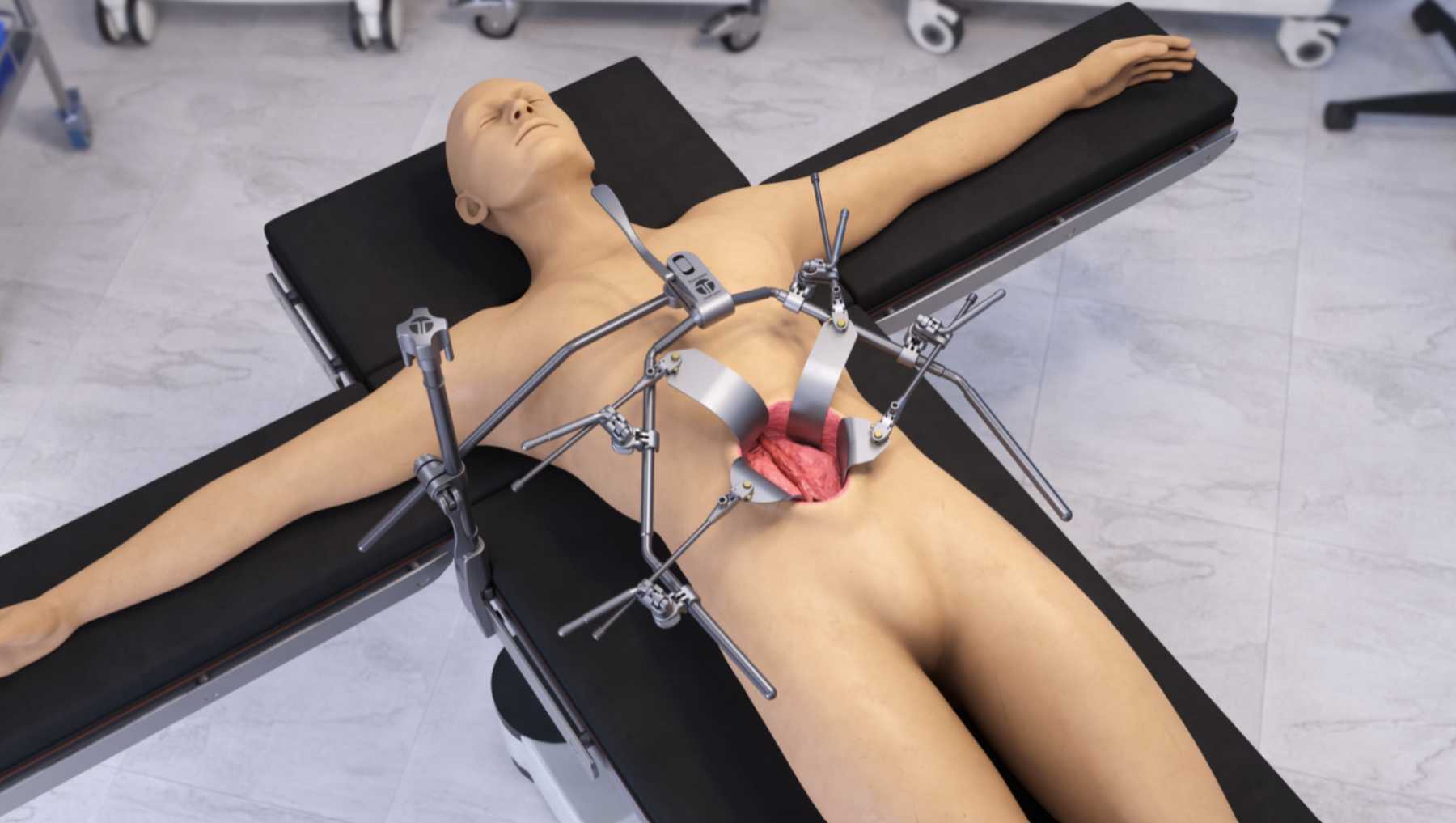
For Thompson anterior lumbar retractor sets, the frame architecture gives surgeons several ways to support that exposure strategy. Some teams may prefer the structure of a ring-based setup. Others may want a streamlined one-piece frame, a Spine Frame configuration, or adjustable Articulating Arms for multi-planar positioning.
A good comparison should ask:
● How does the frame support stable, hands-free exposure?
● How does it allow blade placement and adjustment?
● Does the setup preserve working space around the field?
● Are LitePath™ illumination options available?
● Which blade kits are compatible with the configuration?
● Can the OR team set it up consistently?
● Can SPD teams process and organize the components efficiently?
Those questions keep the decision focused on how the retractor set performs during use.
Comparing ALIF Retractor Set Configurations
Thompson offers multiple table-mounted retractor sets for anterior lumbar procedures, including Spine Frame, RingFrame, RingTrack® , OneFrame, and Articulating Arm configurations. Each option supports a different balance of frame structure, blade positioning, illumination, and setup workflow. Explore Thompson’s table-mounted retractors for spine procedures.
A configuration that supports one surgeon’s preferred exposure strategy may not be the best fit for another surgeon, case type, or OR workflow.
Spine Frame Retractor Set
The Anterior Lumbar Spine Frame Retractor Set is built around stable, hands-free exposure with frame setup efficiency and specialized blade design. This configuration provides stable exposure for anterior lumbar procedures, with LitePath™ Technology delivering targeted illumination directly to the surgical site.
This ALIF retractor set provides surgeon-controlled stability, multi-planed retraction, and anterior lumbar blade options. Blade kit options include Short Neck Renal Vein, Radiolucent Richardson, LitePath Add-On, and General & Reverse Lip blade kits.
For OR teams, the evaluation should include more than the frame itself. Teams should look at how the frame positions, how quickly staff become familiar with setup, how blade kits are organized, and whether LitePath™ illumination supports the surgeon’s visibility needs in deep anterior lumbar exposure.
RingFrame Retractor Set
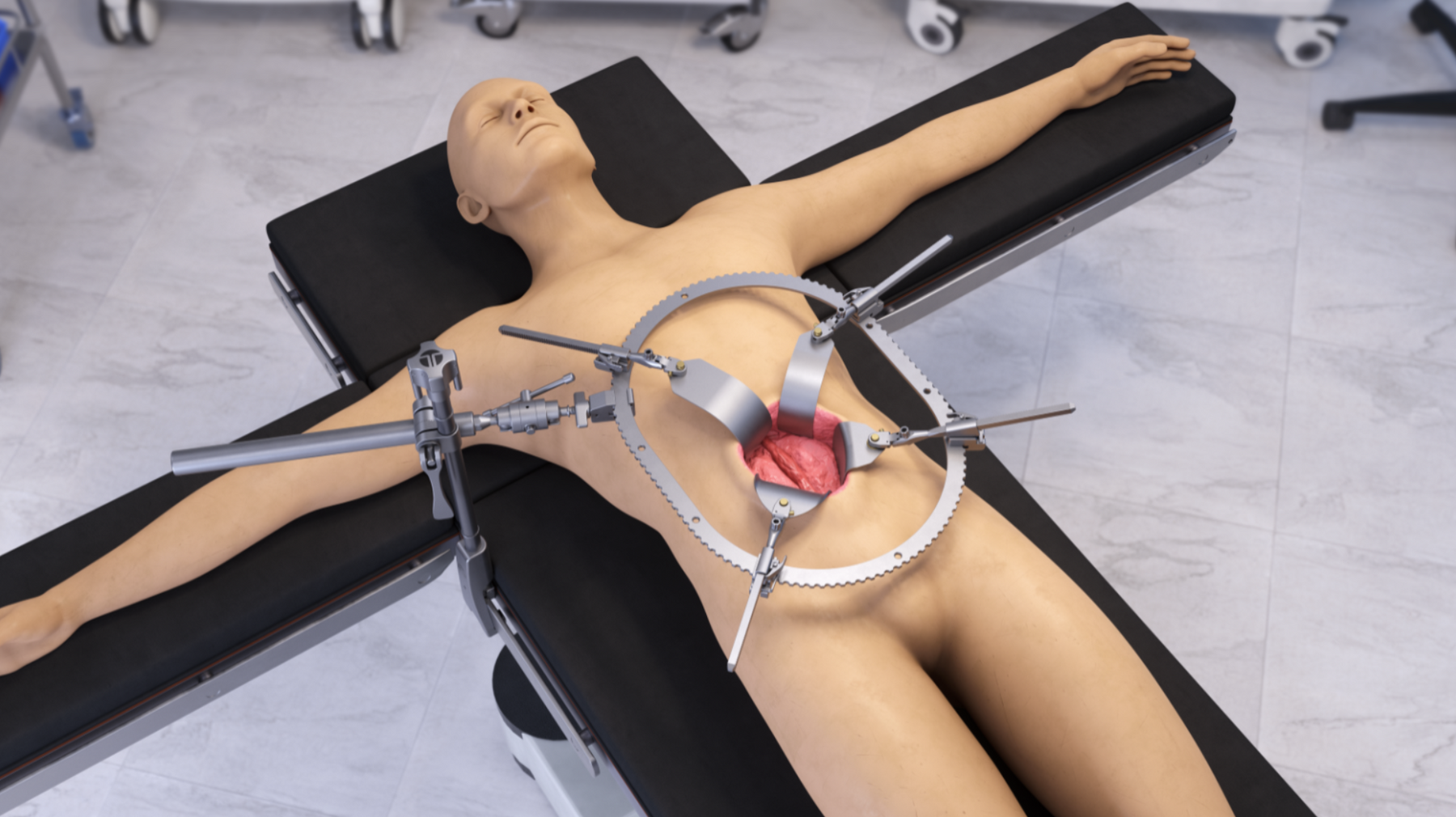
The Anterior Lumbar RingFrame Retractor Set uses a low-profile table-mounted ring to support anterior lumbar exposure. Thompson describes the ring frame as allowing quick, precise blade placement while maintaining a clear view of the surgical site. LitePath™ integrated blade lighting is available with this configuration.
A ring-based setup may be useful when the surgeon prefers multiple points of retraction organized around the operative field. The ring architecture can support precise blade placement while giving the team a defined structure for positioning and adjustment.
Blade selection should be reviewed alongside the frame and includes Short Neck Renal Vein, Fine Vessel, Radiolucent Richardson, Reverse Lip, and LitePath Add-On blade kit options.
For surgeons and OR leaders, the key question is whether the ring configuration provides the right balance of exposure control, visibility, blade access, and working space for the team’s anterior lumbar approach.
RingTrack® Retractor Set
The Anterior Lumbar RingTrack® Retractor Set is built on Thompson’s RingTrack® frame and paired with LitePath illuminated blades. Thompson describes the RingTrack® frame as a familiar platform that provides reliable hands-free exposure for anterior lumbar approaches while bringing light directly to the surgical site.
This configuration may be appropriate for teams that prefer a ring-based platform but want the specific structure and setup familiarity of RingTrack®. The frame gives surgeons another option for organizing exposure while maintaining stable, hands-free retraction.
The RingTrack® blade kit options include General & AL Brau, Short Neck Renal Vein, Radiolucent Richardson, Fixed RingTrack® General Vascular, and LitePath Add-On kits. These options make blade compatibility an important part of the evaluation.
For ALIF retractor set selection, RingTrack® should be evaluated on frame familiarity, blade organization, lighting workflow, and setup repeatability.
OneFrame Retractor Set
The Anterior Lumbar OneFrame Retractor Set uses a single-piece frame design for anterior lumbar procedures. Thompson describes the OneFrame configuration as delivering stable, versatile retraction with modular positioning and optional LitePath™ integrated lighting for deep surgical field illumination.
OneFrame may be useful when the team wants a streamlined setup while preserving stable, hands-free exposure and controlled positioning. The single-piece frame design can help reduce setup complexity when consistency and efficiency are important to the OR team.
This configuration should be evaluated for how naturally it fits the surgeon’s exposure preference and the team’s workflow. A streamlined frame still needs to support the required blade placement, working space, and visibility for the procedure.
For hospitals evaluating ALIF retractor sets across multiple surgeons, OneFrame may also be part of a standardization discussion. The key question is whether the configuration gives the team a repeatable setup while still allowing the surgeon to work in the preferred exposure corridor.
Articulating Arm Retractor Set
The Anterior Articulating Arm Retractor Set provides a stable table-mounted frame with adjustable articulating arms for versatile, multi-planar retraction. Thompson’s product page describes the configuration as offering fast, easy setup with streamlined components and LitePath™ integrated blade lighting for focused illumination directly in the wound.
The Articulating Arm configuration may be appropriate when the surgeon wants flexible positioning from multiple directions. Rather than working within a ring frame or one-piece frame layout, the articulating arms allow the team to position retraction points independently based on the exposure strategy.
Evaluation should include arm positioning, blade compatibility, working space, setup workflow, and how the configuration supports surgeon-controlled exposure.
ALIF Retractor Set Comparison Matrix
|
Thompson Configuration |
What to Evaluate |
Workflow Considerations |
|
Spine Frame Retractor Set |
Stable hands-free exposure, Frame efficiency, multi-planed retraction, LitePath™ illumination |
Frame positioning, blade kit selection, setup repeatability |
|
RingFrame Retractor Set |
Low-profile ring exposure, precise blade placement, bilateral support |
Ring placement, working space, blade access, team familiarity |
|
RingTrack® Retractor Set |
Familiar ratcheted ring-based platform, LitePath™ illuminated blades, broad blade kit options |
Blade organization, lighting workflow, setup consistency |
|
OneFrame Retractor Set |
Streamlined single-piece frame, stable versatile retraction, optional LitePath™ lighting |
Setup efficiency, staff training, consistent frame positioning |
|
Articulating Arm Retractor Set |
Adjustable arm positioning, multi-planar retraction, focused illumination |
Arm placement, surgeon-specific adjustment, blade compatibility |
The right ALIF retractor set should be selected based on exposure goals, rather than frame preference alone. Surgeons should consider how the configuration performs during setup, blade placement, exposure refinement, imaging workflow, and takedown.
What OR Teams Should Compare Before Standardizing
A retractor set may support the surgeon’s exposure strategy but still need to fit the full OR workflow. Setup, training, documentation, tray organization, and SPD processing all affect whether a configuration can be adopted consistently.
Before standardizing an ALIF retractor set, OR leaders should compare:
● Setup sequence
● Frame positioning
● Blade compatibility
● LitePath™ illumination needs
● Working space around the field
● Surgeon adjustment during exposure
● Setup videos and user manuals
● Cleaning and reprocessing documentation
● SPD organization and tray workflow
● Clinical evaluation support
Thompson’s offers documentation including IFUs, user manuals, catalogs, and illumination product specifications, giving teams a place to review support materials before and during evaluation.
This workflow review is especially important when a facility is comparing several anterior lumbar configurations. A frame may look appropriate on paper, but the team still needs to understand how it performs during setup, use, breakdown, and reprocessing.
Evaluating ALIF Retractor Sets in the OR
A clinical evaluation gives surgeons and OR teams the opportunity to compare retractor sets in their own environment. This is especially useful when the decision involves multiple frame styles, blade kits, and surgeon preferences.
Thompson offers a free 30-day clinical trial for U.S. customers. During the evaluation, Thompson coordinates the retractor set, trains OR and SPD teams, and provides full support throughout the trial.
For ALIF retractor set selection, the evaluation should include feedback from the surgeon, scrub techs, circulators, assistants, SPD staff, and purchasing stakeholders. Each group may identify different details that affect long-term adoption.
Surgeons can assess exposure and adjustment control. OR staff can assess setup and workflow. SPD teams can review cleaning, documentation, and organization. Value-analysis teams can compare the system’s fit across procedure needs, staff training, and standardization goals.
Thompson’s Spine Frame Retractor Sets
Choosing an ALIF retractor set starts with understanding how the surgeon wants to create and maintain exposure. RingFrame, RingTrack®, OneFrame, Spine Frame, and Articulating Arm configurations each offer a different balance of positioning control, frame structure, blade access, illumination, and workflow support. The best selection is the configuration that fits the procedure, surgeon preference, team familiarity, and anterior lumbar workflow.
Thompson Surgical Instruments has spent more than 60 years refining table-mounted retraction systems for stable, hands-free surgical exposure. Our employee-owned team supports surgeons and OR teams with anterior lumbar configurations, blade options, LitePath™ illumination, training, and clinical evaluation support. Contact us today to learn more about ALIF retractor set selection.
Share:
Table-Mounted Retractor for ALIF: What Surgeons and OR Leaders Should Evaluate
How to Build a Value-Analysis Case for an ALIF Table-Mounted Retractor Set