



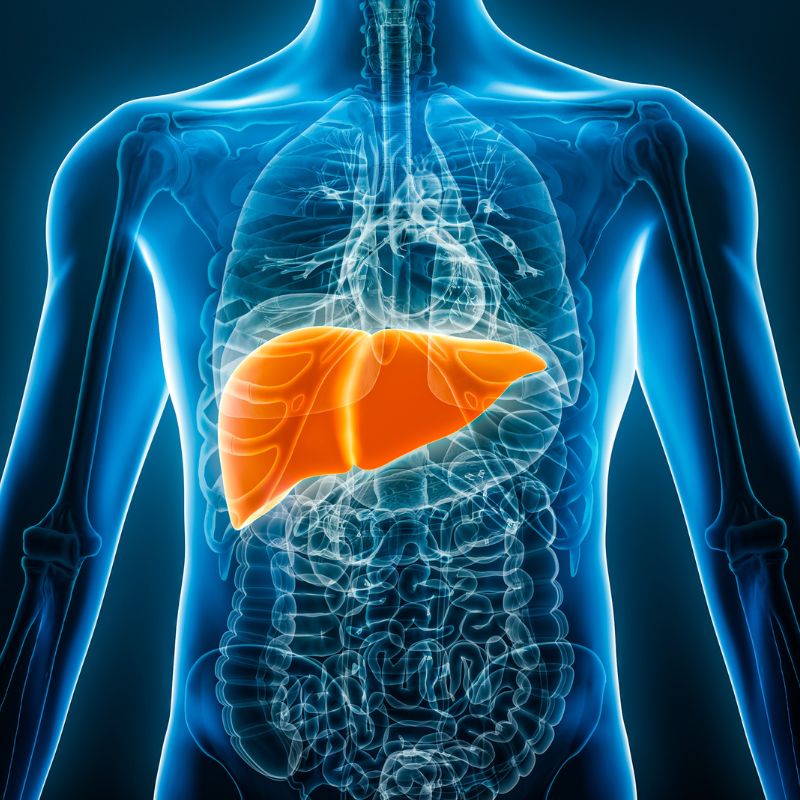
Liver surgery exposure depends on more than retractor size. In complex open liver procedures, the quality of exposure comes from stable support, blade position, retraction direction, working space, and the ability to adjust the setup as the field changes.
A larger retractor may provide more reach or more attachment points, but size alone does not define useful exposure. Surgeons and operating room teams need a setup that holds steadily, positions blades where they are needed, preserves access around the field, and supports the surgeon’s workflow throughout the case.
Bigger Retractors Do Not Automatically Create Better Visualization
Good visualization starts with a stable, usable field. Retraction has to open the right area, from the right direction, with enough control to preserve access as the case progresses.
In open liver surgery, the operative field can be broad, deep, and dynamic. The surgeon may need access near the costal margin, liver hilum, hepatic veins, inferior vena cava, or surrounding upper-abdominal anatomy depending on the procedure. A Journal of Gastrointestinal Oncology article on hepatic resection identifies the Thompson Retractor as the authors’ standard retractor for liver exposure and describes upward rib retraction to support access around the suprahepatic and infrahepatic inferior vena cava.
That kind of exposure is not created by size alone. It requires a retraction strategy that supports the anatomy, the incision, the direction of pull, and the surgeon’s preferred access points.
Liver Surgery Exposure Depends on Direction
Retraction direction matters because tissue rarely needs to move in one uniform way. Liver surgery exposure may require cephalad, lateral, abdominal wall, costal margin, soft tissue, or organ retraction at different points in the case.
A strong exposure strategy considers:
● Where the frame is anchored
● Where each blade is placed
● Which direction each blade applies retraction
● How much working space remains around the field
● Whether the setup can be adjusted without disrupting exposure elsewhere
Multi-planed retraction is important for this reason. It allows the surgeon to create different retraction vectors around a complex field instead of depending on one large opening or one direction of force.
Stable Retraction Has to Hold as the Case Changes
Initial exposure is only part of the problem. In complex liver procedures, the field may change as tissue shifts, depth changes, access points move, or the surgeon transitions through different portions of the case.
Thompson offers table-mounted retractor sets for liver transplant, liver resection, HPB, Whipple, HIPEC, and oncology procedures, with configurations designed around procedure-specific exposure needs. These cases share a common requirement: exposure needs to remain stable while allowing controlled adjustment when access requirements change.
Stable retraction should support:
● Deep operative access
● Sustained exposure during long procedures
● Controlled adjustment as the field changes
● Consistent working space for instruments and visualization
● Repeatable setup for the operating room team
For liver surgery exposure, stability means more than holding tissue away from the field. It means the setup continues to support the procedure as the case develops.
Blade Position Matters More Than Retraction Force
A blade positioned well can create more useful exposure than a larger setup applying force in the wrong direction. Blade location, blade angle, blade depth, and blade selection all affect the working field.
In liver surgery, the blade strategy may need to account for:
● Incision size and location
● Patient anatomy and body habitus
● Exposure depth
● Tissue load
● Costal margin retraction
● Abdominal wall retraction
● Organ or soft tissue retraction
● Surgeon preference and workflow
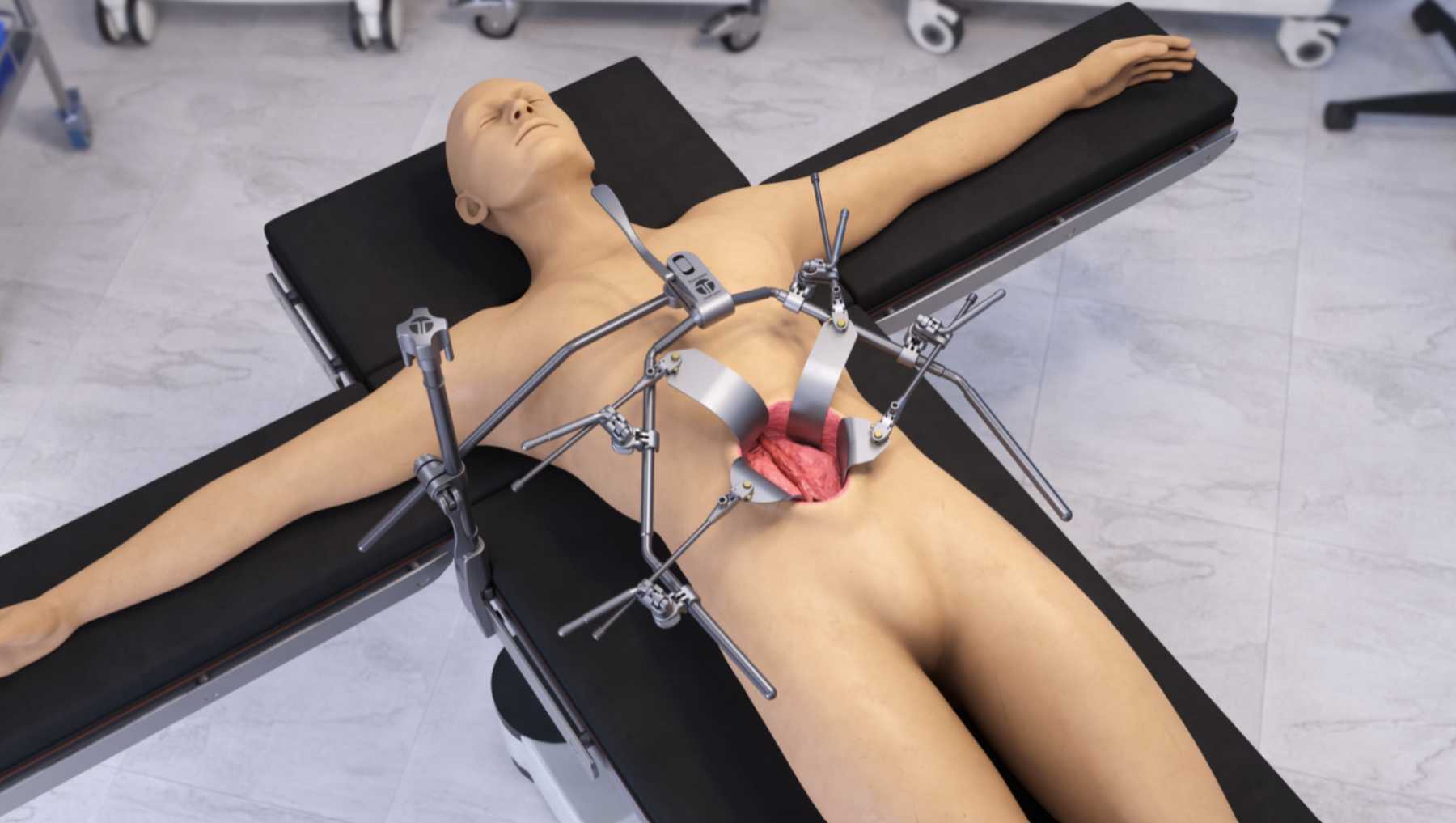
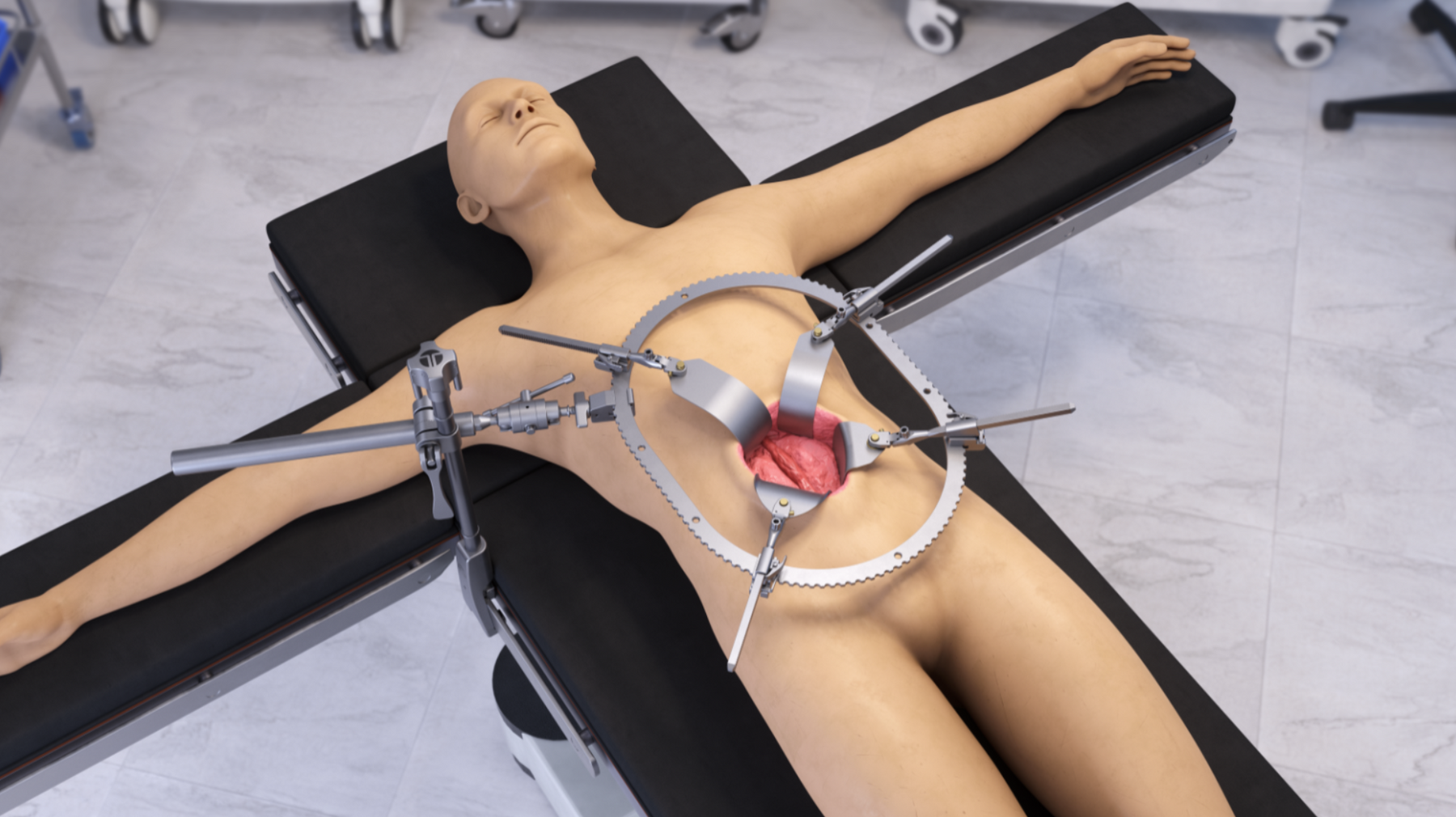
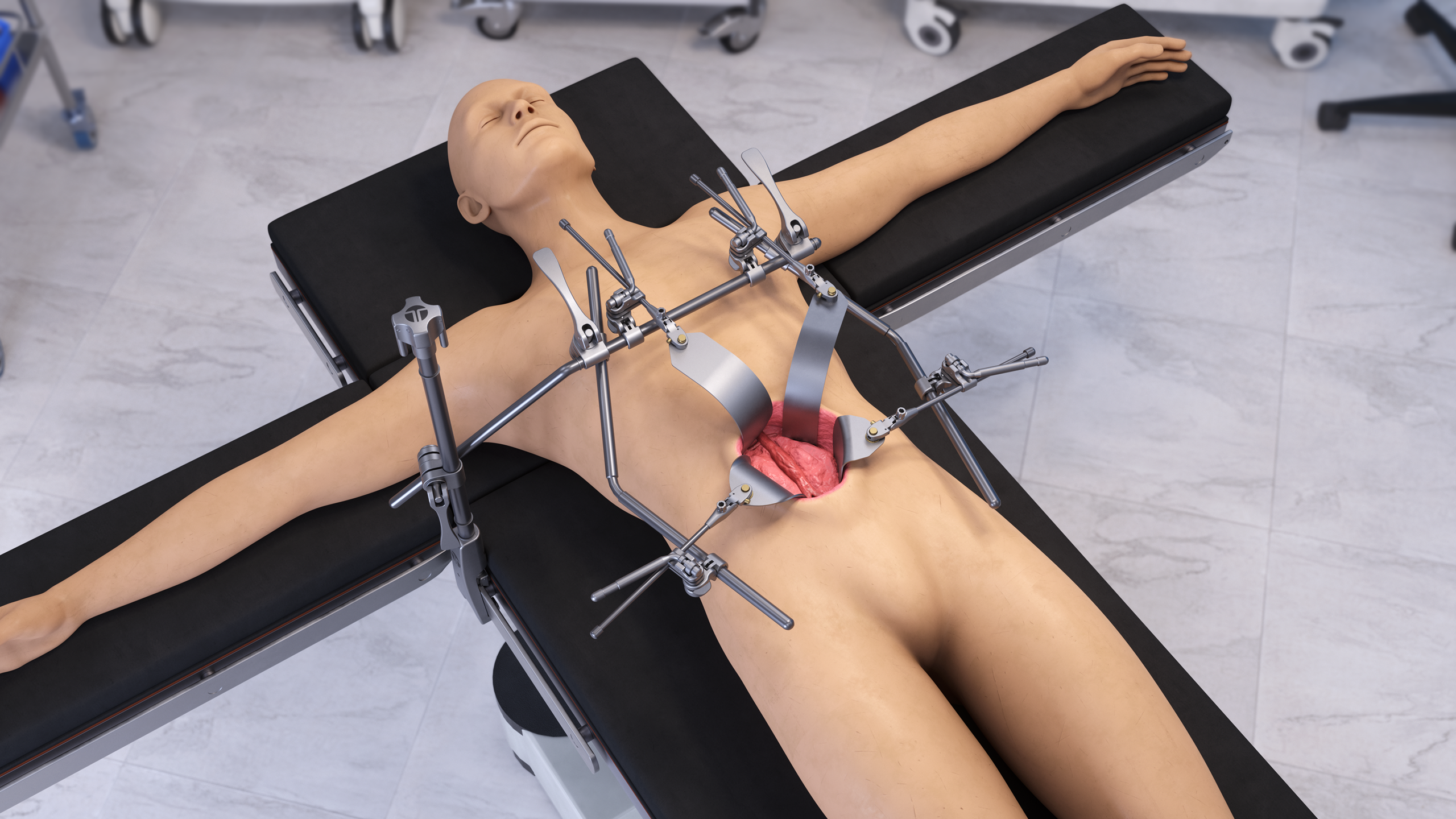
The Liver Transplant/Oncology Retractor Set pairs a bilateral table-mounted frame with broad blade selection for complex abdominal cases. That combination allows the team to configure exposure around the procedure rather than depending on a single retraction pattern.
A useful liver retraction setup gives the surgeon control over where each blade works. That is often more important than simply increasing the size of the frame or the amount of retraction applied.
Working Space Defines Usable Exposure
An open field is only useful if the team can work within it. Frame position, handle placement, blade angle, and retractor profile all influence how much usable room remains for the surgeon, assistants, instruments, and visualization.
For liver surgery exposure, working space should be evaluated from multiple perspectives:
● Does the surgeon have a clear sight line?
● Can instruments move through the necessary corridor?
● Does the frame interfere with assistant access?
● Are handles positioned away from critical working areas?
● Can the team adjust blades without crowding the field?
● Can the setup be reproduced consistently across cases?
The question is not whether the field looks open in a still image. The better question is whether the field remains workable during the procedure.
Good Liver Surgery Exposure Is Stable, Adaptable, and Reproducible
A useful retractor setup supports the way the surgeon works. In complex liver procedures, good exposure is usually defined by several characteristics working together.
Good liver surgery exposure should be:
● Stable enough to hold the field during sustained retraction
● Adaptable as anatomy and access requirements change
● Usable for instrumentation, visualization, and assistant access
● Reproducible for operating room staff
● Configurable around patient anatomy and surgeon preference
● Compatible with the procedure’s exposure depth and field size
This is why “bigger” is too limited as an evaluation standard. A retractor set can be large and still fail to provide the right working geometry. A more useful evaluation looks at the relationship between frame stability, blade control, retraction direction, and working space.
Where a Bilateral Table-Mounted Retractor Set Fits
A bilateral table-mounted retractor set supports liver surgery exposure by creating a stable external foundation tied to the operating room table. The frame gives the surgeon multiple options for positioning blades around a broad upper-abdominal field.
The Liver Transplant/Oncology Retractor Set is designed for liver transplant, liver resection, oncology, obesity, and complex abdominal cases. Its bilateral frame supports multi-planed retraction, broad blade selection, and stable, versatile exposure across large or changing operative fields.
For surgeons, the value is configurability. The setup can be matched to anatomy, incision strategy, body habitus, exposure depth, and procedure phase. Independent blade positioning allows one area of exposure to be refined while the rest of the field remains organized.
For operating room teams, the value is repeatability. A known frame setup, clear blade options, staff training, and documented preferences help the team prepare the retractor set consistently while preserving surgeon-specific flexibility.
Test the Exposure Strategy in the OR
Liver surgery exposure should be evaluated during representative cases. Product descriptions can explain the frame, blades, and configuration options, but the operating room shows how those parts work together.
A practical evaluation should document:
● Exposure stability during the case
● Number and type of blade adjustments
● Working space around the field
● Surgeon sight line and instrument access
● Ease of setup for scrub and circulating staff
● Blade selection and positioning needs
● Sterile processing department workflow
● Training requirements
● Surgeon feedback after use
The liver transplant retractor setup resource gives teams additional context for frame, blade, and setup considerations in open liver exposure. For broader retractor education, Beyond the Blade collects Thompson setup guides, frame comparisons, and procedure-focused resources.
A 30-day clinical evaluation allows U.S. customers to assess a Thompson retractor set in their own facility. Thompson coordinates the appropriate set, trains operating room and sterile processing department teams, and provides support during the evaluation.
Stable Table-Mounted Retraction for Liver Surgery
Stable table-mounted retraction gives surgeons a foundation for controlled liver surgery exposure. A strong setup supports multi-planed positioning, independent blade control, broad blade selection, usable working space, and adjustment as exposure requirements change. For complex liver procedures, the best evaluation looks at how the full frame-and-blade configuration performs in the operating room.
Thompson Surgical Instruments has spent more than 60 years refining table-mounted retraction systems for stable, hands-free surgical exposure. Our employee-owned team supports surgeons and OR teams with liver transplant, liver resection, HPB, Whipple, HIPEC, and oncology configurations, along with broad blade options, training, and clinical evaluation support. Contact us today to learn more about improving liver surgery exposure.
Share:
Why Stable Hands-Free Retraction Matters in ALIF Procedures