



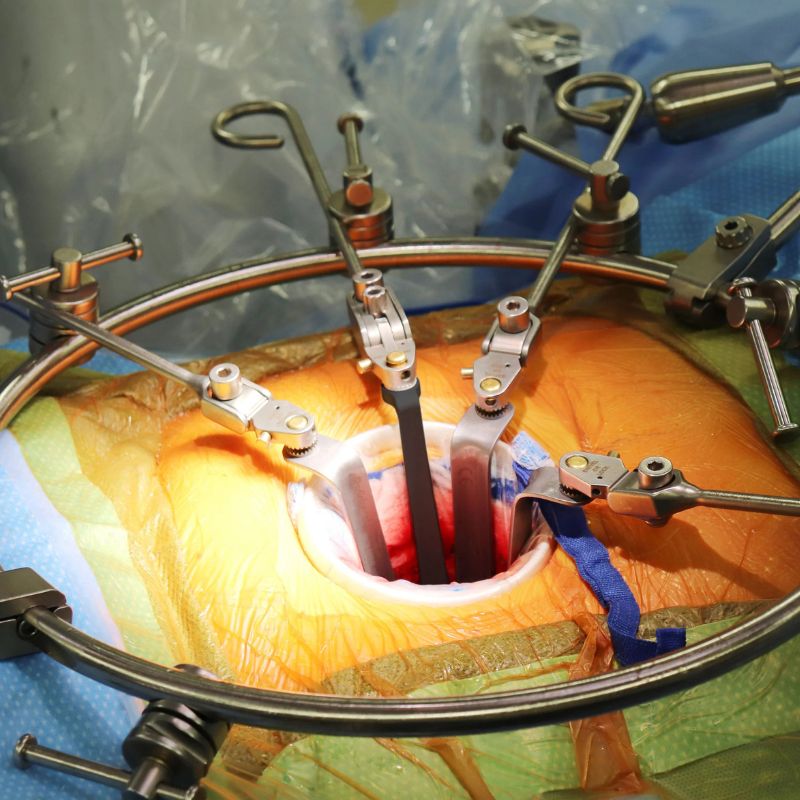
ALIF retraction must hold steady in a deep anterior corridor where visibility, working space, and controlled access all affect the flow of the procedure. Stable hands-free retraction gives the surgical team a consistent field while allowing the surgeon to refine exposure as the case progresses.
In anterior lumbar procedures, retraction is not only about initial access. The retractor set must support the surgeon’s exposure strategy over time, hold position under load, and allow controlled blade adjustment without repeatedly interrupting the established field.
Why ALIF Retraction Requires Stability Over Time
Anterior lumbar interbody fusion is performed through an anterior approach to the lumbar spine. A 2025 review in the Journal of Spine Surgery describes ALIF as a valuable spine procedure but notes that it requires careful execution because of its proximity to critical neurovascular and soft tissue structures. The same review also identifies vascular and visceral injury as part of the unique challenge profile of ALIF procedures.
That is why stable exposure matters. The surgical team needs a field that remains consistent while the surgeon works through a confined corridor, manages instrumentation, and adjusts exposure as needed. Small shifts in retraction can affect access, visualization, and workflow.
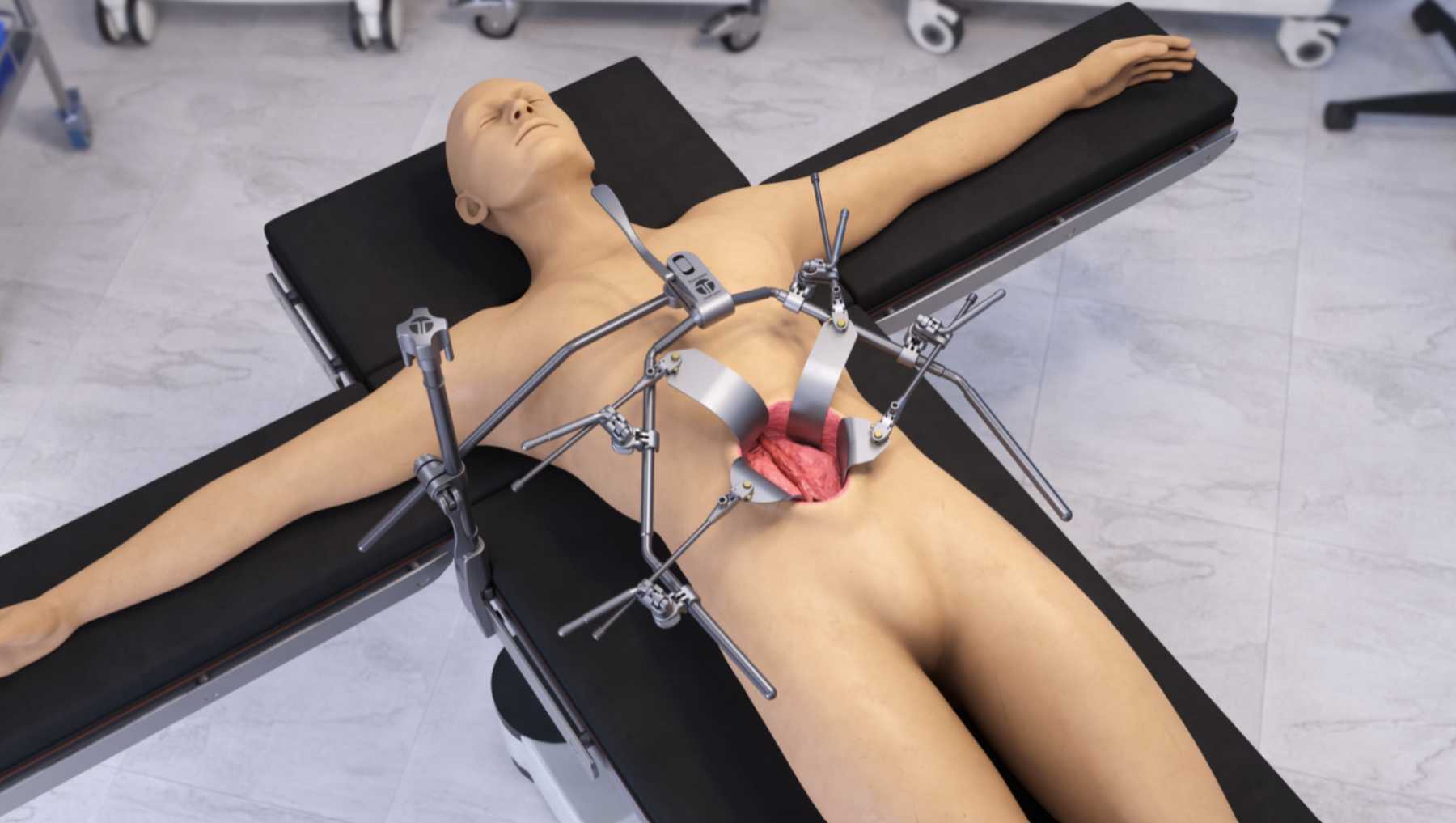
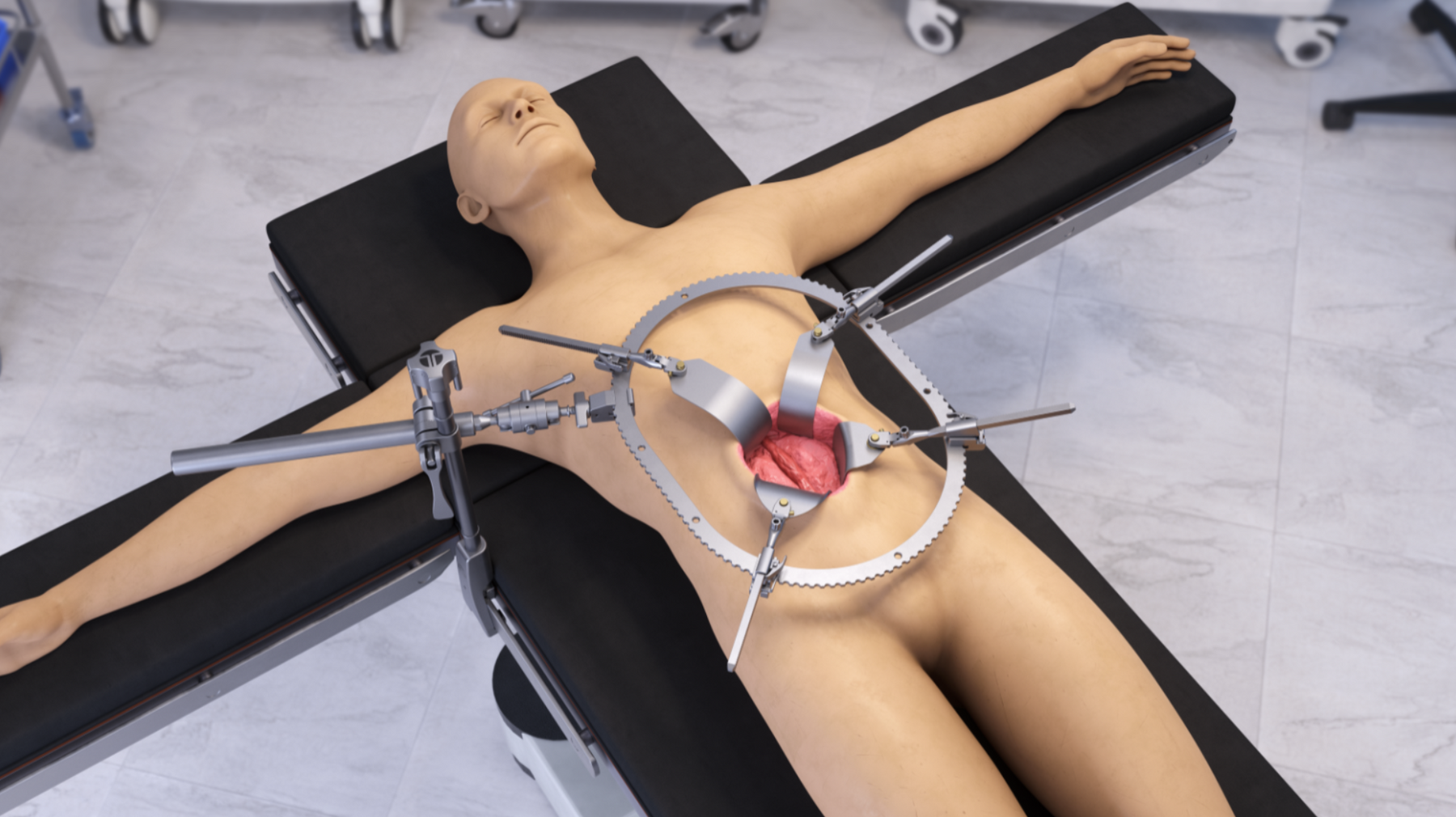
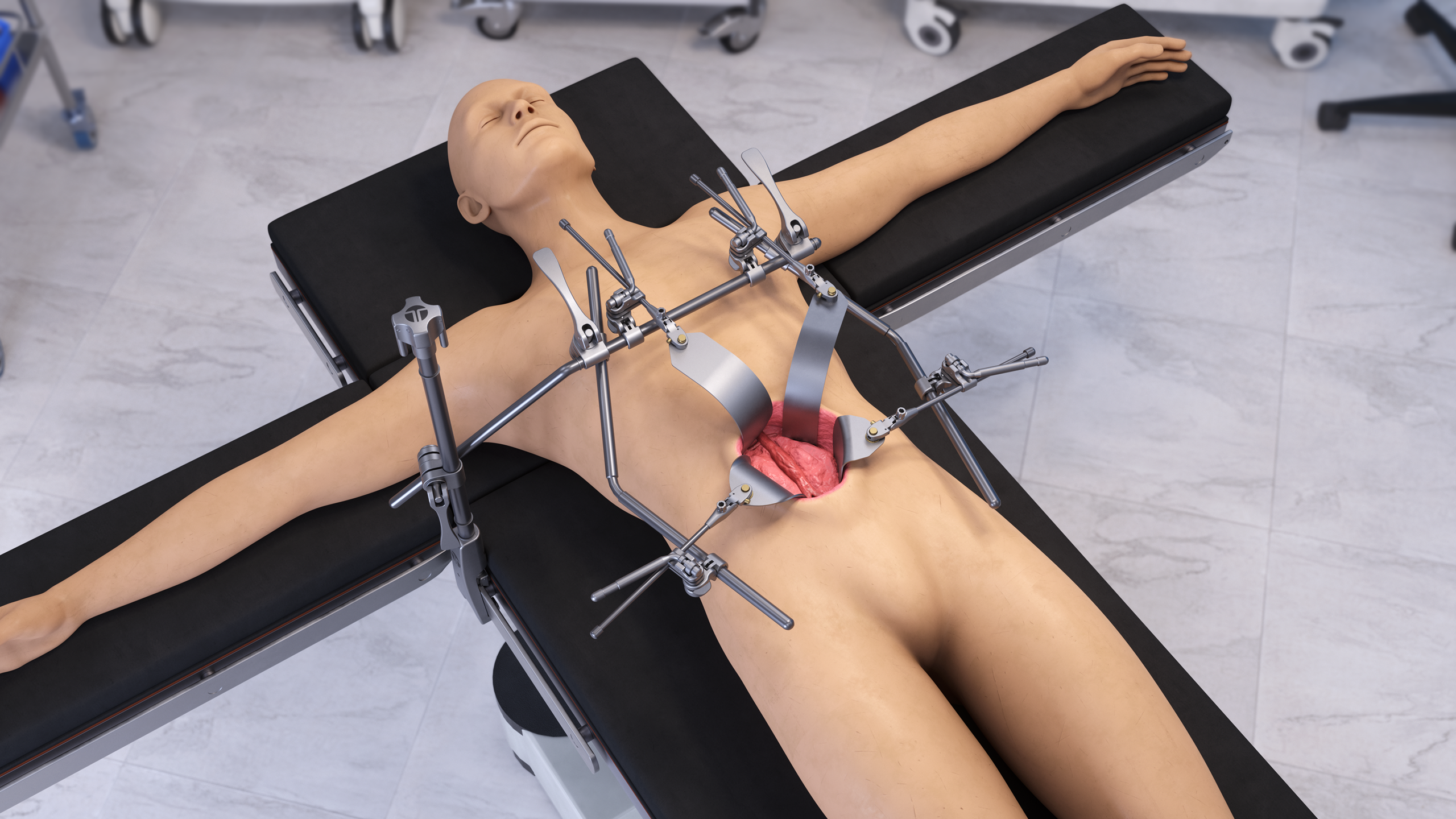
A table-mounted spine retractor supports this need by anchoring the frame to the operating room table. Instead of relying on continuous manual holding as the primary exposure strategy, the retractor set provides a stable foundation that can maintain hands-free retraction while the team works.
What Hands-Free Retraction Supports in the OR
In ALIF procedures, hands-free retraction should support the surgeon’s exposure strategy with stable positioning, controlled blade adjustment, and working space for instrumentation and visualization. The retractor set needs to hold the field consistently while allowing the surgeon to refine exposure as anatomy, access, and procedural needs change.
A table-mounted spine retractor set supports this workflow by anchoring the frame to the operating room table and giving the team a fixed platform for anterior lumbar exposure. Thompson’s spine procedure resources describe stable hands-free retraction, low-profile configurations, independent blade control, and LitePath™ illumination as important considerations for spine exposure.
For ALIF retraction, the evaluation should focus on how the frame and blades work together during the case:
● Does the frame hold position under sustained retraction?
● Can the surgeon adjust individual blades without disrupting the field?
● Does the setup preserve working space around the anterior corridor?
● Are blade and lighting options matched to the exposure strategy?
● Can the OR team reproduce the setup consistently?
For ALIF retraction, the evaluation should focus on how the frame and blades work together to maintain stable exposure, preserve working space, and support controlled adjustment as the procedure progresses.
Why Retraction Drift Can Disrupt Workflow
ALIF exposure depends on controlled positioning. When retraction shifts or requires repeated adjustment, the working corridor may need to be re-established before the surgeon can continue through the next step of the procedure.
A table-mounted spine retractor should hold position under sustained retraction while still allowing controlled refinement of individual blades. In anterior lumbar procedures, that combination supports stable exposure, working space for instrumentation, and visibility in a deep operative corridor.
For OR teams, stability should be evaluated during use, not only during initial setup. The frame, blades, handles, lighting, and locking mechanisms all affect whether the retractor set can maintain consistent exposure as the procedure progresses.
Stable Retraction and Visualization Work Together
Retraction and visualization are closely connected in ALIF procedures. A frame that holds steady helps preserve the field, but visibility also depends on blade position, working space, lighting, and how the setup interacts with the surgeon’s approach.
Thompson’s Anterior Lumbar Spine Frame Retractor Set is designed for anterior lumbar procedures and provides stable, hands-free exposure with a Quick Frame setup efficiency, specialized blade design, and LitePath™ Technology for targeted illumination at the surgical site. Thompson offers blade kit options including Short Neck Renal Vein, Radiolucent Richardson, LitePath Add-On, and General & Reverse Lip blade kits.
For deep anterior lumbar exposure, lighting should be considered part of the retraction strategy. LitePath™ integrated blade lighting is available across Thompson’s anterior lumbar spine retractor sets and delivers targeted illumination directly into the wound.
The evaluation should ask whether the retractor set helps maintain both exposure and visibility as the procedure moves forward.
Blade Control Matters During ALIF Retraction
Stable hands-free exposure depends on more than the frame. Blade positioning plays a central role in how access is established and maintained.
The surgeon may need to adjust exposure around vascular structures, soft tissue, the operative level, and instrumentation. Independent blade control allows the team to refine one area of the field without disrupting the entire setup.
For ALIF retraction, blade-related considerations may include:
● Vessel-oriented blade options
● Radiolucent blade options when imaging workflow matters
● Deep exposure blade options
● LitePath™ illuminated blade configurations
● Blade compatibility with the selected frame
● Setup documentation and training resources
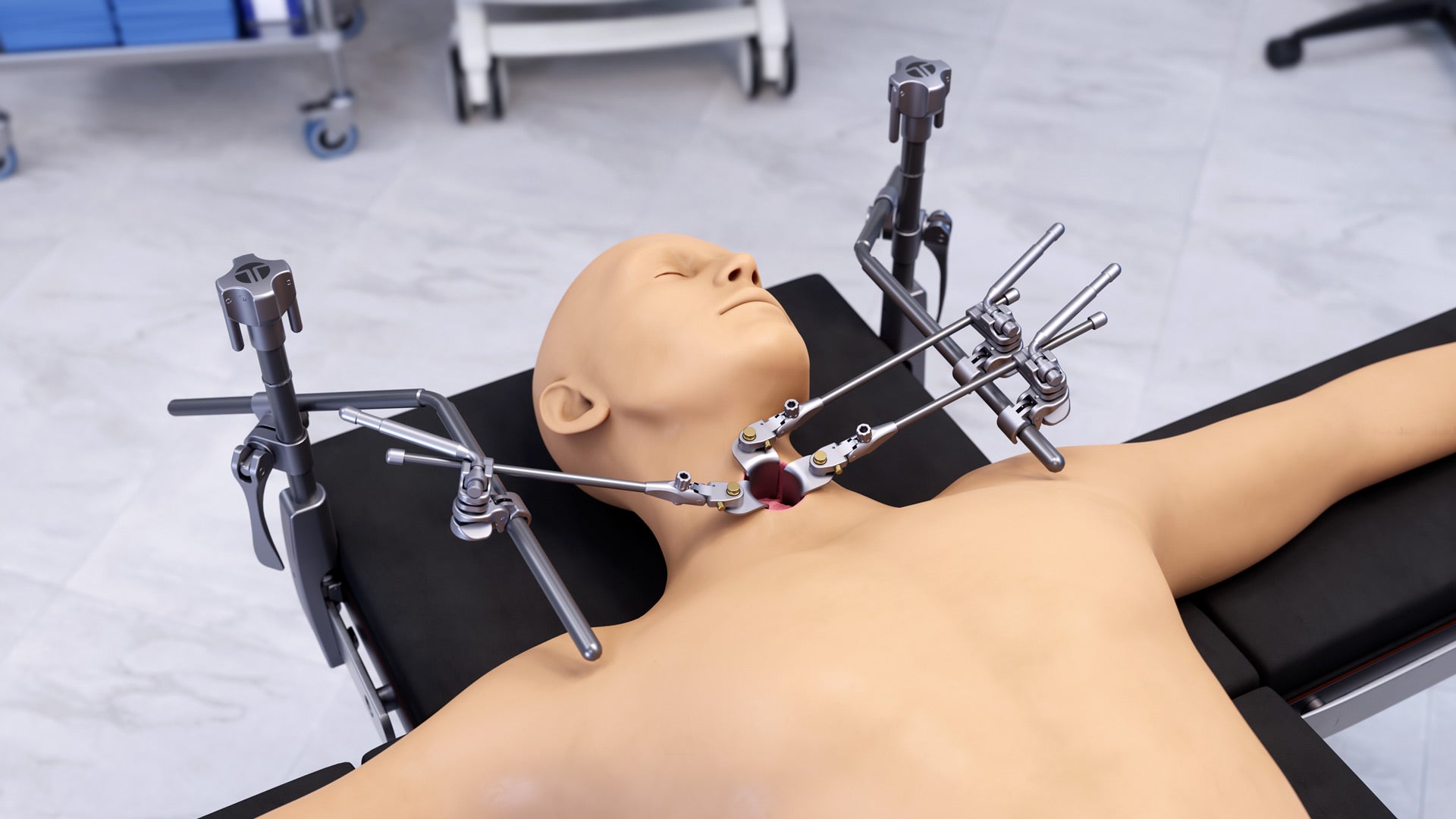
These details are especially important when a facility is choosing among table-mounted spine retractor options such as Spine Frame, RingFrame, RingTrack®, OneFrame, and Articulating Arm configurations. A stable frame provides the foundation, but the blade strategy determines how exposure is shaped during the case.
How Table-Mounted Retraction Supports Team Workflow
ALIF retraction affects more than the surgeon’s view. It affects the full OR workflow, including setup, adjustment, instrument access, imaging workflow, takedown, and reprocessing.
A table-mounted retractor set should support:
● Repeatable setup
● Clear frame positioning
● Controlled blade adjustment
● Working space around the field
● Consistent lighting approach when LitePath™ is used
● Familiar workflows for scrub techs and circulators
● Documentation for OR and SPD teams
This becomes especially important when multiple surgeons use the same retractor platform. The team needs to know not only how the set works, but how to reproduce the setup consistently across cases.
What OR Leaders Should Evaluate
OR leaders and service-line teams should evaluate ALIF retraction in the same way the system will be used: in representative procedures, with feedback from the people responsible for setup, use, and reprocessing.
Useful evaluation questions include:
● Does the frame remain stable under sustained retraction?
● Can the surgeon adjust individual blades without disrupting the field?
● Does the setup preserve working space around the surgical corridor?
● Does LitePath™ illumination support visibility in deep exposure?
● Are the required blade kits included or available?
● Can the OR team reproduce the setup consistently?
● Are user manuals, IFUs, setup videos, and training resources available?
● Can SPD teams process and organize the components efficiently?
● Does the configuration support the surgeon’s preferred exposure strategy?
Thompson offers a free 30-day clinical evaluation for U.S. customers. During the evaluation, our team coordinates the appropriate retractor set, trains OR and SPD teams, and supports the trial so the facility can assess the system in its own operating environment.
Stable Retraction Should Be Evaluated Before Standardization
Specifications are useful, but stable ALIF retraction is best evaluated in the OR. Surgeons need to see how the frame holds, how blades position, how lighting supports visibility, and how the setup feels during actual use.
The OR team should also be part of the evaluation. Scrub techs may identify setup or blade organization issues. Circulators may see workflow details around positioning and turnover. SPD teams may identify documentation, cleaning, and organization considerations that affect long-term adoption.
A strong evaluation should answer a simple question: does the retractor set support consistent anterior lumbar exposure while fitting the team’s actual workflow?
Hands-Free Retraction for Anterior Lumbar Exposure
Stable ALIF spine retraction starts with a table-mounted setup that supports the surgeon’s exposure strategy and the OR team’s workflow. Frame stability, independent blade control, LitePath™ illumination, setup repeatability, and documentation all affect whether a retractor set can maintain consistent anterior lumbar exposure throughout the procedure. The right configuration should support the case without adding unnecessary disruption to setup, adjustment, or reprocessing.
Thompson Surgical Instruments has spent more than 60 years refining table-mounted retraction systems for stable, hands-free surgical exposure. Our employee-owned team supports surgeons and OR teams with anterior lumbar configurations, blade options, LitePath™ illumination, training, and clinical evaluation support. Contact us today to learn more about ALIF retraction.
Share:
Liver Surgery Retractor Selection: How to Maintain Stable Exposure in Complex Open Cases