



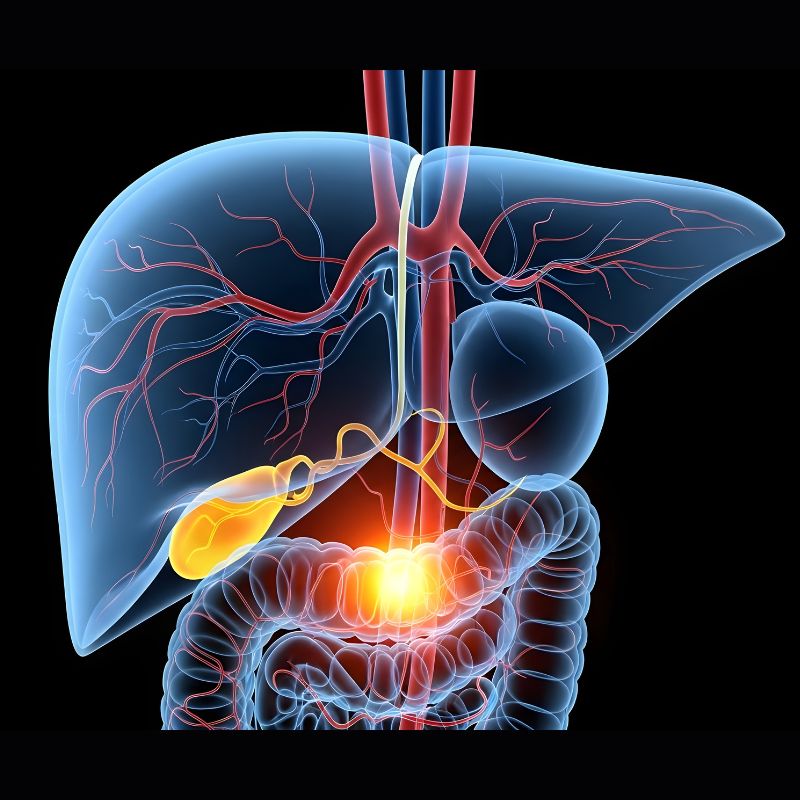
Open liver procedures require retraction that can support deep upper-abdominal exposure, changing access needs, and stable hands-free control throughout the case. Surgeons choosing a liver surgery retractor should focus on table-mounted stability, blade positioning, working space, patient anatomy, and whether the setup supports the specific demands of liver resection, transplant, oncology, or related open procedures.
Liver surgery often involves deep anatomy, broad exposure, and long procedure times. Retraction has to hold steady as tissue shifts, access needs change, and the surgical team works around vascular, biliary, and upper-abdominal anatomy. A retractor set should support that exposure strategy without crowding the field or forcing repeated disruption to the established setup.
Why Open Liver Surgery Requires More Than Basic Abdominal Retraction
Open liver procedures place different demands on retraction than many general abdominal cases. The liver’s position under the costal margin, the depth of the upper abdomen, and the need for controlled access around surrounding structures all affect how exposure is established and maintained.
A basic abdominal setup may provide initial access, but complex liver cases often require more. The retractor set must support stable exposure across a wide or deep operative field while allowing the surgeon to refine access as the procedure progresses.
Common exposure challenges in open liver surgery include:
● Deep upper-abdominal access
● Subcostal exposure
● Broad or bilateral access needs
● Sustained retraction over a long procedure
● Heavy or shifting tissue load
● Access around vascular and biliary anatomy
● Blade positioning that can adapt as the field changes
For surgeons and OR teams, the retractor decision is an important exposure decision. The right setup helps the team maintain control while working through a demanding open liver case.
What a Liver Surgery Retractor Needs to Support
The right liver surgery retractor depends on the exposure demands of the case, including access depth, blade positioning, working space, and the procedure being performed. Open liver resection, transplant, oncology, and complex abdominal cases may all require different frame and blade choices.
Stable Table-Mounted Exposure
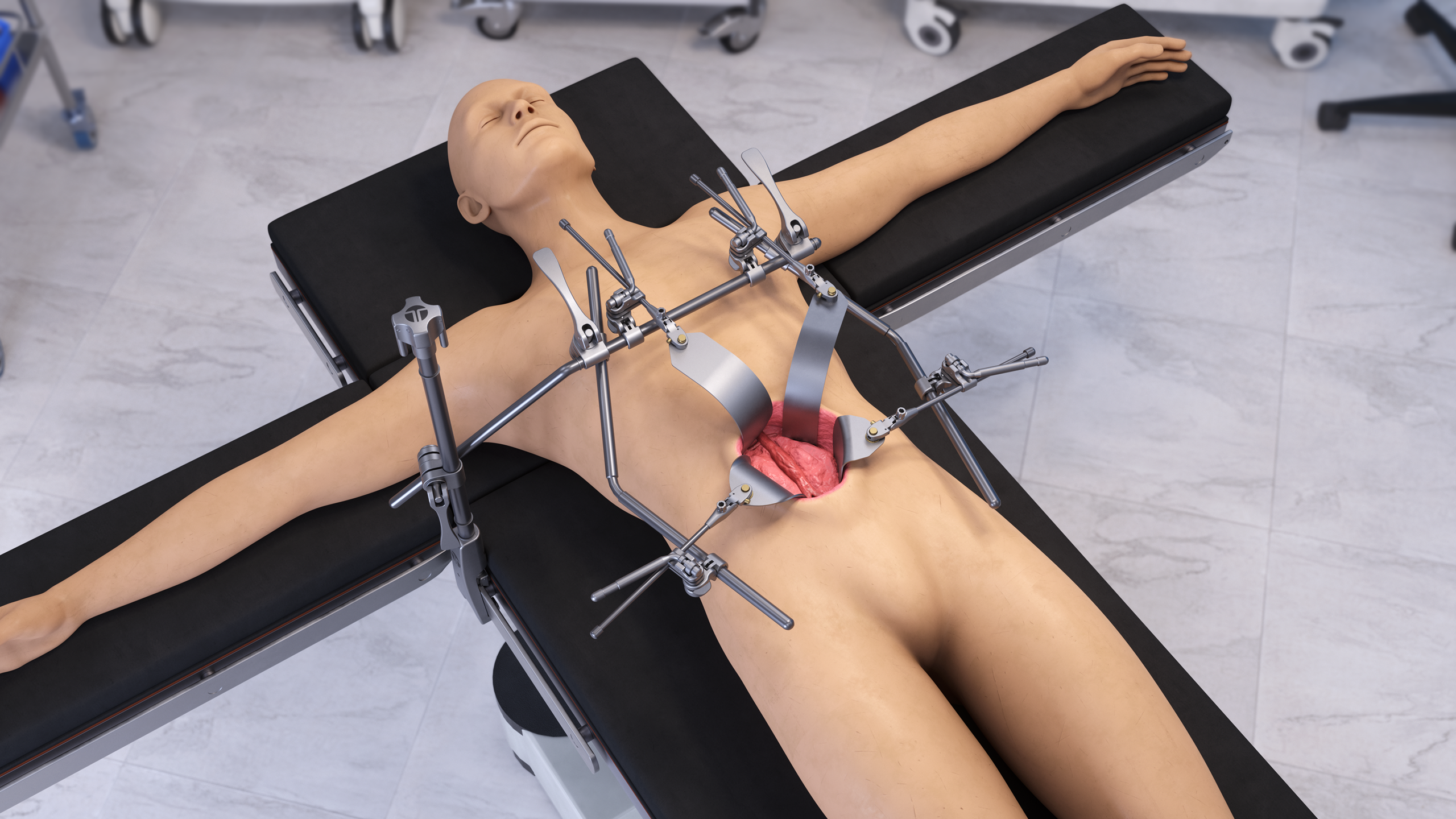
Table-mounted retractor sets attach to the operating room bed frame, creating a stable foundation for hands-free retraction. In open liver surgery, that stability matters because exposure often needs to hold through long and technically demanding phases of the case.
Stable table-mounted exposure can also reduce reliance on continuous manual retraction. Manual assistance may still be needed, but the team is not depending only on someone holding the field open for the duration of the procedure.
Deep Upper-Abdominal Access
Open liver surgery often requires access high in the abdomen, sometimes under the costal margin or across a broad upper-abdominal field. The retractor setup must support the depth and angle of exposure without obstructing the surgeon’s view or instrument path.
This is where frame configuration and blade choice matter. A liver surgery retractor should help create a working corridor that remains usable as the case progresses.
Multi-Planar Blade Positioning
Liver procedures may require retraction from more than one direction. The surgeon may need to adjust exposure around the liver, diaphragm, stomach, colon, or vascular structures depending on the procedure and anatomy.
Multi-planar blade positioning allows the team to refine access without fully resetting the field. This is especially important in open liver cases where exposure needs can change as the liver is mobilized or the surgical target shifts.
Working Space Around the Field
Stable exposure is only useful if the team can still work around it. Frame profile, handle placement, blade angle, and rail positioning can all affect access for instruments, assistants, and visualization.
A liver surgery retractor should support exposure without crowding the operative field. The goal is controlled access with enough room for the surgeon and team to work efficiently.
Blade Options for Procedure and Patient Anatomy
Blade selection should be part of the retractor strategy from the beginning. Liver procedures may require different blade lengths, shapes, and angles depending on the patient’s anatomy, incision strategy, tissue depth, and exposure goals.
Body habitus, prior surgery, and the type of liver procedure can all affect blade selection. A strong table-mounted setup gives the surgical team options without turning the field into a crowded arrangement of components.
Liver Resection, Transplant, and Oncology Exposure Needs
Open liver procedures vary by case type, anatomy, and exposure needs. Liver resection, transplant, oncology, and complex abdominal cases may each require a different frame setup, blade selection, and approach to maintaining access. The liver surgery retractor should give the team stable exposure while allowing the setup to match the procedure in front of them.
Liver Resection
Liver resection may require controlled exposure for mobilization, vascular access, and work around deep upper-abdominal anatomy. Exposure can change as the liver is mobilized and the surgeon moves through different phases of the case.
A surgical technique article in the Journal of Gastrointestinal Oncology describes the Thompson Retractor as part of Loma Linda University’s standardized approach to complex liver resections. In that approach, upward rib retraction helps create exposure for dissection around the suprahepatic and infrahepatic IVC and supports mobilization of the right lobe of the liver.
Table-mounted exposure plays an important role in complex open liver resection techniques. According to the article, “Most liver surgeons now use the Thompson Liver retractor which allows for ease of visualization of the hepatic veins and mobilization of the liver”.
Liver Transplant
Liver transplant procedures require broad access, stable exposure, and a setup that can support long case duration. Retraction must help maintain access across a large operative field while allowing the team to work through changing anatomy and workflow demands.
For transplant teams, setup consistency also matters. The retractor configuration has to support exposure while fitting the team’s established OR process.
Liver Oncology Cases
Liver oncology cases may involve complex anatomy, large fields, or difficult access depending on tumor location and patient factors. The retractor set must support exposure that can be adjusted as the case progresses.
In these procedures, blade choice and frame configuration can affect how well the team maintains working space. The setup should help preserve visibility without adding unnecessary obstruction around the field.
Obesity and Complex Abdominal Exposure
Patient body habitus can affect depth, angle, blade selection, and frame setup. In obesity cases or procedures involving deep abdominal access, the retraction strategy may need to account for increased tissue load and working distance.
A liver surgery retractor should give the team enough configuration flexibility to match the patient and procedure. That flexibility matters most when exposure is deep, broad, or likely to change over time.
Thompson Liver Transplant/Oncology Retractor Set for Open Liver Procedures
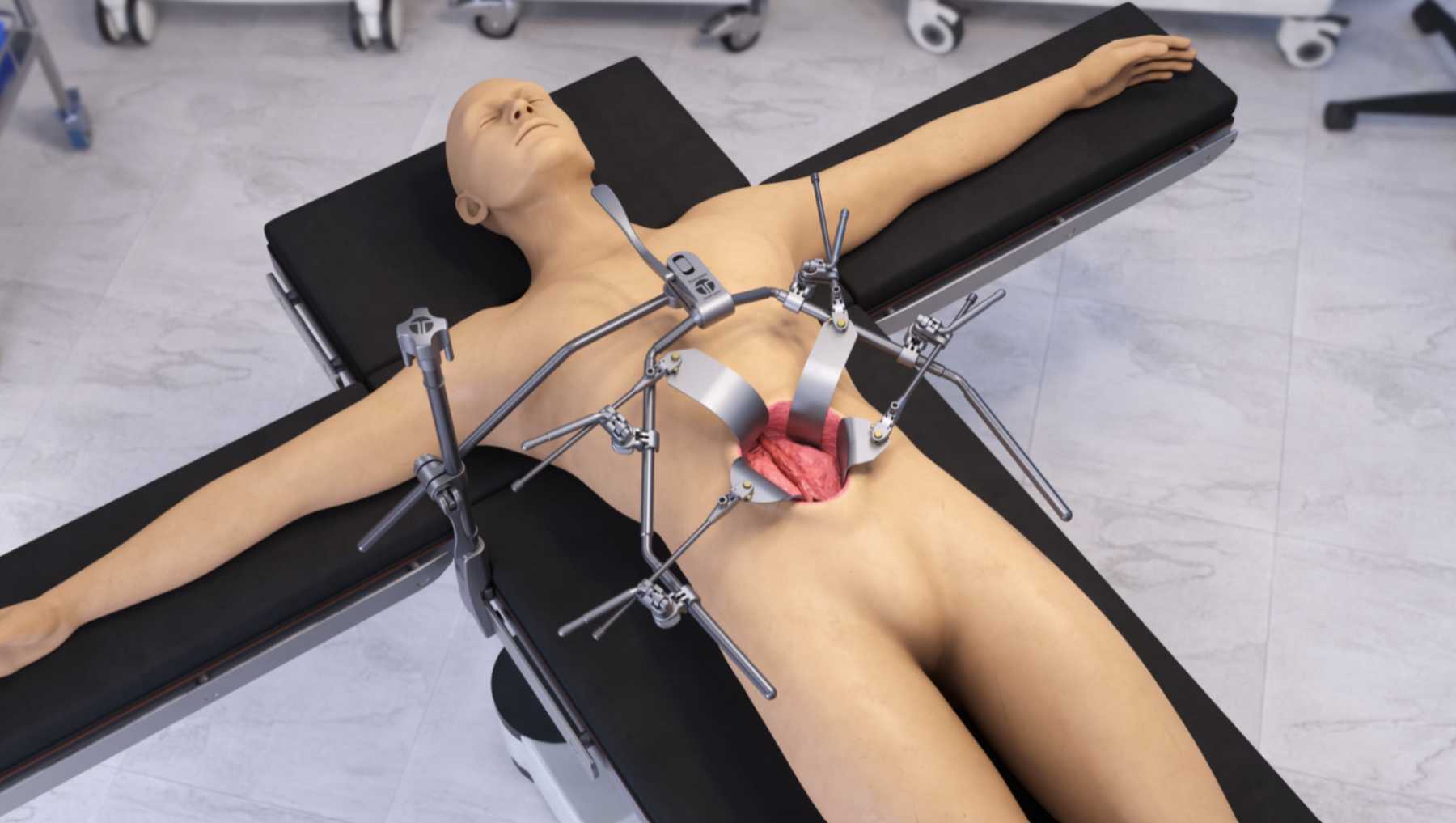
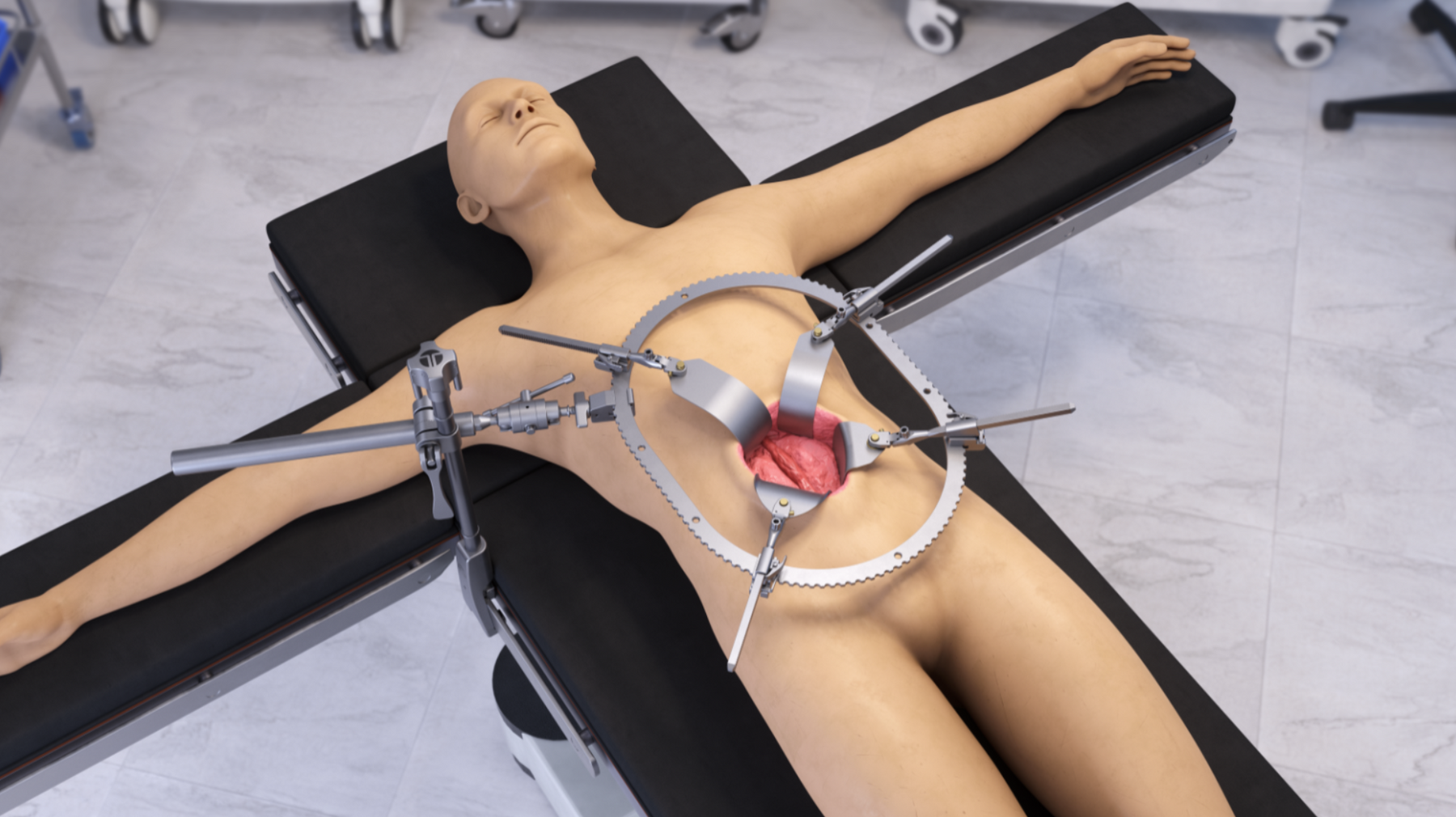
The Liver Transplant/Oncology Retractor Set is designed for major hepatic procedures requiring wide exposure and stability in complex surgical cases. It serves as the strongest Thompson product anchor for open liver resection, transplant, oncology, and high-demand abdominal exposure.
This table-mounted configuration supports stable hands-free retraction with liver-focused blade options and frame control for complex open procedures. For surgical teams, that means the retractor set can be configured around the exposure needs of the case rather than relying on a general abdominal setup.
Thompson’s broader liver procedures resources also include table-mounted retractor sets for HPB, Whipple, HIPEC, and liver transplant or oncology procedures. This makes liver retractor selection part of a larger exposure strategy for teams performing complex upper-abdominal surgery.
How Open Liver Retraction Differs from General HPB Retraction
HPB surgery includes liver, biliary, and pancreatic procedures. Open liver surgery is more specific. It often places greater emphasis on upper-abdominal access, liver mobilization, broad exposure, and sustained retraction across a deep operative field.
A broader HPB Retractor Set may support hepatobiliary and pancreatic procedures, including cases where radiolucent blade options are needed for cholangiograms. A liver-focused setup should be evaluated around liver-specific exposure needs, including resection, transplant, oncology, and patient anatomy.
For teams that perform a wide range of HPB procedures, both configurations may have a place. The key is matching the retractor set to the procedure rather than treating all upper-abdominal cases the same way.
Questions to Ask When Choosing a Liver Surgery Retractor
Before selecting or standardizing a liver surgery retractor, surgeons and OR leaders should evaluate both exposure and workflow.
Useful questions include:
● Does the setup support deep upper-abdominal exposure?
● Can blade position be adjusted independently?
● Does the frame preserve working space around the field?
● Does the blade selection fit the procedure and patient anatomy?
● Can the setup support liver resection, transplant, and oncology workflows?
● Can the OR team repeat the setup consistently?
● Can SPD process and organize the components efficiently?
These questions keep the decision focused on procedure fit, workflow, and exposure quality.
Evaluate a Liver Surgery Retractor in Your OR
A liver surgery retractor should be evaluated in the environment where it will actually be used. The team should look at setup repeatability, working space, exposure stability, adjustment needs, and staff familiarity during representative cases.
Thompson offers a 30-day clinical evaluation with OR and SPD training and case support for U.S. customers. This gives surgical teams a way to evaluate a table-mounted retractor set in their own facility before making a long-term decision.
During the evaluation, the team can assess how the setup supports liver exposure, how easily staff can repeat the setup, and whether the frame and blade configuration fit the surgeon’s workflow.
Choosing a Liver Surgery Retractor for Complex Open Cases
A table-mounted liver surgery retractor should support consistent, stable exposure, controlled blade positioning, deep access, working space, and procedure-specific flexibility. Open liver resection, transplant, oncology, and complex abdominal cases require a setup that can hold exposure while still allowing adjustment as the case progresses.
The right retractor set helps the surgical team maintain controlled exposure through changing anatomy, sustained retraction demands, and procedure-specific access needs. For complex open liver procedures, table-mounted stability and liver-focused blade options should be central to the retraction strategy.
Thompson Surgical Instruments has spent more than 60 years refining table-mounted retraction systems for stable, hands-free surgical exposure. Our employee-owned team supports surgeons with liver-focused configurations designed for complex open liver procedures. Contact us to learn more about choosing a liver surgery retractor.
Share:
HPB Retractor Selection: What Surgeons Should Consider for Complex Liver, Biliary, and Pancreatic Procedures
Why Stable Hands-Free Retraction Matters in ALIF Procedures