




Open liver resection and hepatobiliary procedures require exposure that holds steady across deep upper abdominal anatomy, long case times, and changing access needs. A table-mounted retractor set should provide stable, hands-free exposure while allowing the surgeon to adjust retraction as the procedure evolves.
Liver resection, HPB surgery, Whipple procedures, HIPEC, and liver transplant or oncology cases all place different demands on exposure. The retractor set should support the incision, anatomy, case duration, imaging needs, and surgeon workflow.
Why Liver Resection Places High Demands on Surgical Exposure
Liver resection creates exposure challenges that go beyond initial access. Surgeons often work deep in the upper abdomen, across multiple planes, and around anatomy that shifts as dissection progresses. Retraction must hold steady without repeatedly interrupting the case.
Open liver procedures commonly require:
● Deep upper abdominal access
● Subcostal, lateral, and abdominal wall retraction
● Stable exposure across long case durations
● Multiple planes of retraction
● Controlled adjustments as access needs change
For HPB, transplant, and oncology procedures, consistent exposure directly affects workflow. When retraction drifts or requires constant adjustment, the team loses time re-establishing the field instead of moving through the procedure.
What a Table-Mounted Retractor Set Must Do in Open Liver Surgery
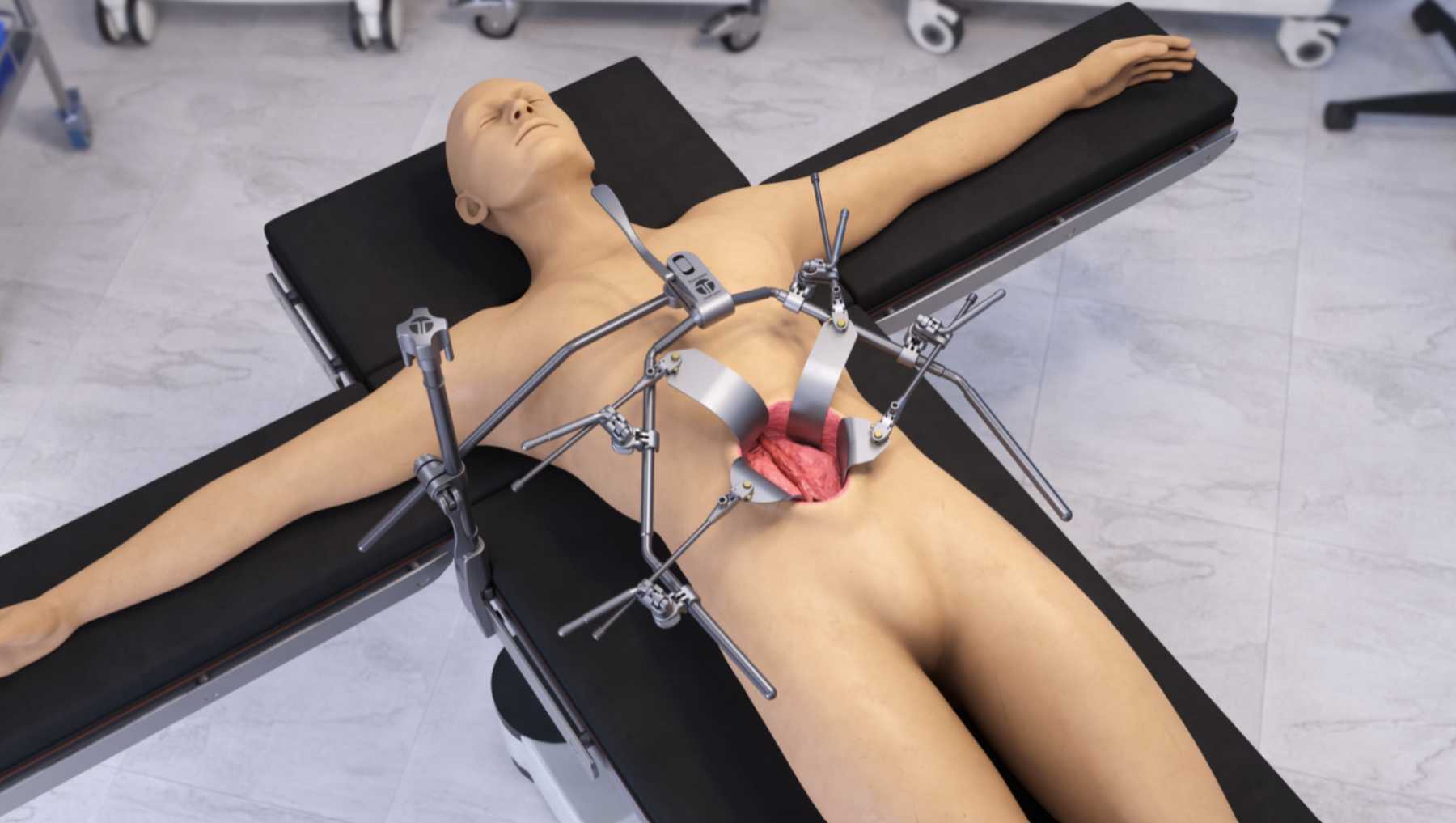
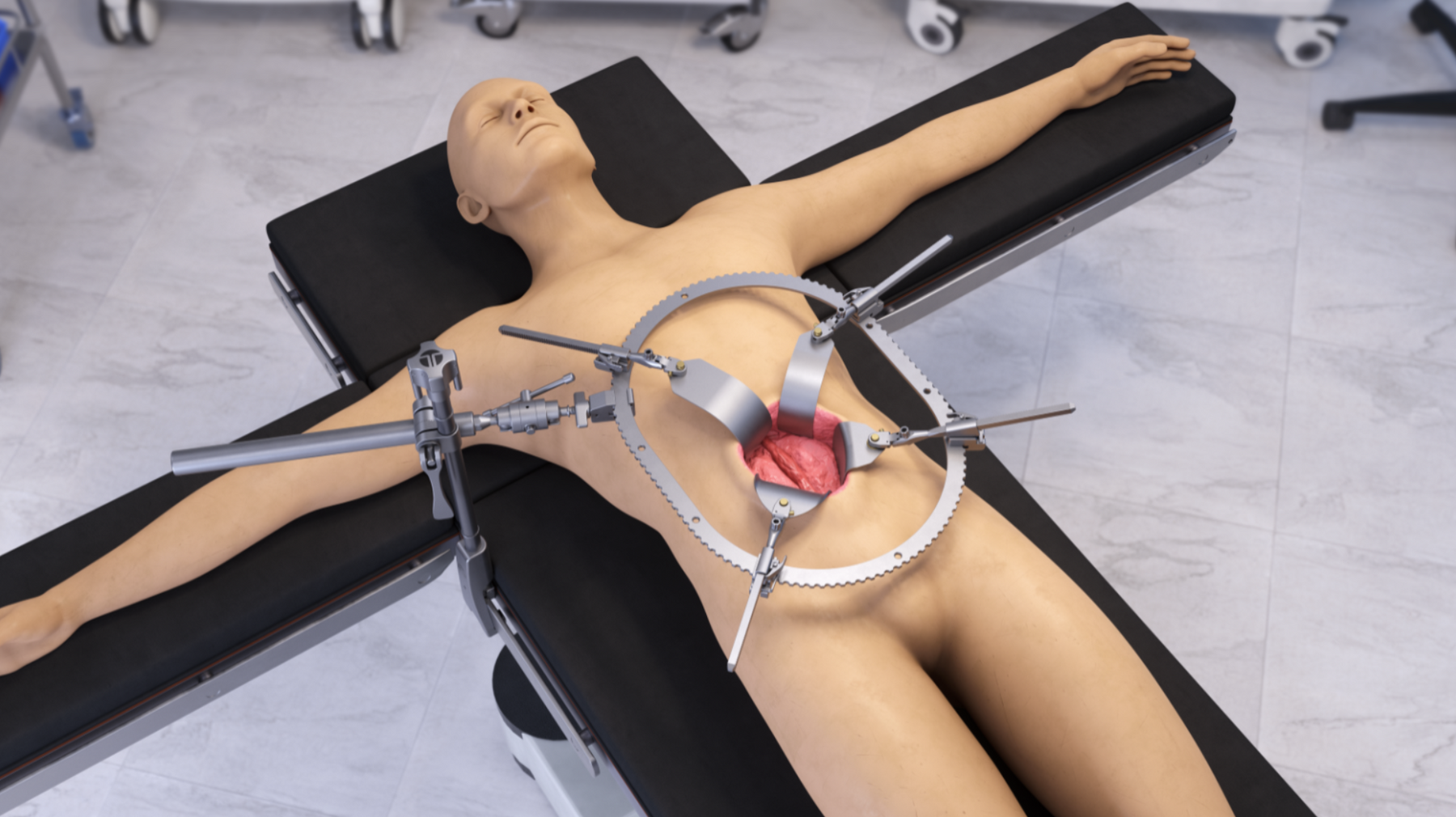
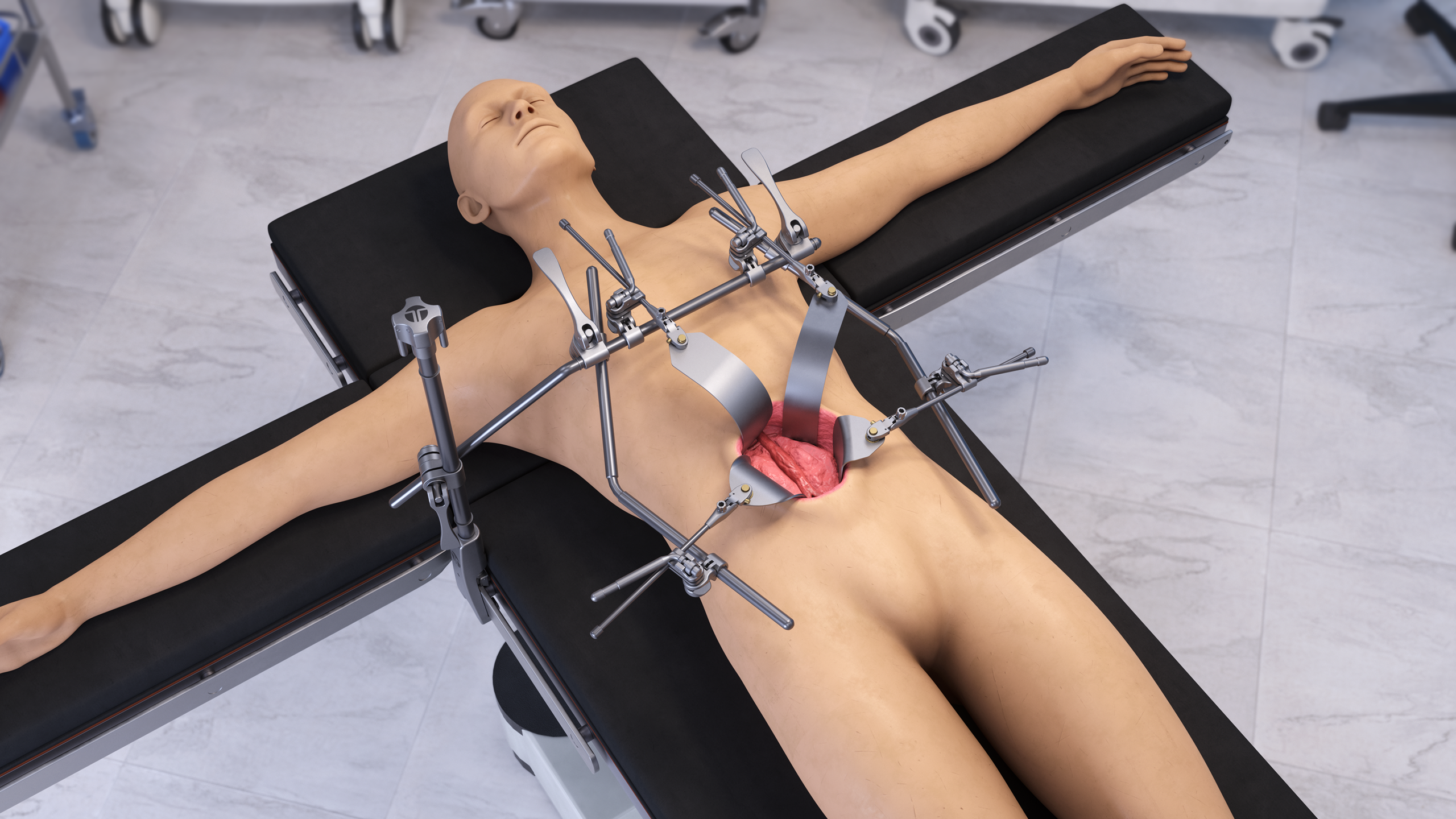
A table-mounted liver retractor set anchors directly to the operating room table, providing a fixed foundation for hands-free retraction. This matters in open liver surgery because exposure must remain stable throughout the case, not only during initial setup.
An effective open liver retractor set should:
● Anchor securely to the OR table
● Maintain stable, hands-free exposure
● Allow independent blade positioning
● Support cephalad, lateral, subcostal, and abdominal wall retraction
● Hold under sustained soft tissue tension
● Allow controlled adjustment without rebuilding the setup
A review article published in the Journal of Gastrointestinal Oncology describes the need for reliable surgical retraction during complex liver surgeries. Thompson’s table-mounted retractors are the standard for these procedures performed at Loma Linda University. According to the authors, Thompson’s retractor provides access for dissection around the suprahepatic and infrahepatic IVC and supports mobilization of the right lobe of the liver with upward rib retraction.
Thompson’s table-mounted retractor sets for liver resection provide hands-free retraction for procedure-specific exposure needs, including HIPEC, HPB, Whipple, and liver transplant or oncology procedures.
How HPB Surgery Changes Retraction Requirements
HPB stands for hepatobiliary and pancreatic surgery, which includes procedures involving the liver, pancreas, and bile ducts. These cases often require controlled access to deep hepatobiliary anatomy, vascular structures, and soft tissue planes.
In HPB procedures, retraction must support more than wide exposure. It must allow precise, multi-directional control while preserving visibility during technically demanding dissection. When cholangiography is part of the surgical plan, blade selection and imaging workflow are also included in the evaluation.
HPB retraction should support:
● Deep access to liver, biliary, and pancreatic anatomy
● Stable exposure during long or technically demanding dissection
● Controlled positioning around vascular and soft-tissue structures
● Adjustment as the procedure progresses
● Imaging workflow considerations when cholangiography is planned
HPB Retractor Set for Hepatobiliary Exposure
The Thompson HPB Retractor Set provides stable, hands-free exposure for complex hepatobiliary procedures. Radiolucent blades are available for cholangiograms, supporting imaging workflow during liver, biliary, and pancreatic surgery.
Surgeons and OR teams need visibility and control that can hold steady as the field changes. When cholangiography is part of the surgical plan, radiolucent blade options help support imaging workflow while preserving the exposure already established.
Key Decision Criteria for Choosing a Liver Resection Retractor Set
Choosing a liver resection retractor set means looking beyond frame style. Surgeons and OR leaders should consider how the set performs during setup, exposure, adjustments, imaging, and turnover.
Exposure Stability Under Load
Open liver cases require a retraction that holds position under sustained soft-tissue tension. A retractor set that shifts, flexes, or loses tension can compromise visibility and require repeated adjustments during critical stages of the procedure.
Stable table-mounted retraction helps maintain the operative field without continuous manual holding. This gives the surgical team a more predictable foundation throughout longer HPB and liver resection cases.
Access Across the Upper Abdomen
Liver and HPB procedures often require exposure across the upper quadrants, including subcostal and lateral access. The retractor set must support multiple directions of pull without crowding the surgical field.
The right configuration should allow the team to maintain upper abdominal visibility while adapting to incision size, patient anatomy, and surgeon preference.
Blade Selection and Configuration
Blade choice affects how exposure is created and maintained. The ideal blade kit should match the depth of the operative field, tissue load, incision strategy, and imaging needs.
For HPB procedures, radiolucent blade options may matter when cholangiography is part of the surgical plan. For broader liver oncology or transplant-level exposure, teams may prioritize blade variety and independent positioning across multiple access points.
Setup Repeatability
A retractor set should be easy for the OR team to set up consistently each time. In liver surgery, a repeatable setup helps with case preparation, role clarity, and fewer interruptions during the procedure.
This matters even more when a facility uses table-mounted retractor sets across related procedures, including HPB surgery, Whipple procedures, liver transplant, oncology, and HIPEC.
OR Footprint and Working Space
Liver procedures often require space for assistants, suction, imaging support, and multiple instruments. A retractor set should maintain exposure without crowding the field or limiting access around the table.
The best configuration preserves working space while supporting stable, multi-plane retraction.
Training and Reprocessing Workflow
Clinical performance is only one part of the decision. OR leaders should also consider training, preference card consistency, cleaning, inspection, and SPD workflow.
A retractor set that works well but is difficult to standardize can create problems across teams and shifts. Evaluation should account for the full workflow, from setup through reprocessing.
Matching the Retractor Set to the Liver Procedure
Open liver procedures require stable, hands-free exposure, but the retractor set should match the surgical plan. Liver resection, HPB surgery, Whipple procedures, HIPEC, transplant, and oncology cases each have different exposure needs based on anatomy, incision strategy, access points, imaging, case length, and surgeon preference.
For open liver resection, the main priority is a stable upper abdominal exposure with blade positioning that can be adjusted as the field changes. HPB procedures may require deep hepatobiliary access and radiolucent blade options when cholangiography is planned. Whipple procedures need sustained exposure through a multi-step pancreatic workflow.
Liver transplant and oncology cases often require stable, adaptable exposure across large or changing operative fields. HIPEC procedures need full abdominal access and long-duration stability.
Thompson table-mounted retractor sets for liver resection provide hands-free retraction for procedure-specific exposure needs, including HIPEC, HPB, Whipple, and liver transplant or oncology procedures. Rather than starting with frame terminology, surgeons and OR leaders should start with the case: the anatomy involved, the depth of exposure, the need for imaging access, and the type of blade control required throughout the procedure.
Evaluation Checklist for Surgeons and OR Leaders
A clinical evaluation should look beyond whether the retractor set fits the procedure. It should assess how the set performs during setup, exposure, adjustment, imaging, and breakdown.
Key questions to ask during evaluation include:
● Does the frame remain stable under sustained load?
● Can the surgeon adjust individual blades without disrupting the entire setup?
● Does the blade kit support the incision, anatomy, and exposure depth?
● Are radiolucent blade options needed for the imaging workflow?
● Does the setup preserve working space around the field?
● Can the team reproduce the setup consistently?
● What training is provided for OR staff?
● What documentation supports cleaning and reprocessing?
● How does the set perform across HPB, liver resection, Whipple, transplant, oncology, or HIPEC cases?
● Does the clinical evaluation include case support and setup guidance?
The goal is to evaluate procedure fit, not just equipment preference. A strong retractor set should support the surgeon’s exposure strategy while also fitting the OR team’s setup, workflow, and reprocessing needs.
Evaluate a Table-Mounted Liver Retractor Set in Your OR
Thompson Surgical Instruments provides table-mounted retractor sets for liver procedures, including HPB, HIPEC, Whipple, and liver transplant or oncology configurations. These sets are designed to support stable, hands-free exposure and procedure-specific blade positioning for complex open liver surgery.
For liver resection and HPB procedures, a free 30-day clinical evaluation allows surgical teams to assess setup, exposure stability, blade positioning, imaging workflow, and team training in their own OR environment. This gives surgeons, OR leaders, and purchasing stakeholders a practical way to evaluate the fit of procedures before standardizing a retractor set.
Thompson Surgical Instruments engineers table-mounted retractor sets designed to provide stable, hands-free exposure in complex open liver procedures. We support surgical teams with HPB, liver transplant, oncology, Whipple, and HIPEC configurations designed for controlled exposure and workflow consistency. Contact us today to learn more about table-mounted retractor sets for liver resection.
Share:
What Retractor Options Exist for Long Thoracoabdominal Aortic Procedures?