




Bilateral retraction is commonly used in liver, transplant, and complex upper-abdominal oncology procedures to maintain stable, multi-directional surgical access. By applying controlled retraction from both sides of the operative field, surgical teams can preserve visualization, improve access in deep anatomical regions, and reduce the need for repeated repositioning. Table-mounted retractors support this approach by providing consistent, hands-free stability throughout long liver procedures.
Why Upper-Abdominal Oncology Often Requires Bilateral Retraction
Liver resections, transplant procedures, and complex upper-abdominal oncology cases require access across a wide and deep operative field. Exposure often extends beyond a single plane, with critical structures located on both sides of the incision.
Maintaining consistent access becomes more difficult as dissection progresses. Tissue must be retracted in multiple directions to preserve visibility while allowing controlled instrument movement.
Single-direction retraction limits access in these cases. As anatomy shifts or deeper structures are approached, repositioning may be required, which can interrupt workflow during critical phases of the procedure.
Bilateral retraction helps address these challenges by:
● Creating balanced exposure across the field
● Supporting access to multiple anatomical regions at the same time
● Reducing the need for repeated repositioning
● Maintaining consistent visualization in deep upper-abdominal spaces
In long oncologic and transplant procedures, this approach helps teams maintain control while adapting to changing access requirements.
How Bilateral Setups Improve Multi-Plane Surgical Access
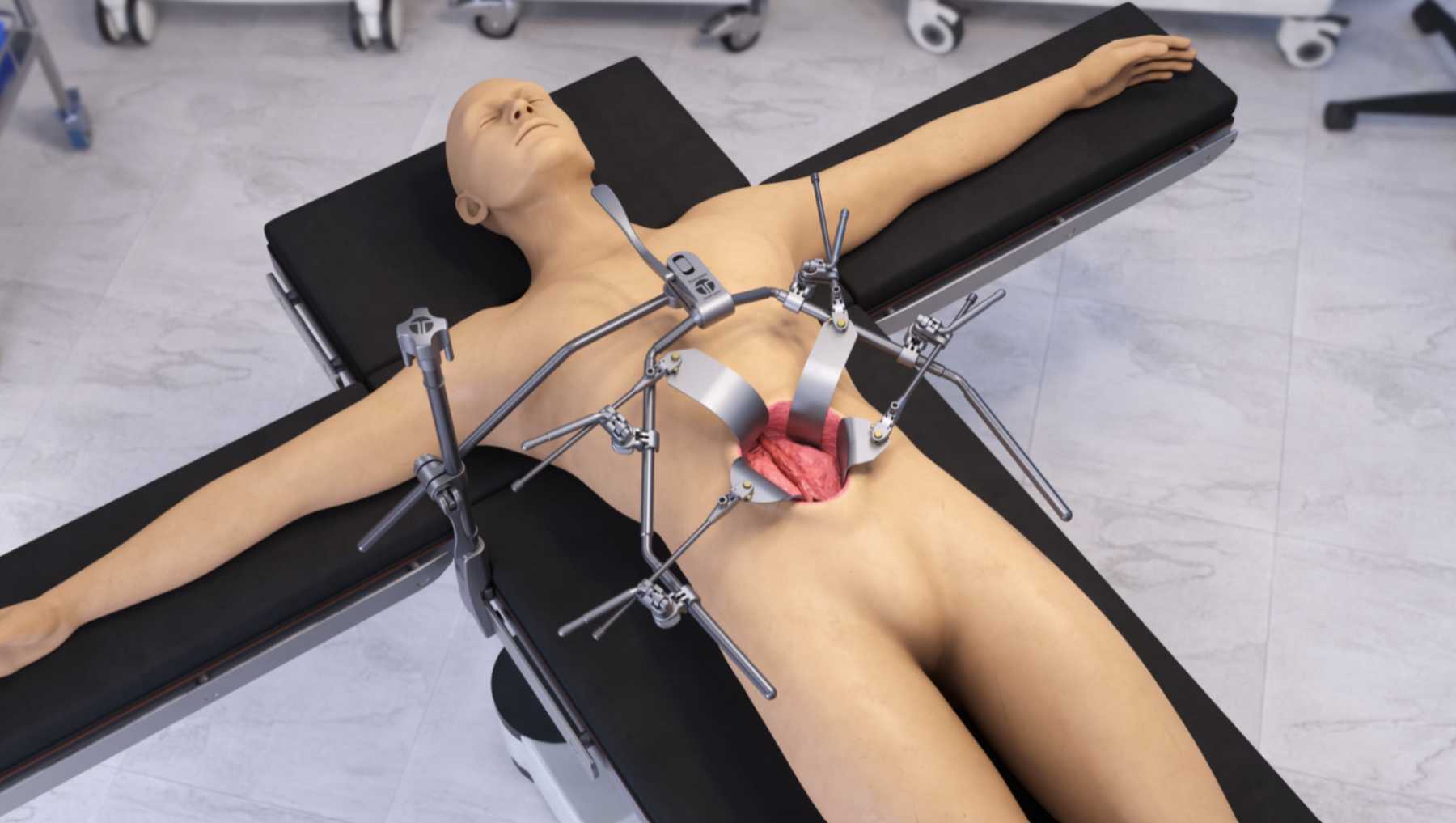
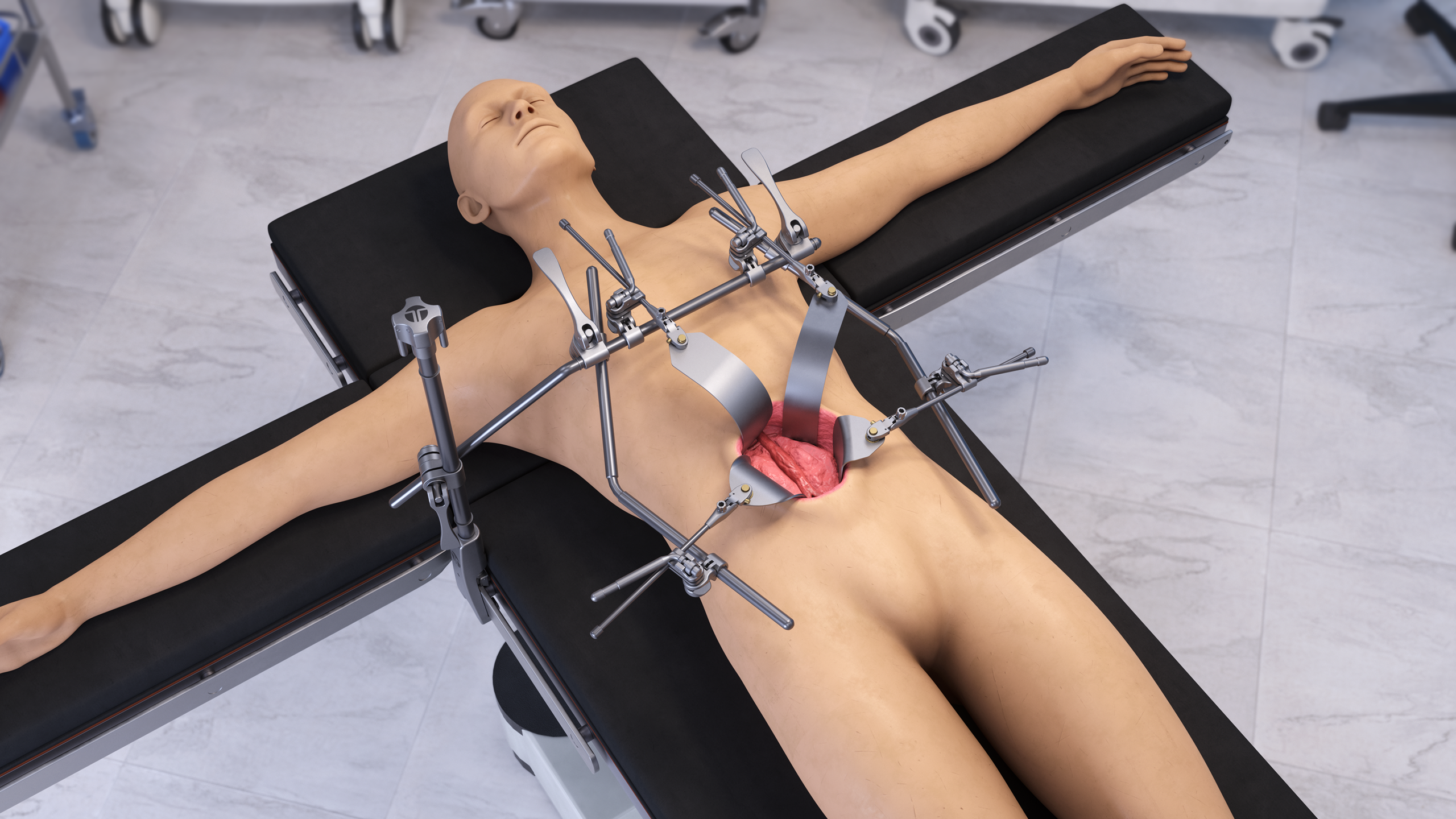
Bilateral setups use table-mounted retraction to apply a controlled pull from both sides of the field. This creates a stable exposure platform that supports access across multiple planes without continuous adjustment.
By positioning retraction points on both sides, surgical teams can build a multi-directional construct that maintains access as the procedure progresses.
This approach supports:
● Multi-directional retraction without moving the frame
● Balanced tissue engagement across the field
● Improved visualization in deep abdominal regions
● Incremental adjustment as anatomy shifts
● Reduced reliance on manual retraction
In liver and upper-abdominal oncology procedures, where access often deepens and expands during the case, bilateral setups help maintain stable, adaptable exposure without disrupting workflow.
Where a Dedicated Liver/Oncology Configuration Fits
Complex upper-abdominal procedures often require retraction systems designed for wide exposure, deep access, and sustained stability. Standard configurations may not provide the reach, positioning flexibility, or control needed for liver resections and transplant procedures.
Dedicated liver and oncology configurations are designed to support:
● Wide exposure across the upper abdomen
● Deep retraction into retrohepatic and subcostal regions
● Multi-arm positioning for bilateral access
● Stable positioning during long procedures
● Flexibility to adapt to anatomy and incision variability
These configurations allow surgical teams to establish a stable exposure platform early and refine access as needed without rebuilding the setup.
Surgical teams can explore liver surgery retractor options designed for upper-abdominal exposure and complex oncologic procedures.
Liver/Oncology-Specific Retraction Systems
Liver and transplant procedures place specific demands on retraction. Surgical access must remain stable while accommodating depth, organ movement, and multi-directional dissection across the field.
Retractor sets designed for these procedures support:
● Bilateral retraction for balanced exposure
● Controlled access to deep anatomical structures
● Stable positioning throughout long procedures
● Integration with multiple blade types and lengths
These systems are configured to maintain consistent access without adding unnecessary complexity during the procedure.
Thompson provides a liver and oncology configuration designed to support bilateral retraction and stable access in complex upper-abdominal procedures.
How Adjunct Positioning Supports Bilateral Retraction
Adjunct positioning techniques are often used alongside table-mounted retraction to improve access in liver and upper-abdominal procedures. These techniques help optimize how tissue is presented within the operative field, particularly in deeper or more complex areas.
Rather than replacing retraction, these approaches work with the retractor set to improve visibility and access.
They help support:
● Improved exposure of deeper structures
● Better visualization without excessive retraction force
● More controlled access in complex anatomical areas
● Efficient adaptation as the procedure progresses
When combined with a stable, table-mounted retractor set, adjunct positioning helps improve access without introducing additional variability.
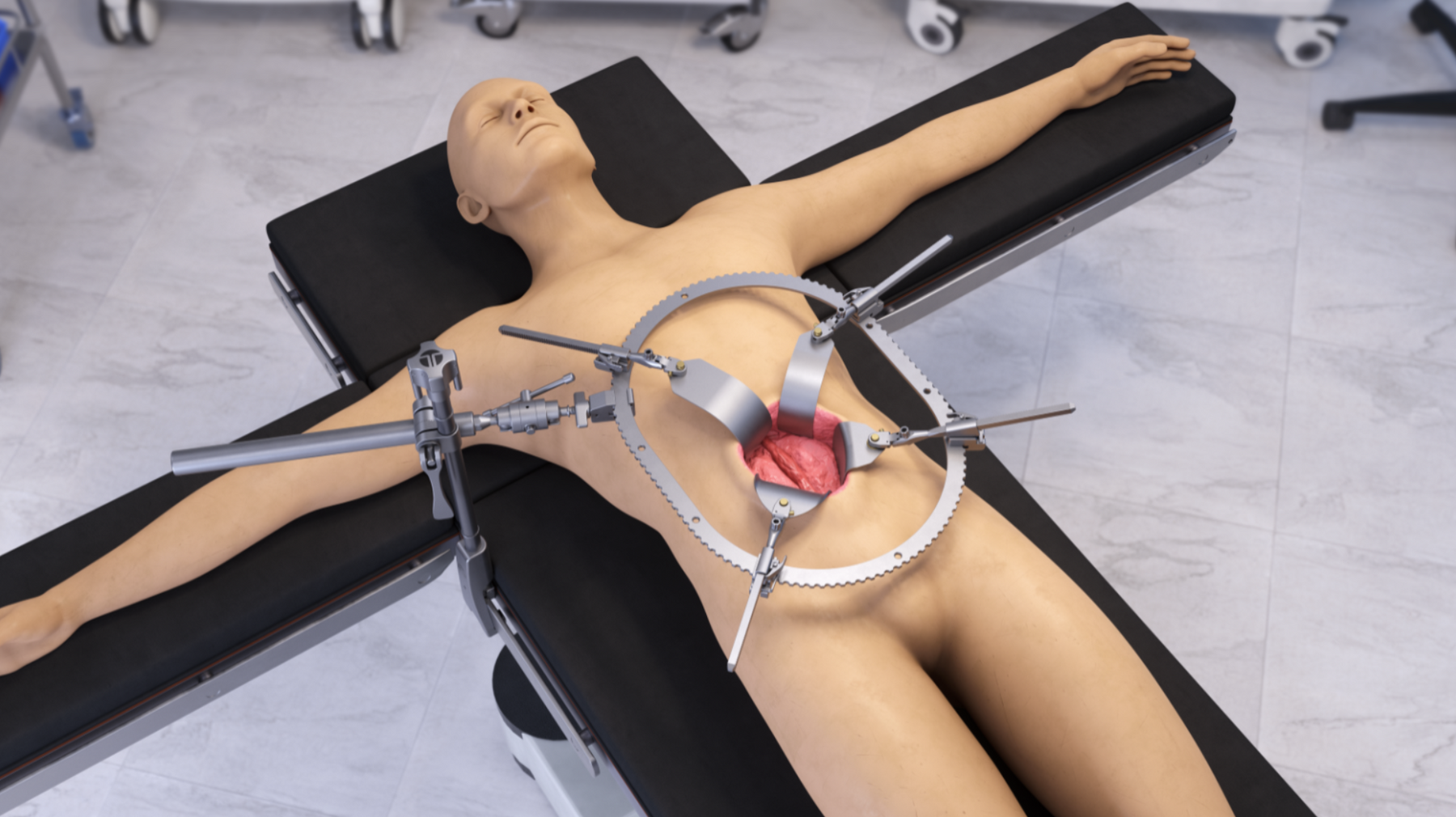
Additional examples of clinical images and alternative setups demonstrate how different configurations support bilateral access during upper-abdominal procedures.
Why Bilateral Retraction Supports Workflow in Long Procedures
Liver transplants and complex oncologic cases often last several hours and involve multiple procedural phases. Maintaining consistent access throughout these phases helps preserve efficiency and control.
Bilateral retraction supports workflow by:
● Maintaining stable exposure as anatomy changes
● Reducing the need for repositioning
● Supporting coordination between surgical teams
● Preserving visualization without increasing complexity
When retraction remains stable and adaptable, surgical teams can focus on the procedure rather than managing exposure.
Consistent Access in Complex Upper-Abdominal Procedures
Liver, transplant, and complex upper-abdominal oncology procedures require retraction systems that maintain stable access across wide and deep operative fields. As procedures progress and anatomy shifts, exposure must remain consistent without repeated repositioning or workflow interruption.
Bilateral setups supported by table-mounted retractors allow surgical teams to apply controlled, multi-directional retraction while maintaining stability throughout long procedures. This helps preserve visualization, improve access to deep structures, and support coordination across teams working within the same field.
Thompson Surgical Instruments: Bilateral Retraction Solutions
Thompson Surgical Instruments works with surgeons performing liver transplants and complex oncologic procedures to refine retraction systems based on real procedural demands. Feedback from the field informs frame design, arm articulation, and blade configurations, supporting wide exposure, deep access, and controlled positioning.
By offering dedicated liver and oncology configurations along with a modular table-mounted platform, Thompson supports bilateral retraction setups that maintain stability while adapting to anatomy and procedural complexity.
Thompson Surgical Instruments offers a 30-day clinical evaluation program that allows surgical teams to trial retractor configurations in actual procedures. This gives teams the opportunity to evaluate blade selection, positioning, and setup within their own operating room workflow. The program supports standardization based on real clinical use rather than planned configurations.
Thompson Surgical Instruments has spent over six decades refining table-mounted retraction systems built to perform reliably throughout long procedures. Our surgeon-focused approach emphasizes stable exposure, durable construction, and repeatable workflow in the operating room. Contact us to learn more about Thompson Surgical Instruments and table-mounted bilateral retraction.
Share:
What’s New in Thoracoabdominal Aortic Repair: Hybrid & Endovascular Devices, and How They Influence Open Exposure Needs
Pelvic & GYN Oncology Exposure: Optimizing Deep, Stable Retraction for Complex Resections