



Independent retractor blade positioning matters in liver transplant surgery because exposure changes throughout the case. A stable setup may establish initial access, but complex open liver procedures often require the surgeon to refine one area of the field while maintaining exposure elsewhere.
A table-mounted liver transplant retractor should provide stable support and blade-by-blade control. The frame creates the foundation, while the blade kit determines how exposure can be shaped around anatomy, depth, body habitus, incision strategy, and the surgeon’s preferred workflow.
Liver Transplant Exposure Changes Throughout the Case
Liver transplant surgery requires broad upper-abdominal exposure that must remain usable over time. The operative field may involve deep access, changing sight lines, shifting tissue relationships, and multiple points of instrument access.
A Journal of Gastrointestinal Oncology article on hepatic resection identifies the Thompson Retractor as the authors’ standard retractor for liver exposure. The article also describes upward rib retraction to support access around the suprahepatic and infrahepatic inferior vena cava and mobilization of the right lobe of the liver.
That kind of exposure depends on more than the original frame setup. The retractor set should help maintain stable access while allowing blade position to be refined as exposure requirements change.
Why Fixed Retraction Can Limit Field Adjustment
A liver transplant retractor setup has to support both stability and flexibility. When the full construct behaves as one fixed arrangement, a localized exposure change can require more disruption than the field should need.
Patient anatomy, body habitus, tissue depth, incision strategy, and surgeon preference all influence how exposure needs to be maintained. A blade position that supports one part of the procedure may need to change later as the working angle or access requirement shifts.
Independent blade positioning gives the surgeon a controlled way to make those refinements. A specific blade, angle, or retraction point can be adjusted while the surrounding field remains organized.
What Independent Retractor Blade Positioning Means
Independent retractor blade positioning is the ability to position and adjust individual blades around the operative field. In liver transplant surgery, this gives the surgeon blade-by-blade control instead of treating the retractor setup as one uniform pull.
Liver exposure is rarely one-dimensional. The surgeon may need cephalad, lateral, abdominal wall, costal margin, organ, or deep soft tissue retraction depending on the anatomy and the stage of the case. Independent positioning allows the retractor set to match those changing needs with greater control.
A table-mounted retractor set supports this approach by giving the blades a stable frame connection. The frame holds the foundation, while the surgeon refines individual blade positions based on what the field requires.
How Bilateral Table Mounting Supports Blade Control
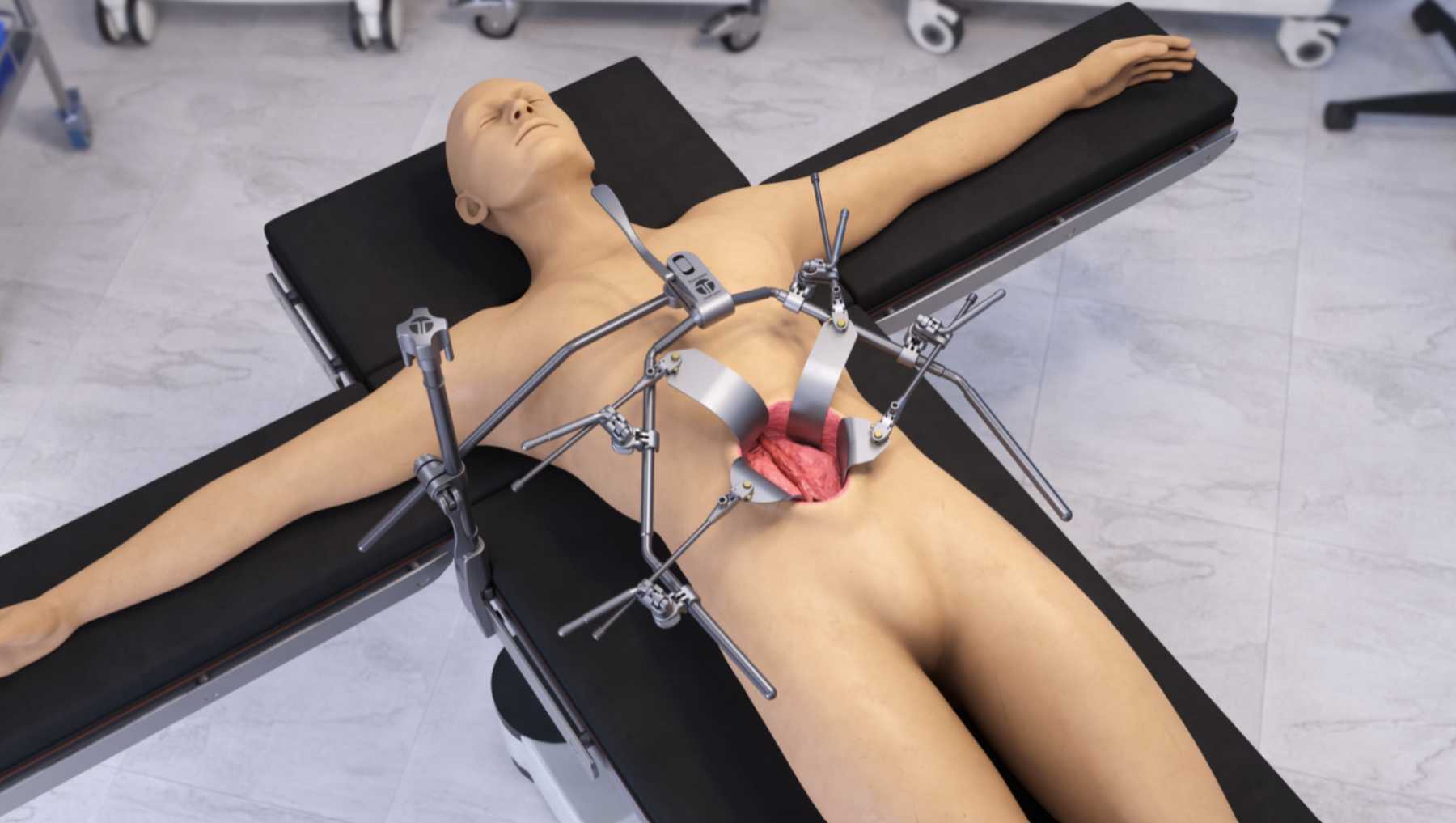
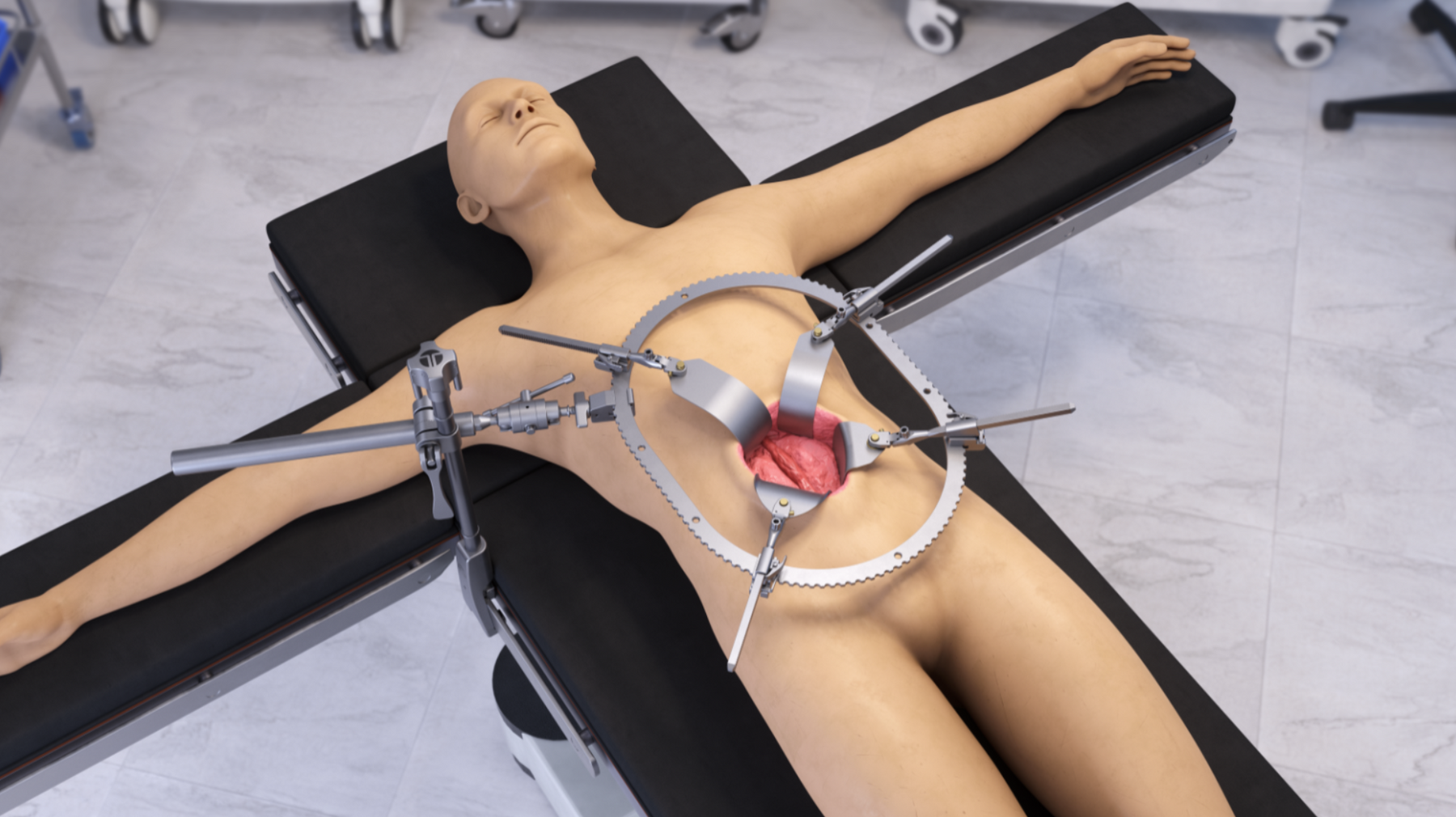
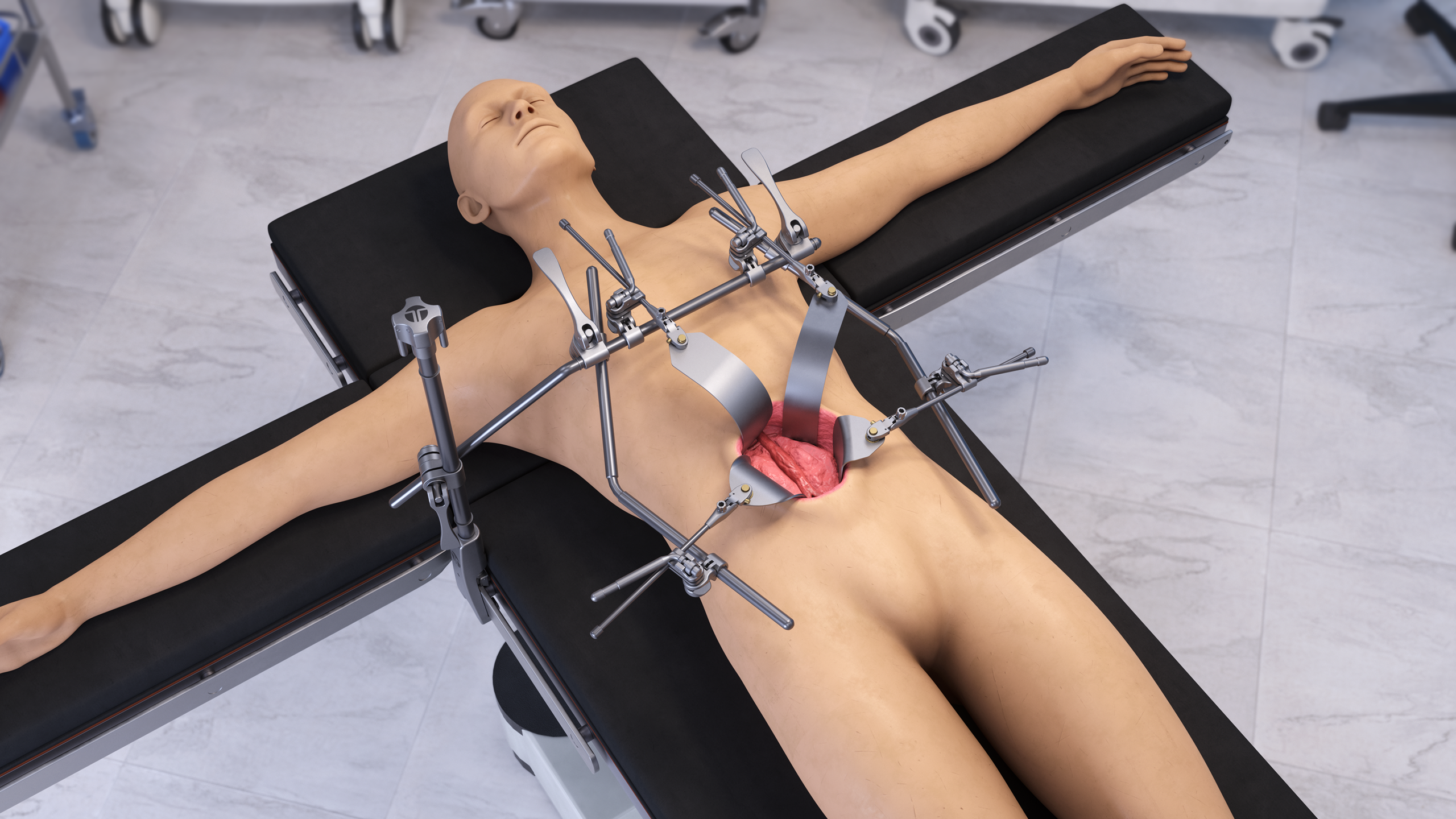
Independent blade positioning works best when the frame itself provides a stable foundation. The Liver Transplant/Oncology Retractor Set uses a bilateral table-mounted frame for liver transplants, liver resections, oncology, obesity, and complex abdominal cases.
The bilateral setup gives surgeons multiple options for organizing exposure across a broad upper-abdominal field. The Liver-Oncology Blade Kit and Radiolucent Liver-Oncology Blade Kit options expand that flexibility by giving the team multiple blade shapes and applications for soft tissue, abdominal wall, costal margin, organ, and gentle organ retraction.
For liver transplant procedures, bilateral table mounting supports the field from outside the incision. The surgeon can position blades around the exposure strategy, adjust individual points of retraction, and preserve working space around the operative field.
Blade Kit Selection Supports Independent Positioning
Independent blade positioning becomes more useful when the blade kit gives the surgeon enough options to match the exposure. In liver transplant and oncology procedures, blade length, width, contour, and application all affect how the field is held and refined during the case.
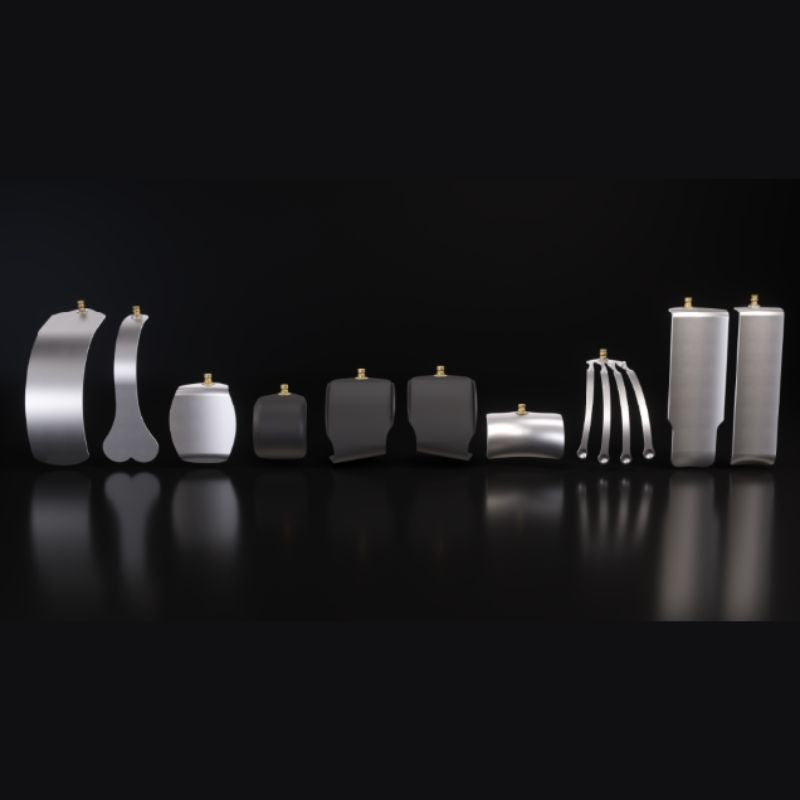
The Liver-Oncology Blade Kit Atlas includes components that support the frame and blade strategy together. The atlas identifies the Elite III Rail Clamps, bilateral crossbar, Lower Abdominal Bar, angled arms, Cam joints, Quick Angle handles, and micro-adjustable handles that help position and adjust the retractor blades around the incision.
The same atlas lists blade options for different exposure needs, including:
● Malleable blades for soft tissue retraction
● Kelly blades for abdominal or incisional wall retraction
● Balfour and Wide Balfour blades for costal margin or abdominal wall retraction
● Richardson blade for abdominal wall retraction
● Harrington blade for organ or soft tissue retraction
● St. Marks blade for soft tissue retraction
● Malleable Finger blades for gentle organ retraction
● Non-Slip Balfour blades for costal margin retraction
The Radiolucent Liver-Oncology Blade Kit Atlas follows the same liver-oncology frame structure while adding radiolucent blade options for the configuration. Its blade applications include soft tissue retraction, abdominal wall retraction, costal margin or abdominal wall retraction, organ or soft tissue retraction, and gentle organ retraction.
For OR teams, these blade kit details belong in the evaluation because they connect independent blade positioning to actual use. The selected frame and blade kit should give the surgeon enough control to adjust exposure around anatomy, depth, body habitus, and changing access needs.
Adjustment Without Rebuilding the Field
Independent blade positioning supports local refinement. When one area of exposure needs adjustment, the surgeon can change that blade position while the rest of the setup remains organized.
This can be especially important in long, complex cases where several areas of the field are already working well. A targeted blade adjustment helps the team adapt exposure without turning every change into a larger frame reset.
In practical use, the evaluation should focus on how well the retractor set supports:
● Blade-by-blade adjustment
● Directional refinement
● Stable surrounding exposure
● Working space for instrumentation
● Surgeon-specific positioning preferences
● Repeatable setup for the operating room team
These details affect how the retractor performs during the case, not only during assembly.
What Operating Room Teams Should Standardize
Independent blade positioning does not mean every case uses the same blade placement. For liver transplant programs, standardization is more useful when it focuses on the setup process, component organization, and team familiarity.
Operating room teams should standardize:
● Frame setup sequence
● Component identification
● Blade kit organization
● Surgeon preference documentation
● Setup training
● Sterile processing department preparation
● Cleaning and reprocessing documentation
● Case-readiness checks
The sterile processing department should be included early because multi-component retractor sets depend on clear organization and consistent preparation. Staff should know which components belong to the liver transplant setup, how they are organized, and how they return to case readiness after reprocessing.
A strong workflow gives the team a consistent platform while preserving the surgeon’s ability to adjust blade placement for the case.
Repeatability Without Forcing One Blade Configuration
A liver transplant program does not need every surgeon to use identical blade positions for standardization to be useful. The stronger approach is to standardize the platform, setup sequence, blade kit organization, training, and documentation while preserving flexibility for surgeon-specific blade placement.
This is important because patient anatomy and exposure requirements vary. A repeatable frame setup gives the operating room team a familiar starting point, while independent blade positioning allows the surgeon to configure the field based on the procedure.
The liver transplant retractor setup discussion reinforces the same practical issue: frame, blade, and setup considerations all affect stable open exposure in complex liver procedures. For OR teams, repeatability comes from understanding the setup well enough to support controlled variation when the case requires it.
Evaluating Independent Blade Positioning in the OR
Independent retractor blade positioning should be evaluated in the operating room environment where the set will be used. Product features are important, but representative cases show how the frame, blades, handles, and workflow perform together.
Surgeons and operating room leaders should observe:
● Whether individual blades can be adjusted smoothly
● Whether surrounding exposure remains stable during adjustment
● How well the setup preserves working space
● Whether blade positions support the surgeon’s preferred exposure strategy
● How easily staff can reproduce the frame setup
● How components are organized for sterile processing
● Whether the setup supports case-to-case consistency
A 30-day clinical evaluation allows U.S. customers to assess a Thompson retractor set in their own facility. Thompson coordinates the appropriate set, trains operating room and sterile processing department teams, and provides support during the evaluation.
For this topic, the team should pay specific attention to blade adjustment. The most useful feedback will come from how the retractor set performs as exposure needs change during actual liver transplant or complex open liver cases.
Liver Transplant Exposure
Liver transplant exposure depends on a retractor setup that can remain stable while allowing controlled adjustment. Independent retractor blade positioning gives surgeons the ability to refine exposure as access requirements change, while the bilateral table-mounted frame and liver-oncology blade kit options support the working field from a stable foundation. A strong evaluation considers how well the set supports blade control, working space, setup repeatability, and surgeon-specific exposure needs during actual cases.
Thompson Surgical Instruments has spent more than 60 years refining table-mounted retraction systems for stable, hands-free surgical exposure. Our employee-owned team supports surgeons and OR teams with liver transplant and oncology configurations, broad blade options, training, and clinical evaluation support. Contact us today to learn more about independent retractor blade positioning for liver transplant exposure.
Share:
ALIF Retractor Blades: What to Consider for Vascular, Deep, and Radiographic Access