



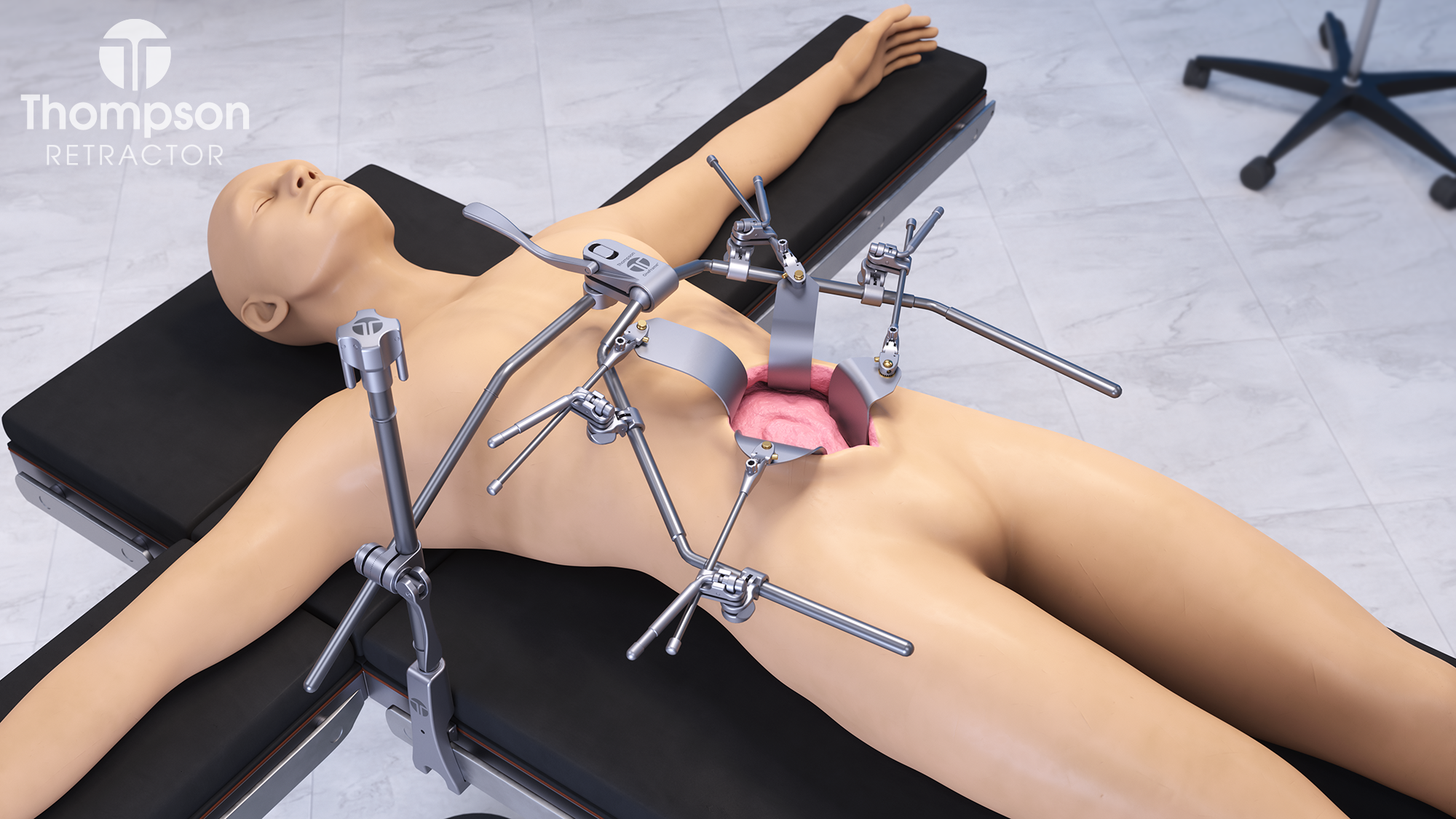
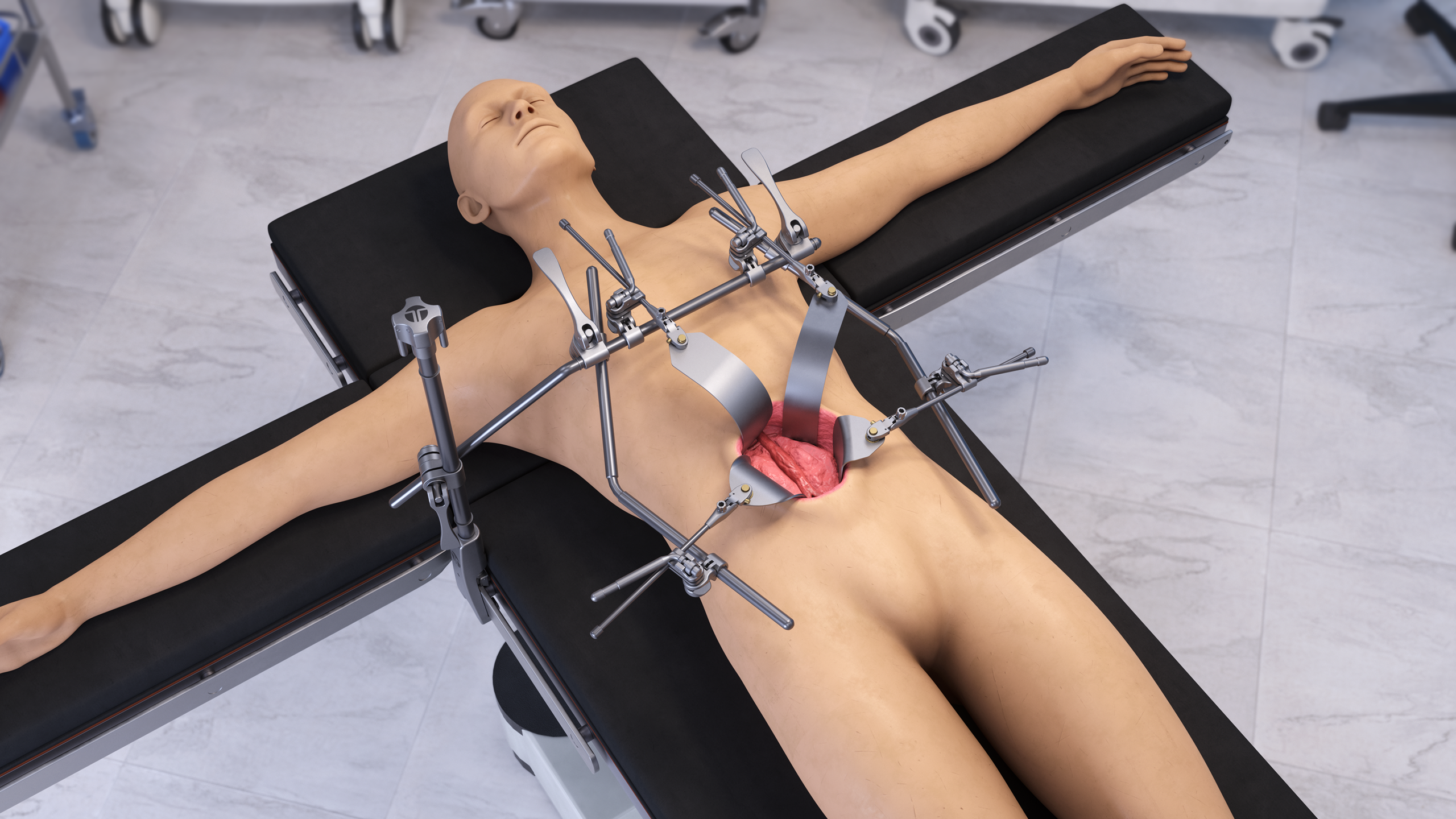
Table-mounted retraction is commonly used in long thoracoabdominal aortic cases because it supports hands-free stability and consistent exposure in deep operative fields. As procedure duration increases, maintaining exposure becomes a critical planning consideration, particularly when access must be preserved without repeated interruption. Systems designed for stable mounting, repeatable setup, and long-term durability help surgical teams maintain predictable case flow throughout extended procedures.
Understanding Table-Mounted Retractor Systems
A retractor is a surgical instrument used to hold back tissue or structures so that areas beneath an incision can be accessed during a procedure. In open surgeries that require sustained visualization, retractors are essential for maintaining exposure in the operative field.
Retractors are typically comprised of two primary components: a blade and a handle. The retractor blade is the portion that engages tissue or anatomy, while the handle connects to the blade, either permanently or removably, and is used to apply and maintain retraction forces. Together, these components allow tissue to be positioned and held away from the surgical site in a controlled manner.
Retractors are available in a wide range of shapes and sizes to accommodate anatomical variations, depth, and exposure requirements. In table-mounted retraction systems, blades and handles are designed to integrate with rigid mounting structures, allowing retraction forces to be applied and maintained without continuous manual holding. This integration is particularly important in long-duration procedures, where maintaining consistent exposure over time is critical.
Why Table-Mounted Retraction Matters in Long Thoracoabdominal Aortic Procedures
Thoracoabdominal aortic procedures place unique demands on the exposure strategy due to their depth, complexity, and extended duration. By anchoring retraction directly to the operating table, table-mounted retraction reduces the need for repeated adjustments and minimizes workflow interruptions as the case progresses, supporting predictable case flow during demanding, long-duration exposure. Maintaining a stable operative field over long periods requires careful planning, particularly when access must be preserved in deep operative cavities.
As procedure length increases, even small shifts in retraction can disrupt workflow. Manual retraction, while sometimes necessary, can become physically demanding during prolonged cases and may introduce variability in exposure as fatigue sets in. In these situations, maintaining consistent access without frequent repositioning becomes increasingly important to support procedural continuity.
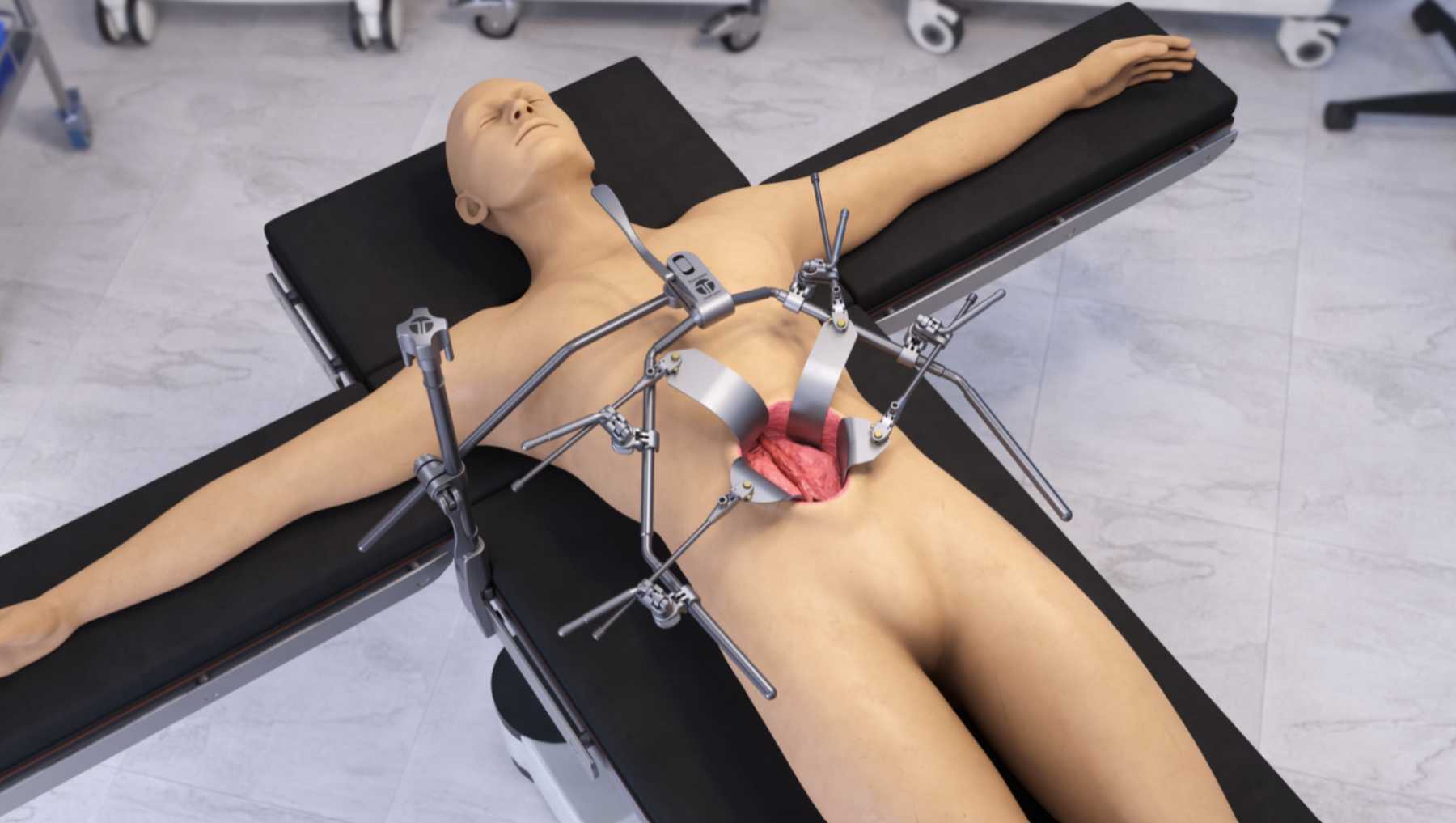
Table-mounted retraction is often selected in long thoracoabdominal aortic cases because it provides hands-free stability and structural support throughout prolonged exposure. Table-mounted systems help maintain exposure over time while reducing reliance on sustained manual holding. This allows surgical teams to remain focused on procedural execution with fewer interruptions from ongoing retraction management.
Why Hands-Free Retraction Matters in Prolonged Surgical Procedures
Long-duration surgical procedures place sustained demands on the entire operating room team. When exposure must be maintained for extended periods, reliance on continuous manual retraction can introduce variability as physical strain increases over time. Even subtle changes in hand position or applied force can affect exposure consistency, leading to re-adjustments that interrupt workflow.
Table-mounted retraction systems provide hands-free support that remains stable throughout the procedure. By eliminating the need for continuous manual holding, table-mounted retractors reduce physical strain on OR staff and help maintain consistent exposure without frequent intervention. This hands-free stability supports a more predictable workflow and allows the surgical team to concentrate on procedural tasks rather than ongoing retraction adjustments.
Stability in Deep Operative Cavities: Maintaining Exposure Over Time
Thoracoabdominal aortic procedures often involve deep operative fields, where exposure becomes increasingly challenging as procedure duration increases. In these environments, retraction systems must withstand sustained forces while preserving exposure geometry over time. Any flex, drift, or gradual loss of positioning can require correction, introducing unnecessary interruptions.
Table-mounted retraction provides structural stability by securing the retraction directly to the operating table. This mounting approach helps maintain consistent positioning in deep operative cavities and reduces the likelihood of gradual movement during long cases. By maintaining exposure integrity over time, table-mounted retractors minimize the need for repeated readjustment and enable uninterrupted access in challenging operative fields.
Minimizing Interruptions with Table-Mounted Retraction
In long-duration procedures, small inefficiencies can accumulate quickly. Each instance of re-positioning retraction, whether due to slippage, fatigue, or gradual loss of tension, can disrupt workflow and divert attention from procedural steps. Over the course of a lengthy thoracoabdominal aortic case, these interruptions can impact overall case flow.
Table-mounted retraction is often selected to help minimize workflow interruptions by maintaining surgical access without frequent adjustment. Stable, hands-free support keeps retraction in place as the procedure progresses, reducing the need to pause to reset exposure. This consistency supports predictable case flow and helps surgical teams maintain continuity throughout demanding, extended procedures.
How System Design Influences Table-Mounted Retraction Performance
While the benefits of table-mounted retraction are often discussed in terms of stability and hands-free support, system design plays a central role in how effectively those benefits are delivered during long procedures. Not all table-mounted configurations perform the same once sustained forces, deep operative fields, and extended durations are introduced.
Effective table-mounted surgical retraction systems typically rely on a rigid attachment to the operating table to maintain exposure over time. Thoughtful load distribution helps reduce flex or drift under sustained retraction forces, while configurability allows retraction to be positioned deliberately based on depth, access angle, and procedural progression.
Equally important is repeatability. Systems designed with consistent setup logic and predictable component behavior allow surgical teams to standardize workflows over time. This consistency helps reduce setup variability and limits the need for mid-procedure adjustments, particularly in long cases where maintaining focus and momentum is critical.
Thompson’s Approach to Table-Mounted Retraction Design
At Thompson Surgical Instruments, we design table-mounted retraction systems for long, complex procedures, where exposure must remain stable over time. Our focus extends beyond initial setup to long-term performance, prioritizing structural integrity, durable mechanical interfaces, and a configurable system design that ensures consistent access in deep operating fields.
When surgical teams evaluate strategies for the use of table-mounted retractors, common questions often include:
How reliably will this system maintain exposure over an extended case?
How often will retraction need to be adjusted once the procedure is underway?
These considerations guide our design philosophy. As an employee-owned manufacturer and the originator of table-mounted retractors, we approach system development with long-term accountability in mind. Each component is engineered to perform consistently under sustained load, supporting a predictable workflow while reducing reliance on continuous manual holding. This durability and repeatability help surgical teams standardize retraction strategies across procedures and specialties.
We also recognize that retraction systems are best evaluated under real operating-room conditions. That’s why we offer a 30-day free clinical evaluation for U.S. customers, including training and case support, allowing teams to assess setup efficiency, exposure stability, and workflow impact within their own OR environment. This hands-on approach reflects our commitment to supporting surgeons and OR teams beyond the instrument itself; before, during, and after the case.
For more than 60 years, Thompson Surgical Instruments has remained dedicated exclusively to advancing surgical access through table-mounted retraction. Guided by our mission, the Relentless Pursuit of Perfection, we design durable, low-profile retraction systems surgeons can depend on in demanding operating room environments. Contact us to learn how Thompson Surgical Instruments supports surgeons with reliable table-mounted retraction.
Share:
Coordinating Abdominal Retraction in Combined Thoracoabdominal Exposure