



Plastic Procedures
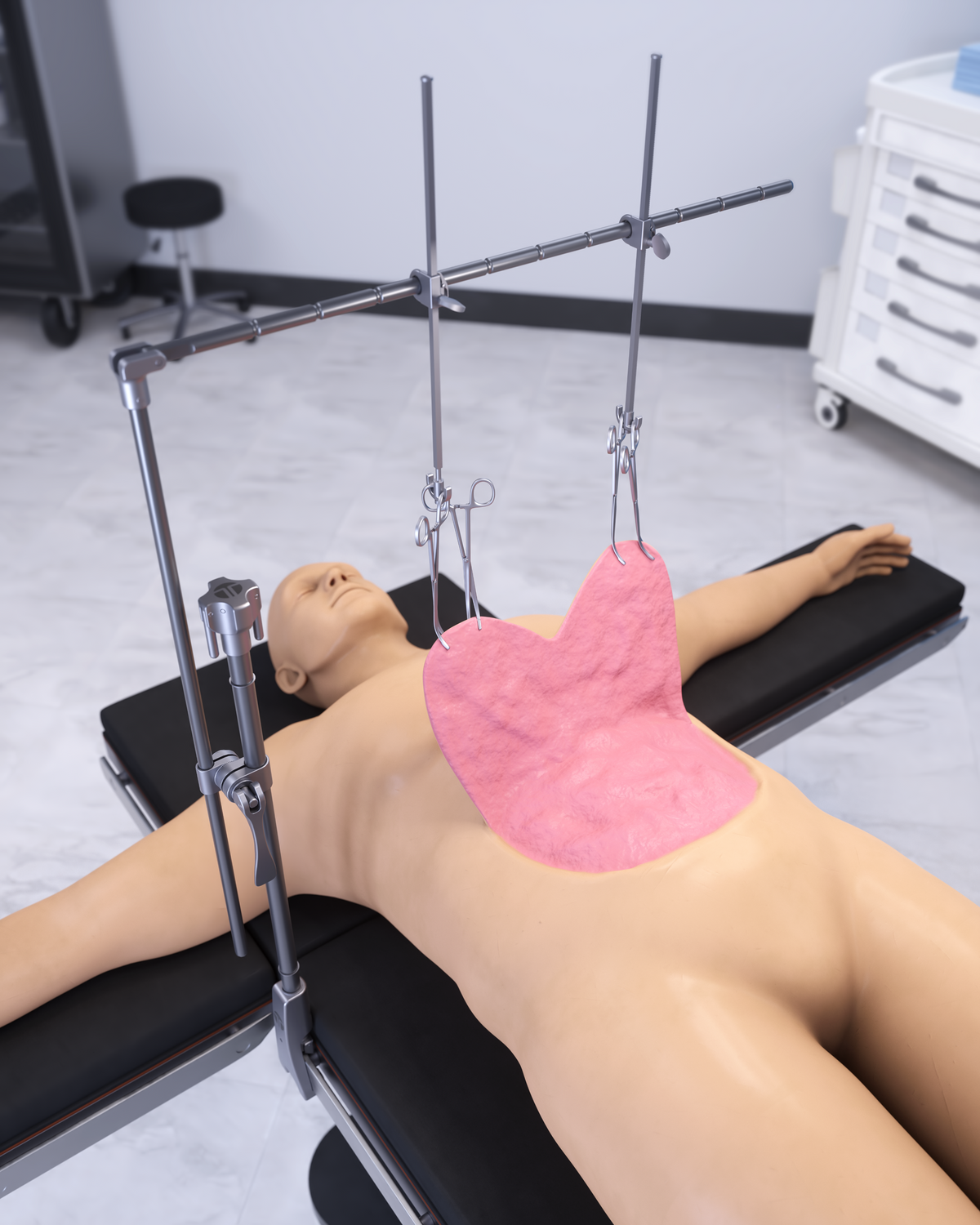
Plastic Surgery Retractors for Body Contouring Procedures
Plastic surgery retractors used in body contouring procedures should support stable exposure, controlled tissue positioning, and practical OR workflow. In panniculectomy, tummy tuck, and related body lift procedures, the surgical team may need to manage a broad soft-tissue field while preserving working access for dissection, hemostasis, contouring, and closure.
Thompson offers the Panniculectomy Retractor Set for body contouring procedures. The table-mounted configuration gives surgeons and OR teams a stable foundation from the operating room table, helping maintain exposure without relying on continuous manual holding as the primary retraction strategy.
Table-Mounted Retraction for Plastic Procedures
Body contouring procedures can place significant demands on exposure. The surgeon may need tissue elevated and held in a consistent position while the team works across the abdominal field. The setup should support access without crowding the table or complicating the OR team's workflow.
A table-mounted plastic surgery retractor set anchors outside the incision and gives the team a fixed support point for pannus retraction, blade positioning, and controlled adjustment. For larger panniculectomy cases, this can be especially useful because the tissue load and working area may change as the procedure progresses.
A strong retraction setup should support:
- Stable exposure across the abdominal field
- Controlled pannus suspension or tissue positioning
- Working space for the surgeon and assistants
- Adjustable retraction as the case progresses
- Clear component organization for the scrub team
- Documentation for cleaning, inspection, and reprocessing
The retractor set should work for the surgeon first. It also needs to make sense for the people who prepare it, assist with it, break it down, and return it to case readiness.
According to a 2023 StatPearls article published by the National Library of Medicine, NIH, on panniculectomy, large‑volume cases often require table‑mounted body‑contouring retractor systems. These rigid, tubular frames secure directly to the operating table and support a bar or ring above the patient, allowing the massive panniculus to be suspended with specialized retractors or hooks. This hands‑free elevation dramatically improves exposure and enables surgeons to design precise, tension‑free flaps
Panniculectomy and Body Contouring Exposure
A panniculectomy removes hanging excess skin and fat from the lower abdomen. The procedure removes hanging skin and fat to create a smoother abdominal contour. Abdominal wall contouring removes significant excess skin and subcutaneous adipose tissue.
From a retraction standpoint, the procedure often requires consistent exposure across a broad field. The surgeon may need to elevate tissue, maintain access to the operative plane, and adjust positioning as the pannus is managed.
A tummy tuck or body lift may place different demands on the setup. The retractor set for plastic surgery procedures should be evaluated by procedure type, tissue load, working depth, surgeon preference, and OR workflow.
Thompson Panniculectomy Retractor Set
The Thompson Panniculectomy Retractor Set is designed for body contouring procedures, including tummy tucks and panniculectomies.
What the Set Supports
The set gives the surgical team a table-mounted platform for controlled body contouring exposure, supporting pannus positioning, hands-free retraction, and adjustment during the case. This retraction configuration provides value to surgeons with controlled access across a broad soft-tissue field. For OR teams, added value includes a defined setup that can be prepared, adjusted, documented, and reprocessed consistently.
Setup and Adjustment Considerations
The Body Contouring retractor setup uses a rail-mounted frame foundation with towel clip cranks and compatible body contouring components. Thompson’s body contouring retractor can be configured unilaterally or bilaterally depending on the case and tissue load.
The bilateral expansion option gives the OR team additional support when a larger pannus requires greater stability. Evaluate this during representative cases so the surgeon and OR staff can determine which setup fits the procedure. View Thompson’s Body Contouring Panniculectomy User Manual for additional setup considerations.
Blade Options for Body Contouring Procedures
Blade selection should match the procedure and the surgeon’s exposure strategy. In body contouring procedures, the frame provides the foundation, while the blades and related components help shape the working field.
Thompson body contouring blade options include Fence blades, Tummy Tuck blades, Saldanha Arched blades, Malleable blades, Cat’s Paw blades, and a Towel Clip Hook. These options support different exposure needs across panniculectomy, tummy tuck, and body contouring procedures.
For OR teams, blade selection should be reviewed with setup and reprocessing in mind. The team should understand which blades are included, which components are used for the procedure, and how to organize the set after cleaning and inspection. Review the complete component listing in Thompson’s Body Contouring System Atlas.
OR and Sterile Processing Workflow
A plastic surgery retractor set must move cleanly through the full perioperative workflow. The set is selected, opened, assembled, positioned, adjusted, taken down, cleaned, inspected, organized, and prepared for the next case.
The surgeon may focus on exposure. The scrub team sees component organization and setup flow. The circulator may notice how the configuration affects table access and room movement. Sterile processing department teams need clear documentation for cleaning, inspection, tray organization, and case readiness.
Before standardizing the set, OR leaders should confirm that the team understands:
- Which components are needed for common body contouring cases
- When unilateral or bilateral setup may be appropriate
- How towel clip cranks and blade options are organized
- Where setup and reprocessing documentation can be accessed
- How the set should be returned to case readiness
Use Thompson documentation to review Instructions for Use, user manuals, cleaning, sterilization, and product support materials before implementation
Evaluating a Plastic Surgery Retractor Set
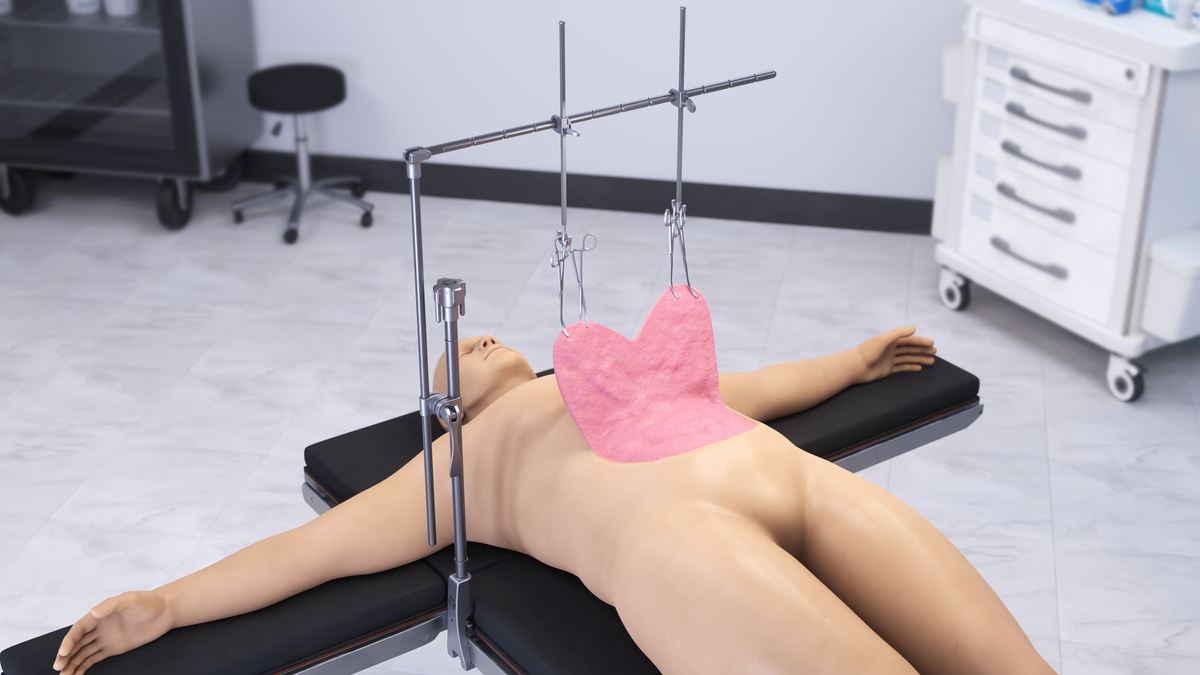
A plastic surgery retractor set should be evaluated in the OR where it will be used. Product information can explain the configuration, but representative cases show how the setup performs with the facility’s surgeons, staff, rooms, and workflow.
Surgeons and OR leaders should assess how well the set supports exposure, how easily the team can prepare the frame, whether the setup preserves working access, and how consistently staff can manage takedown and reprocessing.
The evaluation should include feedback from the surgeon, scrub staff, circulating staff, sterile processing department teams, and purchasing or value-analysis stakeholders. Each group sees a different part of the workflow.
Both configurations use Flex Holders and the Thompson Brain Blade Kit for independently controlled retraction. The primary selection decision is therefore the mounting foundation and preferred relationship between the frame, patient position, and operative field.
Clinical Evaluation & Quotes
The most useful evaluation happens in the facility’s own operating room. Through Thompson’s 30-day clinical evaluation, U.S. facilities can assess the right retractor set with their own surgeons, staff, rooms, and body-contouring workflow. Thompson helps coordinate the set, provides OR and sterile processing department training, and supports the team during the evaluation.
For plastic procedures, the review should focus on exposure, pannus support, setup repeatability, component organization, blade selection, sterile processing workflow, and staff training. That feedback gives the team a clearer basis for deciding whether to standardize the retractor set.
FAQs About Plastic Surgery Retractors
What retractor set does Thompson offer for plastic procedures?
Thompson offers the Panniculectomy Retractor Set for plastic and body contouring procedures, including panniculectomy, tummy tuck, and body lift applications. The table-mounted setup supports pannus positioning, controlled exposure, and body contouring blade options.
How does a table-mounted retractor support panniculectomy?
A table-mounted panniculectomy retractor set anchors to the operating room table and supports tissue positioning through the frame, towel clip cranks, hooks, and compatible blades. This gives the surgical team a stable foundation for maintaining and adjusting exposure during the procedure.
When is a bilateral setup used?
A bilateral setup may be used when the case requires additional support for a larger pannus or broader body contouring exposure. The OR team should follow the current Thompson user manual, Instructions for Use, and facility protocols when selecting and setting up the configuration.
What blade options are available for body contouring procedures?
The Body Contouring System Atlas identifies Fence, Tummy Tuck, Saldanha Arched, Malleable, and Cat’s Paw blade options, along with a Towel Clip Hook. The right blade selection depends on the procedure, exposure requirements, surgeon preference, and selected setup.
How should OR teams evaluate a body contouring retractor set?
OR teams should evaluate exposure, setup sequence, pannus support, blade selection, working access, takedown, cleaning, tray organization, staff training, and sterile processing workflow. A clinical evaluation allows the team to assess the set in its own operating environment before standardization.
Table-Mounted Retraction for Plastic Surgery Procedures
Plastic surgery retraction for body contouring procedures should support the surgeon’s exposure strategy and the OR team’s workflow. Thompson’s Panniculectomy Retractor Set gives teams a table-mounted configuration for panniculectomy, tummy tuck, and related body contouring cases, with options for pannus support, controlled adjustment, blade selection, and bilateral stability when needed. The strongest evaluation looks at how the setup performs in the OR and how consistently the team can prepare, adjust, reprocess, and repeat the configuration.