



Laparoscopic Procedures
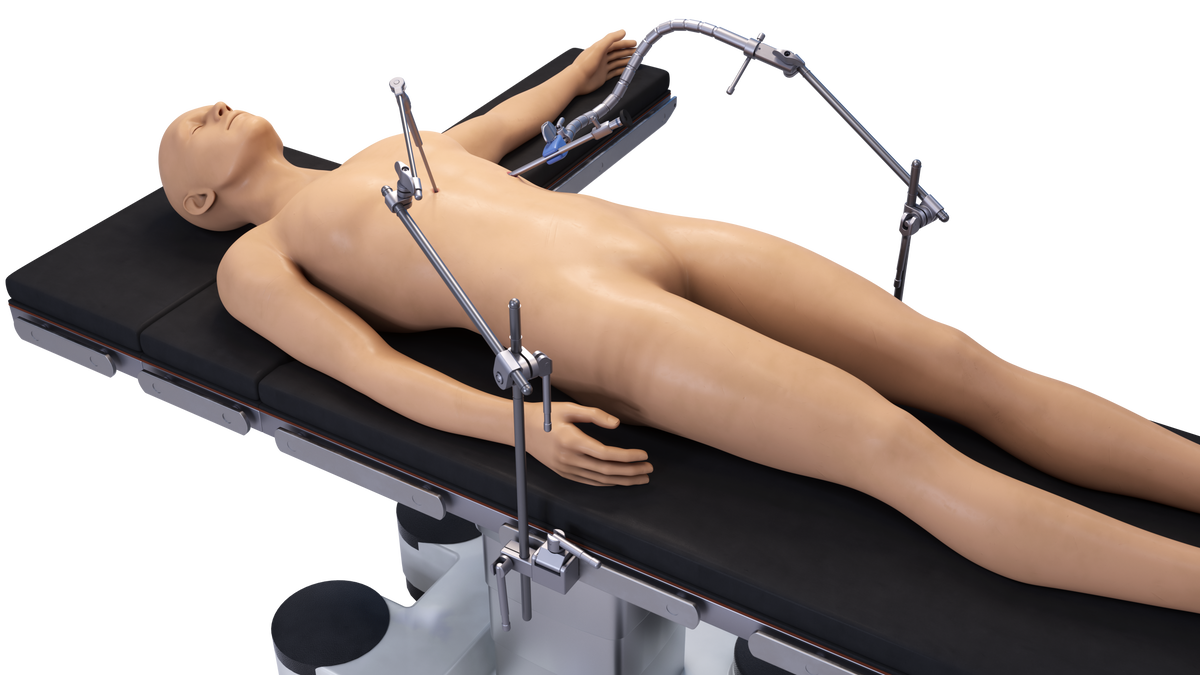
Table-Mounted Retractor Set for Laparoscopic Procedures
The Thompson Laparoscopic Retractor Set provides table-mounted support for scopes, compatible laparoscopic instruments, and Nathanson hooks during minimally invasive procedures. The set attaches to the operating room table and can be configured with flexible, rigid, or articulating holders based on the case's positioning requirements.
Each holding arm can be positioned independently to maintain the operative view, secure a compatible instrument, or support organ retraction while preserving access around the ports and surgical workspace.
Why Laparoscopic Procedures Require Stable Scope and Instrument Positioning
Laparoscopic procedures depend on the view transmitted through the scope. Scope angle, depth, and orientation may change as the surgeon moves between anatomical targets, making controlled positioning an important part of the surgical workflow.
Effective laparoscopic support may need to provide:
- Stable scope or instrument positioning
- Controlled adjustment of angle and depth
- Clearance around ports and instrument paths
- Compatibility with the procedure and selected instruments

What Is a Table-Mounted Laparoscopic Retractor Set?
A table-mounted laparoscopic retractor set attaches to the operating room table and supports one or more independently positioned holding arms. The end of each arm can be equipped with an attachment selected for a scope, laparoscopic instrument, or Nathanson hook.
The Thompson configuration may include:
- Power Rail Clamp
- Flexible Laparoscopic Holder
- Rigid Laparoscopic Holder
- Laparoscopic Articulating Arm
- Adjustable Scope Grip
- Duo Head for compatible instruments
- Small, medium, or large Nathanson hooks
This modular arrangement allows the surgical team to configure the set around port placement, instrument diameter, required movement, and surgeon preference.
Thompson Laparoscopic Retractor Set
The Thompson Laparoscopic Retractor Set provides hands-free support for compatible scopes, laparoscopic instruments, and Nathanson hooks. Quick attachment changes allow the surgical team to select the holder and attachment that best fit the procedure, port placement, and required range of movement.
The set can be configured with flexible, rigid, or articulating holding options. A single holder may support one scope, instrument, or Nathanson hook, while two independently positioned holders can support separate components when the procedure requires more than one support point.
Flexible, Rigid, and Articulating Holding Options
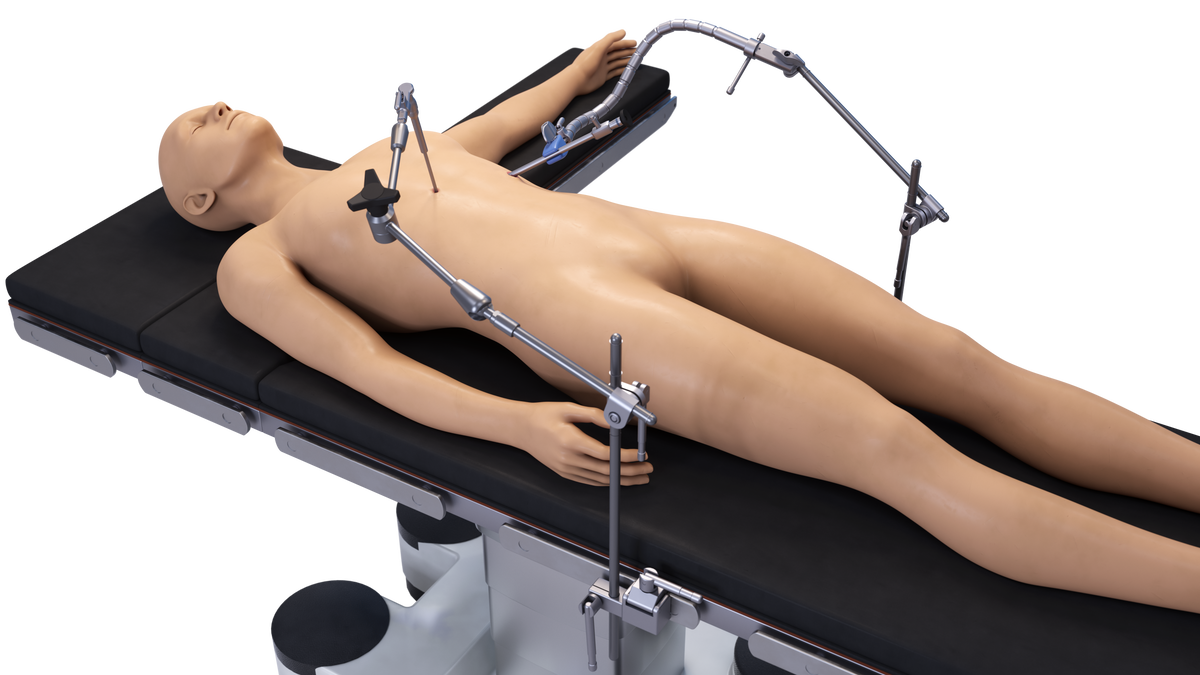
The Thompson Laparoscopic Retractor Set offers three primary holding-arm configurations.
Flexible Laparoscopic Holder
The Flexible Laparoscopic Holder provides a broad range of positioning through an adjustable flexible arm. The arm can be shaped around the operative field and secured after the selected scope or instrument reaches the desired position.
This holder may be appropriate when the port location requires an adaptable positioning path or when the holding angle may need refinement during the procedure.
Rigid Laparoscopic Holder
The Rigid Laparoscopic Holder provides precise structural support for scopes or instruments expected to remain in a relatively fixed position. Thompson also offers rigid-holder configurations with integrated instrument or Nathanson attachments.
Laparoscopic Articulating Arm
The Laparoscopic Articulating Arm provides multi-joint movement and a wide positioning range. The arm can be arranged around the patient, ports, and equipment before being secured in the selected position.
The choice between flexible, rigid, and articulating support depends on the required movement, expected frequency of adjustment, instrument weight, and port location.
Scope and Camera Positioning
A table-mounted scope holder provides a stable foundation for maintaining the selected viewing angle and depth while the surgeon works through other ports.
The Adjustable Scope Grip supports compatible:
- 5–6 mm scope shafts
- 10–11 mm scope shafts
The scope attachment and holder should be selected based on shaft diameter, intended viewing angle, port position, and the anticipated need for adjustment. A flexible holder supports an adaptable approach to the port, while a rigid holder or Articulating Arm may be selected when the scope requires more fixed support or a broader positioning path.
Support for Compatible Laparoscopic Instruments
The Laparoscopic Retractor Set can also secure compatible instruments using the Duo Head attachment. The Duo Head provides openings for:
- 3 mm instruments
- 5 mm instruments
- 10 mm instruments
The selected instrument can be secured to a flexible, rigid, or articulating holder based on its diameter and positioning requirements. Compatibility should be confirmed before the procedure according to instrument design and the applicable instructions for use.
Nathanson Liver Retraction
A Nathanson hook can be used to elevate the liver during applicable upper abdominal laparoscopic procedures. The Thompson configuration provides small, medium, and large Nathanson hook options that connect to a compatible table-mounted holder.
A review of liver retraction techniques for laparoscopic upper gastrointestinal surgery identifies the Nathanson as an established mechanical liver-retraction option. The hook size, placement, angle, and amount of retraction should be selected according to the procedure, anatomy, and surgeon preference.
Configuring the Laparoscopic Retractor Set
Configuration begins with identifying what must be supported and how the component needs to move during the procedure.
A single-arm setup may support:
- A laparoscope
- One compatible laparoscopic instrument
- A Nathanson hook
A dual-arm setup may provide independent support for two components, such as a scope and instrument or a scope and Nathanson hook.
The Power Rail Clamp and holding arms should be positioned to maintain clearance around the ports, surgeon, anesthesia workspace, and other equipment. The selected attachment should match the scope or instrument diameter, and the general arm position should be established before final tightening.
A repeatable setup sequence helps OR teams identify the correct clamp, holder, and attachment before the case. It also supports consistent tray organization and case readiness for SPD teams.
Choosing a Laparoscopic Retractor Configuration
The appropriate configuration depends on the component being supported, required range of motion, port location, shaft diameter, and expected frequency of adjustment.
A flexible holder supports adaptable positioning. A rigid holder provides more fixed structural support, while the Laparoscopic Articulating Arm provides multi-joint positioning around the operative field. Cases requiring two support points may use independently positioned dual arms.
The selected arrangement should maintain the required position without crowding the ports or interfering with the surgeon’s primary working paths.
Why Table-Mounted Support Matters in Laparoscopic Procedures
Scopes, instruments, and organ retractors may need to remain positioned while the surgeon works through another port or changes the operative target. A table-mounted holding arm provides a stable external foundation without relying on continuous manual support.
The Thompson Laparoscopic Retractor Set combines table-mounted stability with several holder and attachment options. This allows surgical teams to configure scope support, compatible instrument positioning, and Nathanson liver retraction around the access requirements of the procedure.
Clinical Evaluation & Quotes
A clinical evaluation allows surgeons and OR teams to assess an orthopedic retractor set during representative hip, knee, or shoulder procedures before making a long-term decision.
Thompson offers a 30-day clinical evaluation for U.S. customers. Thompson coordinates the appropriate configuration, trains OR and SPD teams, and provides support throughout the evaluation.
During the evaluation, the team can assess table compatibility, frame positioning, blade and handle selection, femur elevation requirements, working space, setup repeatability, staff familiarity, tray organization, and reprocessing workflow.
Frequently Asked Questions
What is a laparoscopic retractor set?
A laparoscopic retractor set provides support for scopes, compatible instruments, or organ-retraction components during minimally invasive procedures. The Thompson set attaches to the OR bedrail and uses independently positioned holders and attachments.
Can the Thompson Laparoscopic Retractor Set hold a scope?
Yes. The Adjustable Scope Grip supports compatible 5–6 mm and 10–11 mm scope shafts and connects to the selected laparoscopic holder.
What is a femur elevator retractor used for?
A femur elevator retractor provides controlled elevation of the proximal femur during the femoral-preparation phase of direct anterior hip arthroplasty. The Thompson Femur Elevator Retractor Set uses a separate rail-mounted straight arm, elevator handle, and femur hook and may be used alone or with the Hip frame.
What is a Nathanson hook used for?
A Nathanson hook provides liver retraction during applicable upper abdominal laparoscopic procedures. Thompson offers small, medium, and large hook options.
Thompson’s Laparoscopic Retractor Set
The Thompson Laparoscopic Retractor Set combines a Power Rail Clamp with flexible, rigid, and articulating holding options. Compatible attachments support scope positioning, laparoscopic instrument holding, and Nathanson liver retraction within a configuration selected for the procedure and OR workflow.
Thompson Surgical Instruments has spent more than 60 years advancing stable, hands-free surgical exposure through table-mounted retraction. Our employee-owned team supports surgeons, OR staff, and SPD teams with configurable holding options, training, and clinical evaluation support. Contact us to learn more about the Thompson Laparoscopic Retractor Set.